REVIEW · SAMURAI EXPERIENCES
Kyoto Samurai Experience
Book on Viator →Operated by Kyoto Samurai Experience · Bookable on Viator
A katana lesson in an old Kyoto house. What makes the Kyoto Samurai Experience so interesting is the real setting and the hands-on flow: you’ll put on a kimono, learn sword basics with an instructor, and then slow down with Zen meditation. I especially like that it’s small-group and structured, so you’re not stuck watching from the sidelines.
Two big draws for me are the Bushido discussion and the practical, physical sword time. You get the mindset behind the movements, not just a performance, and you handle a training sword in a guided way. One possible drawback: the location is a bit out of the way, so you’ll want to plan extra time to get there without stress.
In This Review
- A few things to know before you go
- Kyoto Samurai House: Why the Setting Is Part of the Training
- Meeting at Waraku and Getting Your Kimono On
- Bushido Talk: The Values Behind the Blade
- Sword Practice With a Realistic Training Setup
- Safety and comfort matter here
- Zen Meditation After the Moves: Slowing Down on Purpose
- Timing, Group Size, and Kyoto Weather Reality
- Price and Value for a Small-Group Samurai Class
- Who Should Book This (and Who Might Skip It)
- Should You Book Kyoto Samurai Experience?
- FAQ
- How long is the Kyoto Samurai Experience?
- Do morning and afternoon departures both exist?
- What should I wear and bring?
- Is this tour suitable for children?
- What physical fitness level is required?
- What is the group size?
- Do I get a mobile ticket?
- Where do I meet for the tour?
A few things to know before you go
- Small group (max 14): You’ll get more direct attention during sword practice and Q&A.
- Kimono change-in-house: You’ll feel the period setting before the training even starts.
- Bushido + Zen together: The class isn’t only about the blade; it also covers calm and discipline.
- Sword basics with a martial arts training sword: You’ll learn safe fundamentals, not just pose for photos.
- One hour 45 minutes: Fast enough to fit Kyoto sightseeing, but long enough to feel like a real class.
Kyoto Samurai House: Why the Setting Is Part of the Training
This experience works because you’re not doing sword lessons in a generic studio. You’re in a traditional Kyoto samurai house, and that changes your brain’s “game.” The rooms, the atmosphere, and the sense of how people lived here make the history feel less like a lecture and more like a lived environment.
I like that the program connects the house to the theme. You’re not just wearing costumes and then running to the next thing. Instead, the building becomes a backdrop for the parts that matter: what samurai life valued, how training fit into daily discipline, and why Zen still belongs in the conversation.
It also sets the tone for the physical portion. When you’re standing in a space designed for older rhythms, the basic movements start to make sense. You may not become a swordsman by the end, but you’ll understand the logic behind good form.
You can also read our reviews of more tours and experiences in Kyoto.


Meeting at Waraku and Getting Your Kimono On
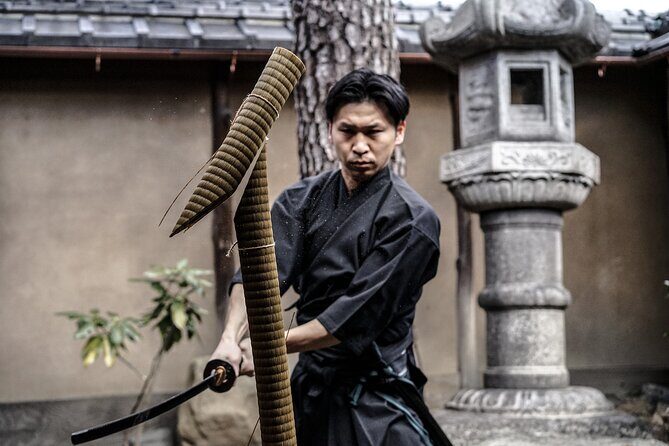
You meet at Kyoto Samurai Experience / Waraku at 111 Inabachō, Nakagyo Ward, Kyoto (604-8803). It’s also described as near public transportation, which matters in Kyoto, where a few extra blocks can feel like a long walk in the heat or the cold.
Once you arrive, expect a welcome and a clear run-through of how the session works. Then you change into traditional kimono. This is more than a photo op. The clothing helps you understand how samurai-inspired culture shaped posture, movement, and personal discipline.
Practical tip: wear comfortable clothes for the changeover and be ready for an athletic footwear swap situation. You’ll do movements, so you want shoes that won’t fight your footing. Kyoto flooring styles can be slick or uneven, so stable footwear is your friend.
One detail I appreciate: the staff tends to manage the full flow smoothly, from arrival to the final moments. Several people highlight how welcome they felt right away, and that lines up with what you want from a small-group class. You don’t want to waste the first 15 minutes figuring anything out.
Bushido Talk: The Values Behind the Blade
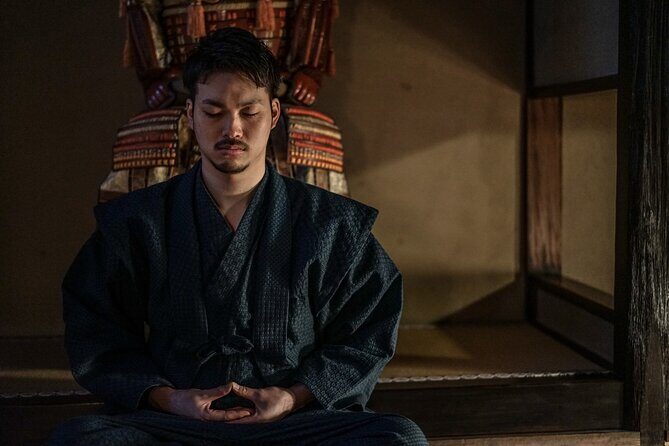
Before you swing anything, you’ll get a guided explanation of samurai culture—especially Bushido, the Way of the Warrior. This part is valuable because it changes what you think sword training is for.
Instead of treating the sword as a cool object, the session frames it as a discipline. Bushido, in plain terms, is about how a person carries themselves: control, responsibility, and inner focus. If you’ve ever wondered why martial arts in Japan often look more like training the mind than charging forward, this is where that starts to click.
The instructor-led format also helps. You’re not reading a wall of text. You’re learning a worldview while preparing your body for controlled movements. That pacing makes it easier to remember the key ideas when you later handle a sword.
If you enjoy history that connects to daily behavior—how people thought, trained, and respected conduct—this is the moment you’ll feel it most.
Sword Practice With a Realistic Training Setup
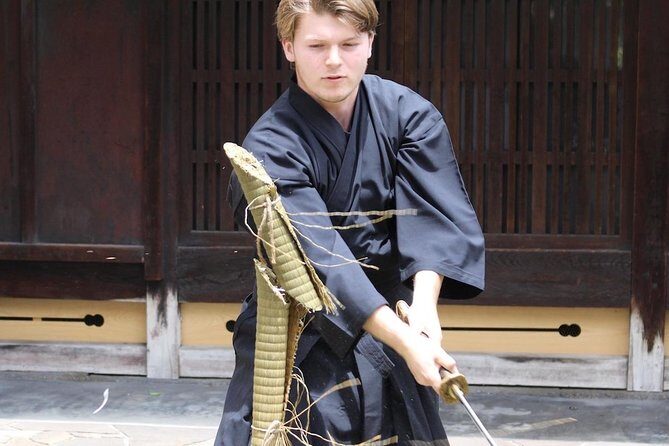
Now for the physical part. You’ll practice swordsmanship basics under guidance, using a martial arts training sword (plus time handling a sword as part of the experience). The goal isn’t to turn you into an expert. The goal is to teach fundamentals safely, with enough hands-on time that you leave knowing what good basics feel like.
The structure usually goes like this:
- You learn the key positions and basic movements.
- You practice controlled strikes and repeat with the instructor watching.
- You get corrections and coaching so you can improve form rather than just go through motions.
People also mention that they had the chance to do cutting drills. Even if your level is beginner, the fact that the program includes a practical training component is a big reason it gets such high marks.
Safety and comfort matter here
Because you’re doing an athletic activity, you should show up with the right expectations. Follow the instructor’s directions, and don’t try to copy advanced technique from your first attempt. Your body needs reps to make movements feel natural.
If it’s your first time with sword training, focus on basics:
- controlled stance
- smooth, deliberate movement
- listening before going faster
That’s where you’ll get the most enjoyment out of the class.




Zen Meditation After the Moves: Slowing Down on Purpose
After the sword work, you’ll take part in Zen meditation. This is one of the most distinctive parts of the experience, because it pulls the session back into balance.
It’s not an added extra. It fits the theme: discipline isn’t only about action. It’s also about calming attention and learning to be still after effort. If you’ve ever left a hands-on activity buzzing in your head, this part helps you land.
People mention the meditation as a highlight, especially as a way to wind down after the physical drills. You’ll likely feel the contrast immediately: sword practice is about control through movement; Zen is about control through awareness.
If you’re the type who travels to “collect” experiences fast, this is the one part that slows your pace in a useful way.
Timing, Group Size, and Kyoto Weather Reality
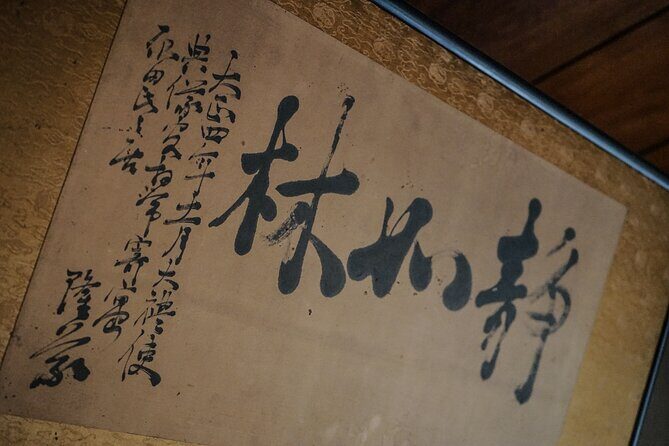
You can choose either a morning or afternoon departure time, depending on what fits your Kyoto days. The class lasts about 1 hour 45 minutes, which makes it easier to place between sightseeing blocks.
The group max is 14 travelers, which is an underrated detail. In a class like this, smaller groups matter because:
- the instructor can correct your form more directly
- you spend less time waiting
- the session doesn’t feel rushed
Kyoto weather can swing fast, and sword training is physical. On cold days, one review specifically mentions hand warmers and hot tea during an outdoor portion. So if you’re visiting in winter, don’t assume you’ll always be comfortable outdoors before you get moving—dress in layers you can manage.
In summer, bring your hydration common sense. Even if water is provided, it’s still hot work, and your body needs a calm setup to learn new movement.
One more thing: this activity can feel a little away-from-the-center. If you base yourself in Kyoto’s main tourist corridors, give yourself buffer time. You’ll enjoy it more when you’re not arriving out of breath and already annoyed.
Price and Value for a Small-Group Samurai Class
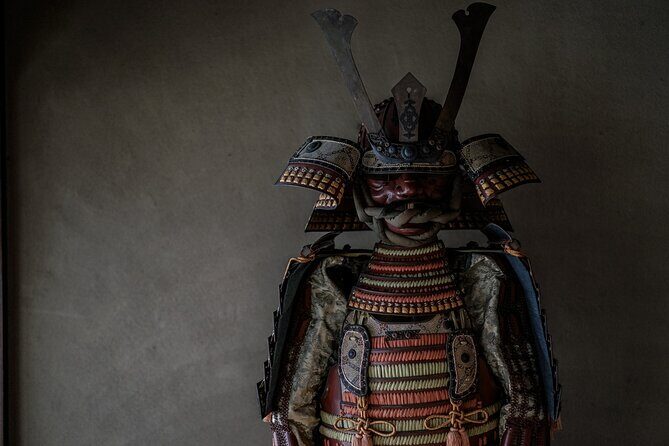
The price is $119.38 per person for about 1 hour 45 minutes. That isn’t cheap, so you should judge value based on what you actually get.
Here’s what makes the cost feel more justified:
- A real traditional samurai house setting, not just a themed room
- Kimono dressing as part of the experience
- Expert sword instruction with hands-on practice time
- Bushido philosophy teaching (mindset, not only technique)
- Zen meditation, so you leave with more than movement lessons
- A small group size (max 14), which improves your coaching time
One possible mismatch to watch for: if you expect a full-day sword mastery course or an experience that looks exactly like promotional videos from start to finish, you might feel disappointed. This is a short, guided class. Think of it as an education and a taste of training, not a transformation into a movie-level swordsman.
Still, overall ratings are extremely strong, and the most praised elements are the welcome, the structure, and how hands-on it is. People also bring up details like photos taken by staff and small cultural touches like music performances during the session. Those extras don’t change the core value, but they help the whole afternoon or morning feel like a complete event.
If your plans shift, it can help that cancellation is offered up to 24 hours in advance for a full refund. If you’re trying to fit this into a tight Kyoto schedule, that safety net is worth something.
Who Should Book This (and Who Might Skip It)
This is a great fit if:
- you want a hands-on cultural experience, not just museum browsing
- you like learning the philosophy behind the activity
- you’re curious about samurai culture in a lived-in context
- you’re traveling with family members who enjoy interactive classes
- you’re okay with moderate physical effort
This may not be your best use of money if:
- you mainly want spectacle and don’t care about the Bushido and Zen components
- you’re expecting long, advanced training
- you’re strongly price-sensitive and only want the cheapest activities
One reason this works for families: people mention it’s enjoyable for adults and children, as long as minors are accompanied by an adult. If you bring kids, this is one of those activities where structured coaching and clear steps can make the experience fun instead of chaotic.
Should You Book Kyoto Samurai Experience?
If you like your Japan travel to include real instruction, a meaningful theme, and time to slow down, I’d book it. The combination of kimono, Bushido, sword basics, and Zen meditation is the kind of mix you rarely get in one compact 1 hour 45 minute session.
Just plan smart for the location and weather. Wear athletic footwear, dress for an outdoor moment if it’s cold, and give yourself buffer time so you arrive in a good mood. If you do that, you’ll leave with more than photos—you’ll understand what samurai discipline looks like in practice.
FAQ
How long is the Kyoto Samurai Experience?
The experience lasts about 1 hour 45 minutes.
Do morning and afternoon departures both exist?
Yes. You can choose either a morning or afternoon session.
What should I wear and bring?
Wear comfortable clothes and appropriate footwear for an athletic activity. You’ll also change into a traditional kimono during the experience.
Is this tour suitable for children?
Minors must be accompanied by an adult.
What physical fitness level is required?
Travelers should have a moderate physical fitness level since it includes an athletic sword training activity.
What is the group size?
The tour/activity has a maximum of 14 travelers.
Do I get a mobile ticket?
Yes. The ticket type is a mobile ticket.
Where do I meet for the tour?
You meet at Kyoto Samurai Experience / Waraku, 111 Inabachō, Nakagyo Ward, Kyoto, 604-8803, Japan. The activity ends back at the meeting point.