REVIEW · WORKSHOPS
Fish Cutting workshop in Kyoto Japan
Book on Viator →Operated by しおやん · Bookable on Viator
Knives, fish, and instant lunch. I like the small group size (max 6), and I love the fact that you cut your own fish and eat it as sashimi right afterward. One consideration: the class involves knives, so children under 8 can’t join.
This workshop is based at Kimura Fresh Fish in Kyoto, and you’re taught by a fish professional tied to a market tradition that reaches back generations. Expect a hands-on lesson in raw fish handling and cutting, starting at 10:00 am and running about 2 hours 30 minutes.
If you’re the type who wants skills you can reuse (not just photos), this is a solid pick. You’ll learn basic Japanese fish processing techniques, get help as you work, and leave fed—no one needs to fear an empty stomach.
In This Review
- Key things to know before you book
- Fish cutting in Kyoto: what you’ll actually do for 2 hours 30
- The market meeting point: Kimura Fresh Fish and the real Kyoto vibe
- Small group lessons (max 6): you’ll get corrections, not just tips
- First-timer safety: learning knife work without the panic
- Knife skills + sashimi logic: how the cutting lesson turns into lunch
- What’s included (and what to expect from the meal)
- Price and value: is $98.53 worth it?
- Logistics that actually matter: mobile ticket, start time, and getting there
- Who this workshop suits (and who should skip it)
- My honest booking advice: should you do the fish cutting workshop?
- FAQ
- FAQ
- Where is the meeting point for the fish cutting workshop?
- What time does the class start, and how long is it?
- Is lunch included?
- How big is the group?
- Are children allowed?
- What’s included, and is transportation provided?
Key things to know before you book
- Cut-and-eat format: you process fish, then eat it as sashimi
- Small group attention: up to 6 people, so questions don’t get lost
- First-timer friendly pacing: careful instruction before you touch the knife
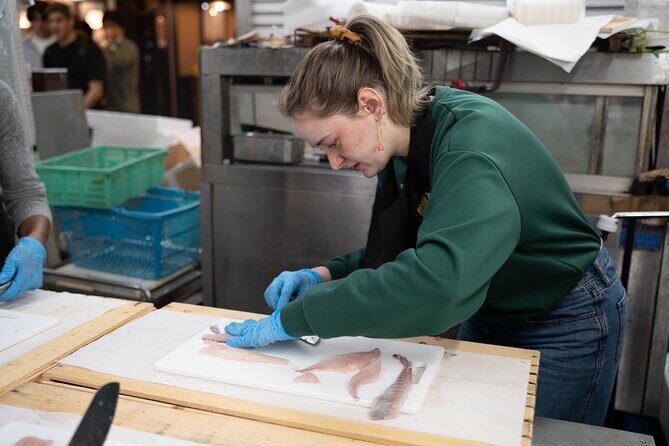
- Multiple steps, real supervision: you cut fish into three pieces and get watched closely
- Fresh lunch is included: lunch is part of the price, and you prepare it yourself
- Location is a market stop: meeting at Kimura Fresh Fish keeps things authentic
Fish cutting in Kyoto: what you’ll actually do for 2 hours 30
This is not a sit-and-watch cooking show. The point is simple: you’ll practice raw fish preparation until you can confidently make the cuts needed for sashimi. The class is structured so the teacher goes step by step first, then you take over with careful oversight.
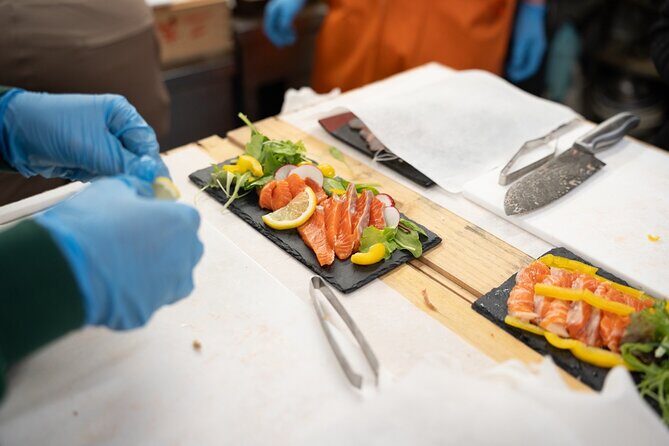
In a typical flow, you start with guidance on fish handling—how to grip, how to work cleanly, and how to think about the fish as material rather than “food.” Then comes the hands-on part: you’ll cut the fish into three pieces yourself. After that, you’ll eat what you prepared, turned into sashimi at the end of class.
Why this matters: learning raw fish technique isn’t something you can pick up from a cookbook. You need repetition, correction, and a teacher close enough to notice when a cut is slightly off. The format here is built for that.
You can also read our reviews of more tours and experiences in Kyoto

The market meeting point: Kimura Fresh Fish and the real Kyoto vibe
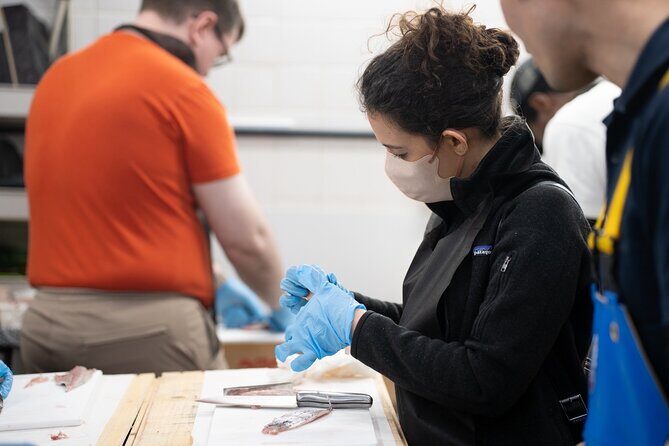
Your class meets at Kimura Fresh Fish, 483 Nakauoyachō, Nakagyo Ward, Kyoto (604-8125). It’s described as near public transportation, which is great because you don’t want to burn time and energy figuring out last-mile logistics before a knife session.
This location choice also changes the feel of the workshop. You’re not learning fish cutting in a classroom with demo photos. You’re learning in a fish-shop environment, which keeps the lesson grounded in the way Japanese fishmongers actually work—clean, practical, and focused on getting the cut right.
Also, the activity ends back at the meeting point, so you’re not stuck navigating a second location after you’re done eating.
Small group lessons (max 6): you’ll get corrections, not just tips
One of the best things about this workshop is the group size: maximum 6 travelers. In a class like this, that’s huge. It means the instructor can watch your knife work and adjust what needs adjusting without rushing you or moving on too quickly.
The instruction style is described as interactive and supportive, with step-by-step demonstrations. When it’s your turn, you’re not left guessing. You get guidance fast, so you can fix your grip or change your cutting angle before the fish quality is affected.
This is also where the class becomes more than just technique. With a smaller group, you’re more likely to ask the questions you actually have, like how to handle different textures or what to look for when preparing raw fish.
First-timer safety: learning knife work without the panic
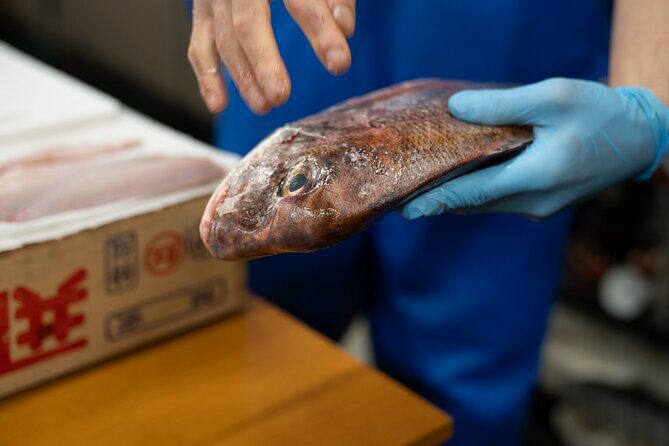
Raw fish preparation is intimidating at first—until someone teaches you the order of operations. The workshop explicitly says they teach you how to handle the fish carefully before you cut. That pacing matters for two reasons:
- You learn the basics before you start cutting.
- You get real-time help if anything feels unclear.
Children under 8 aren’t allowed because they handle knives. That policy tells you a lot about the class: it’s hands-on and safety is taken seriously.
If you’re a nervous knife person, this is one of those experiences where nervousness makes sense. The good news is the class is designed for newcomers, not just people who already know how fish should be broken down.
A small practical point: come with enough time to focus. It’s hard to learn cuts when you’re rushed, distracted, or hungry in that shaky way.
Knife skills + sashimi logic: how the cutting lesson turns into lunch
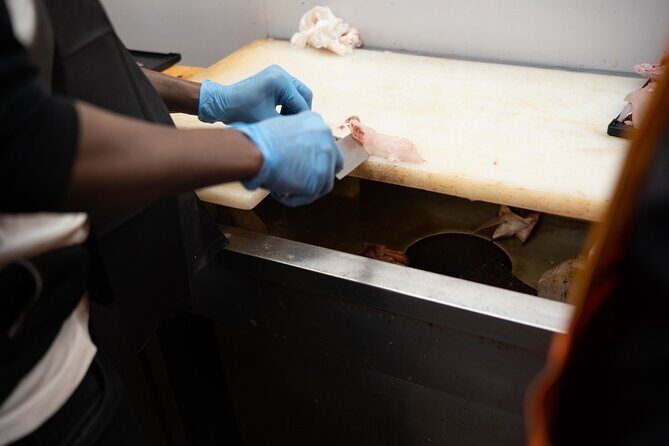
The learning doesn’t stop at “make three pieces.” The instructor teaches how to handle and cut fish for sashimi-style preparation. You’re learning Japanese fish processing techniques—basic but important.
At the end, you eat the fish you prepared. That’s a major part of the value. You don’t just go home with a skill idea. You taste the result while it’s still fresh in your mind.
Some people think sashimi is all about seafood variety. It’s not. The cut, thickness, and how the fish is handled all affect the experience. This workshop keeps the learning loop tight: do the work, then taste what the work created.
In fact, the structure described includes three types of fish being processed, so you get practice across more than one look and texture—not just one “training fish.”






What’s included (and what to expect from the meal)
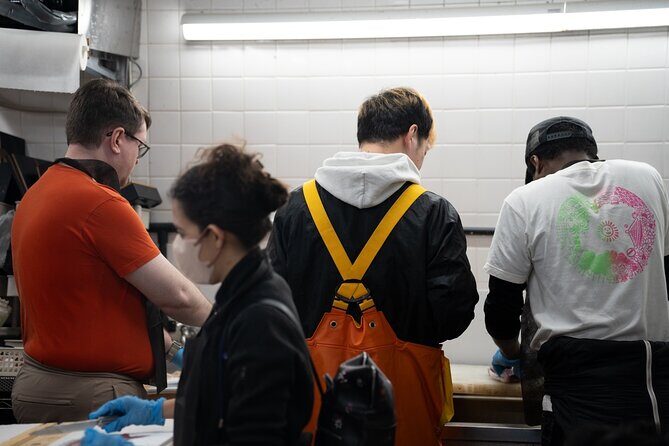
Lunch is included. And yes, it’s the sashimi from your own preparation.
That means two things for you:
- You don’t have to worry about finding a nearby meal spot after class.
- You get to judge your own cuts with your own taste buds, which is the fastest way to learn what feels right.
If you’re concerned about being able to eat what you prepare, don’t be. The workshop is set up so you can eat the food you make—no hunger pangs required.
If you’re picky about raw fish, that’s a bigger question. The class ends with sashimi, so you should be comfortable eating raw fish at least at the sample level.
Price and value: is $98.53 worth it?
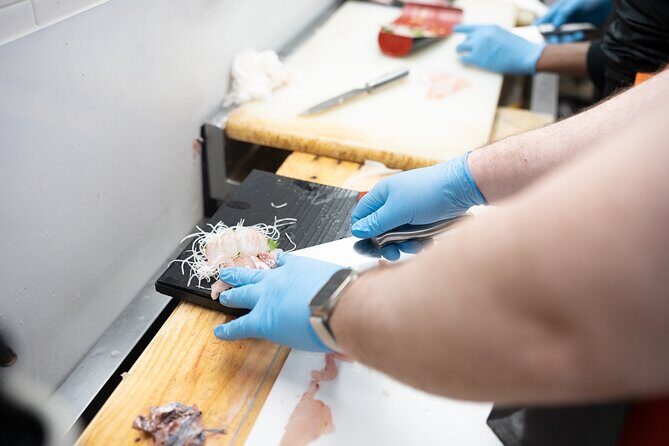
At $98.53 per person for about 2 hours 30 minutes, this isn’t a cheap activity. But it also isn’t just entertainment.
Here’s what you’re paying for:
- Small group instruction (up to 6)
- Hands-on knife work with direct supervision
- A lesson focused on raw fish preparation (not a generic cooking class)
- Lunch included, made from the fish you processed yourself
- A market-based setting, taught by a fish professional connected to long market tradition
If you compare it to buying a bunch of kitchen gear or taking an off-the-shelf cooking class that doesn’t cover raw fish handling in detail, the value starts to make sense. You’re buying time with a teacher and feedback while you learn.
If you’re only looking for a quick “Kyoto food experience” with no interest in learning technique, then you might feel the price more than the skills. But if you like cooking and want practical knife knowledge, this is the kind of class that can pay off for years.
Logistics that actually matter: mobile ticket, start time, and getting there
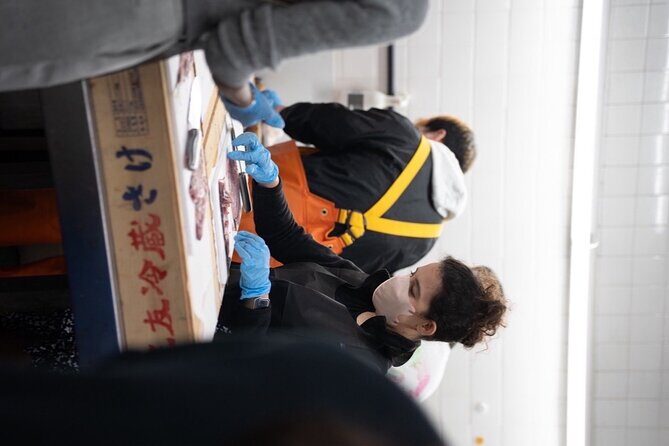
The workshop uses a mobile ticket, which keeps things simple. You don’t need to print anything.
Start time is 10:00 am, and it runs about 2 hours 30 minutes. It ends back at the meeting point, so your day stays easy.
Private transportation is not included. The meeting point is near public transportation, so plan to take transit or walk from nearby.
Also note: confirmation is received at booking, and there’s free cancellation with a cutoff described in the booking rules (covered in the FAQ below).
Who this workshop suits (and who should skip it)
This class is a great fit if you:
- Want a hands-on skill, especially raw fish handling
- Like cooking and want technique you can repeat at home
- Appreciate small group instruction and lots of question time
- Enjoy sashimi and want to understand why fish cutting matters
It might not be the best choice if you:
- Aren’t comfortable eating raw fish (the class ends with sashimi you prepared)
- Have a strong aversion to knives or a fear of close supervision during cutting
- Are traveling with children under 8 (not allowed because they handle knives)
If you’re a food traveler who likes learning, not just consuming, this hits the sweet spot.
My honest booking advice: should you do the fish cutting workshop?
If you’re even a little serious about Japanese food skills, I’d book this. The combination of small group attention and the fact that you cut fish yourself, then eat it, makes it feel like real learning instead of a performance.
Choose it especially if you want knife confidence—this workshop is designed for people who need careful instruction at the start and support when it’s time to cut.
FAQ
FAQ
Where is the meeting point for the fish cutting workshop?
The workshop meets at Kimura Fresh Fish, 483 Nakauoyachō, Nakagyo Ward, Kyoto, 604-8125, Japan.
What time does the class start, and how long is it?
The class starts at 10:00 am and lasts about 2 hours 30 minutes.
Is lunch included?
Yes. Lunch is included, and it’s the sashimi you prepare during the workshop.
How big is the group?
The experience has a maximum of 6 travelers.
Are children allowed?
Children under 8 years old aren’t allowed, since participants handle knives.
What’s included, and is transportation provided?
Lunch is included, but private transportation is not included. The meeting point is near public transportation.