REVIEW · ARASHIYAMA TOURS
Arashiyama Bamboo & “Must See” Gardens with an Amazing Guide
Book on Viator →Operated by TripTomo · Bookable on Viator
Arashiyama looks like a postcard, but meaning matters. This private walk-and-temple visit pairs Togetsukyo Bridge, Tenryu-ji, and the bamboo forest with an expert guide who explains what you’re seeing in clear native English, and it includes the temple/garden admission fees. I love the pace and focus—about three hours—plus the fact that it’s built for your group only, no crowd herding. One consideration: temple and garden paths can include steps and uneven ground, and the tour depends on good weather.
If you want Kyoto that feels calm instead of rushed, this is a smart way to do Arashiyama. You get inside Tenryu-ji (a World Heritage site) for a guided look at the interiors and the famous Zen gardens, then you get a proper bamboo-forest walk for photos and context, not just a quick drive-by. You also get a choice at the end: Okochi Sanso gardens, or Monkey Park if you prefer that view.
The meeting point is easy to find at Tully’s Coffee near Randen Arashiyama Station, and the tour ends back where it starts. Food and drinks aren’t included, so plan to snack on your own or take your time with a break when you have the chance.
In This Review
- Key highlights you’ll feel on the walk
- A short walk through Arashiyama with a guide who explains the details
- Meeting at Tully’s by Randen Arashiyama Station (and how the 3-hour plan flows)
- Togetsukyo Bridge: your first big view, and why timing helps
- Tenryu-ji Temple: Zen gardens explained in plain English
- Bamboo Forest Street: how to enjoy Arashiyama without turning it into a race
- Okochi Sanso gardens or Monkey Park: choosing your ending
- Okochi Sanso Garden
- Monkey Park option
- What the guide really adds (and why everyone talks about him)
- Price and value: what you really pay for at $120 per person
- Who this Arashiyama tour fits best (and who should be careful)
- Final call: should you book this Arashiyama Bamboo and Gardens tour?
- FAQ
- How long is the Arashiyama bamboo and gardens tour?
- Is this tour private?
- Are admission fees included?
- Can I visit Monkey Park instead of Okochi Sanso?
- Is food included?
- What happens if weather is bad?
Key highlights you’ll feel on the walk
- Private, no-other-guests format that lets the guide match your pace and interests
- Tenryu-ji with guided interiors and Zen garden explanations (World Heritage focus)
- Bamboo forest time for photos with real context, not just a stop and go
- Okochi Sanso OR Monkey Park so you can pick the vibe you want
- Admission fees included, which keeps the booking day simple
A short walk through Arashiyama with a guide who explains the details
Arashiyama can be magical, especially early in the day or later when the light changes. The tricky part is that the area can also feel like a blur if you’re only chasing photos. This tour is built for the opposite approach: slow down enough to notice design, layout, and the little cultural cues that make these places feel intentional.
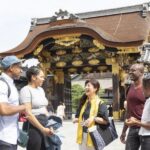
The biggest reason it works is the guide. The tour is led by an expert speaking clear native English, and the focus isn’t only where to stand for a picture. The guide points out what’s going on in and around the gardens—why certain spaces feel calm, how Japanese gardening and architecture are meant to be experienced, and what to look for when you’re walking the grounds.
It also helps that this is a private tour. You’re not negotiating your day around a large group’s speed, bathroom stops, or “everyone move” energy. If you’re the type who likes questions, you’ll appreciate the patient approach described in the tour experience. And if you’d rather just listen and take it in, that works too.
You can also read our reviews of more guided tours in Kyoto
Meeting at Tully’s by Randen Arashiyama Station (and how the 3-hour plan flows)
This starts at Tully’s Coffee at the Randen Arashiyama Station area (Sagatenryūji Tsukurimichichō, Ukyo Ward). It’s a practical meeting point if you’re using public transportation, and it’s close enough that you can get there without turning your morning into an extra sightseeing event.
The tour runs about 3 hours, with short guided stops and walking sections. That duration matters. You get real time at the big-ticket sites—especially Tenryu-ji—without losing half your day to transit and waiting.
You also have flexibility on timing. Morning or afternoon start times are available so you can fit it around your Kyoto plans. The tour ends back at the meeting point, which is a relief in a neighborhood that can confuse your sense of direction when you’re tired and holding a camera.
One small but important planning note: food and drinks aren’t included. That doesn’t mean you can’t pause for a snack—it just means you should bring your own options (or plan a stop nearby) so you’re not scanning menus when you’d rather be resting.
Togetsukyo Bridge: your first big view, and why timing helps
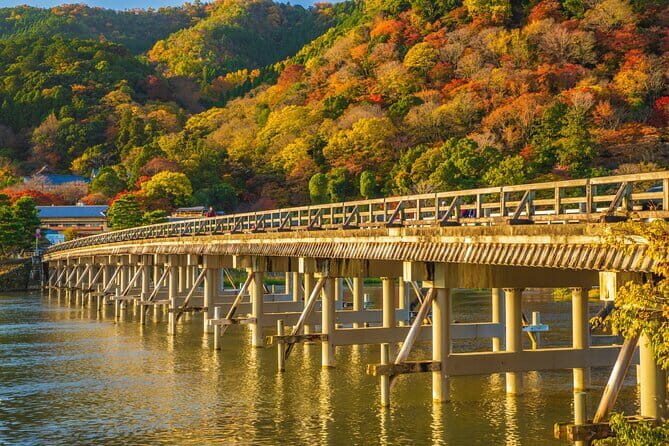
The first stop is the famous Togetsukyo Bridge—one of the classic Arashiyama scenes. You’ll pause there for about 30 minutes, and you can use that time for two things: photos and orientation.
Why orientation? Arashiyama has a way of looking symmetrical on postcards but feels more complex in real life. The bridge acts like your visual anchor. From there, you can start to understand where the river sits, how the gardens and temple spaces open up beyond the bridge, and what direction your later walks will take.
For photos, the practical tip is to watch the light rather than the crowd. Even if people are around, positioning yourself by the waterline and adjusting your angle can give you calmer compositions. Since the tour is structured, you don’t have to rush to make the “perfect shot”—you can take a couple tries, then move on.
Tenryu-ji Temple: Zen gardens explained in plain English
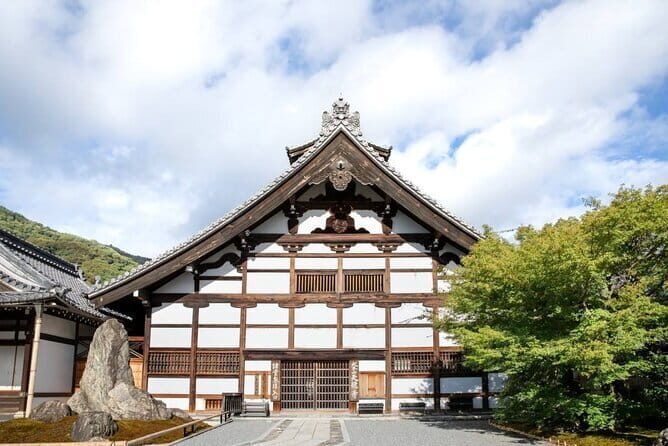
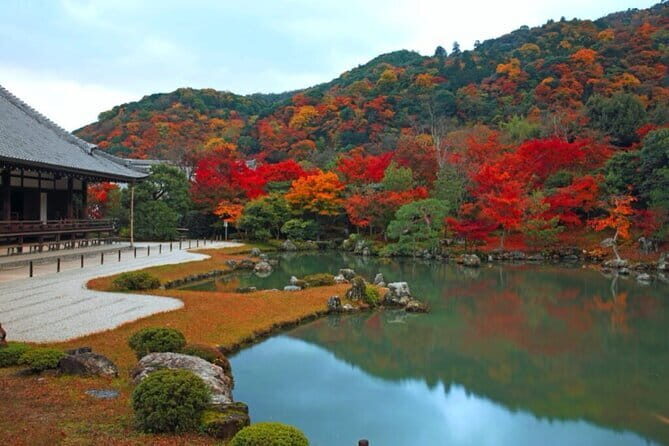
Tenryu-ji is the heart of this outing. You enter the World Heritage Tenryu-ji Temple and spend about one hour there with the guide. Admission is included, and the guide focuses on two big things: the interiors and the famous Zen gardens.
What you should expect at Tenryu-ji is not just “look at the garden.” The guide helps you read the space. Zen gardens often feel like they’re about simplicity, but that’s not the same as being random. You’ll get help noticing how the garden is composed, where sightlines take you, and what details carry meaning.
The interior time is especially valuable if you’re used to temples that are mostly exterior viewing. Here, you’re guided through what you might otherwise skip. If you’ve ever felt like you’re walking through a gorgeous place without understanding it, this is the part that fixes that problem.
A practical consideration: temple grounds include walking and there may be graded sections and stone steps in some areas. The tour isn’t described as a smooth flat stroll. If you have mobility limitations, it’s smart to mention that early so the guide can tailor your route and timing as much as possible.
Bamboo Forest Street: how to enjoy Arashiyama without turning it into a race
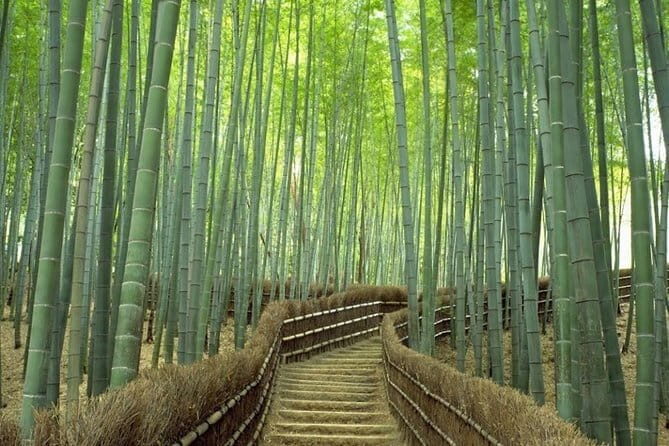
After Tenryu-ji, you’ll walk to the bamboo forest street for about 30 minutes. This is the famous Arashiyama bamboo grove area—one of those places where the photos are easy, but the experience can be a little one-note if you don’t slow down.
This stop works better when you treat it like a walking moment, not a photo sprint. The guide helps you understand what you’re seeing, and you can take your time for pictures while also watching how the area feels at ground level. Bamboo doesn’t just look tall; it changes sound, shade, and the way the path frames the scenery.
Photo strategy: don’t only aim straight down the main corridor. Try a few angles from different spots along the path. Even within a short time window, small changes can make your photos feel more personal and less generic.
The other practical benefit of having a guide here is traffic management. You don’t have to figure out the best way to flow through the area while also reading signs. The tour’s structure keeps the stop productive.

Okochi Sanso gardens or Monkey Park: choosing your ending
The final attraction is where you get to steer your tour. You can go to Okochi Sanso Garden or swap to Monkey Park (you decide at the start of the tour).
Okochi Sanso Garden
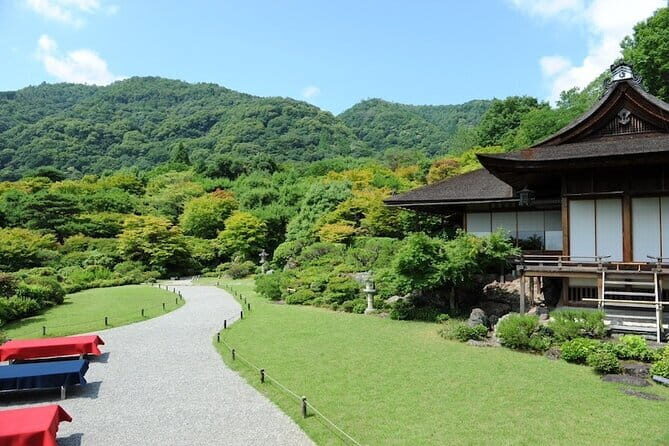
Okochi Sanso is about resting and appreciating the garden setting. You’ll spend about one hour here, and the guide explains details about Japanese gardening and architecture. The tone at this point tends to feel slower—less “get the photo and go,” more “sit, look, and understand.”
You’ll also have the chance to take a break, and the description specifically mentions green tea. Since food and drinks aren’t included, treat that as an optional extra rather than a guarantee you won’t pay for anything.
Monkey Park option
If you prefer Monkey Park, the tour can be adjusted. This choice is great if you’d rather end with a viewpoint vibe than a garden-architecture focus. The key advantage for you is that the tour isn’t locked into one style. You’re not stuck with only the most famous option—you can pick what fits your interests.
Practical thought: choose based on what you want your last hour to feel like. Gardens are calmer and more design-focused. Monkey Park leans toward views and wildlife atmosphere. If your feet are tired, you might also want to consider which option involves the kind of walking you’re comfortable with.
What the guide really adds (and why everyone talks about him)
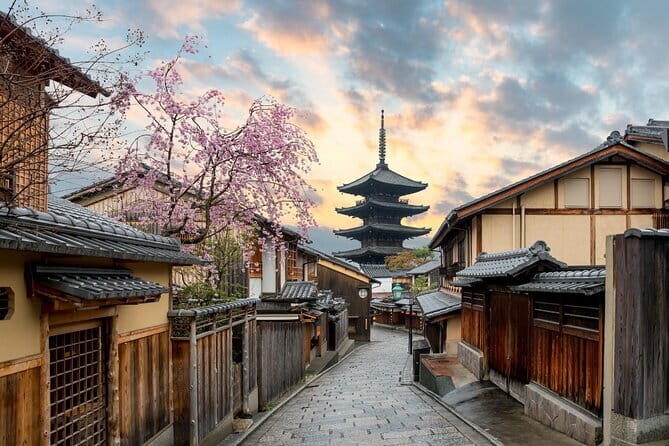
The reviews emphasize the same thing: the guide is patient, knowledgeable about the area, and good at explaining culture without sounding like a textbook. That matters in Kyoto, where it’s easy to feel overwhelmed by the number of temples and the amount of signage.
One standout is the guide’s calm demeanor—described as zen-like, which is the best kind of match for Arashiyama. When you feel rushed or talked over, temples stop feeling spiritual and start feeling like a checklist. Here, the guide seems to slow the experience down.
Another advantage is personalization. Even within a fixed route, this kind of guide can adjust how long you linger, what you focus on, and how you connect Japanese culture to what you already know. One review specifically notes tailoring for interests like architecture and landscapes, and another mentions support for physical limitations with graded sections and ancient stone steps. That tells you this tour isn’t just scripted.
My practical advice: show up with at least one “what I’m curious about” idea. It could be gardens, temple design, or even just how to spot what’s intentional in Japanese scenery. The more you share, the more you’ll get out of the guide’s explanations.
Price and value: what you really pay for at $120 per person
At $120 per person, this tour isn’t the cheapest way to do Arashiyama. But it also avoids the two common hidden costs: “pay entry fees separately” and “waste time figuring things out alone.”
Here’s what your money covers:
- An expert guide speaking clear native English
- Entry to Tenryu-ji and the garden stop (Okochi Sanso OR Monkey Park)
- A private format with no other guests
- A mobile ticket for the experience
Value is about time, clarity, and friction. You’re saving time by not juggling multiple ticket purchases and guessing what’s worth noticing. You’re also saving mental energy, because the guide gives context right where you’re standing.
For families and groups, the private format can be especially worth it if you’re splitting the total across people and you’d rather avoid negotiating around a standard group pace. For solo travelers, it can feel like a splurge—but if you want your sightseeing to make sense, the included guide time is often the best “memory per dollar” you can buy in Kyoto.
Who this Arashiyama tour fits best (and who should be careful)
This tour is a strong match if you want:
- A private Kyoto experience without the stress of managing a crowd
- A guided look at Tenryu-ji beyond quick exterior sightseeing
- Choice at the end: Okochi Sanso if you want garden time, or Monkey Park if you want a different kind of payoff
You should be careful if:
- Your mobility is limited. Some parts involve graded sections and ancient stone steps.
- Your schedule is tight during bad weather. This experience requires good weather, and if it’s canceled due to poor conditions, you’ll be offered a different date or a full refund.
If you love walking but also hate “stand in line and guess what to look at,” you’ll likely find the route satisfying. If you’re looking for a purely relaxed stroll with no steps at all, this might require a bit of planning with the guide before you go.
Final call: should you book this Arashiyama Bamboo and Gardens tour?
I’d book it if you want Arashiyama to feel understandable, not just scenic. The included admission fees, the private format, and the guided focus on Tenryu-ji’s interiors and Zen gardens add up to a better experience than doing the stops solo with only a map.
Skip it only if your priority is maximum free time at the bamboo forest alone, or if you know you can’t handle steps/uneven ground. Otherwise, this is a well-sized, three-hour plan that hits the big Arashiyama highlights while keeping the experience calm and guided.
FAQ
How long is the Arashiyama bamboo and gardens tour?
It’s about 3 hours.
Is this tour private?
Yes. It’s a private tour, and only your group participates (no other guests).
Are admission fees included?
Yes. Admission fees are included for Tenryu-ji Temple and the gardens you choose (Okochi Sanso or Monkey Park).
Can I visit Monkey Park instead of Okochi Sanso?
Yes. Monkey Park is an optional swap. Let the guide know at the start of the tour.
Is food included?
No. Food and drinks are not included.
What happens if weather is bad?
This experience requires good weather. If it’s canceled due to poor weather, you’ll be offered a different date or a full refund.