REVIEW · LUNCH EXPERIENCES
Kyoto: Golden Route Sightseeing Tour via Bus with Lunch
Book on GetYourGuide →Operated by H.I.S. Co Ltd(TIC) · Bookable on GetYourGuide
Kyoto is one of those cities where planning can feel like homework. This bus-based Golden Route tour keeps things moving while you hit the big names, plus a stop for traditional crafts. I especially like the English-speaking guide who helps you make choices on what to focus on once you’re at each site, and I also like that you’re traveling in an air-conditioned coach between long, walking-heavy stops. The main drawback: this is still a lot of walking, so it’s not a good fit if your legs tire quickly.
You’ll get a classic Kyoto mix: red torii gates at Fushimi Inari, the famous stage views at Kiyomizu-dera, the calm green break at Arashiyama’s bamboo area, and the shine-and-reflection moment at Kinkaku-ji (Golden Pavilion). Add in a included Kyoto-style buffet lunch and temple entrance fees, and the tour starts to feel like paying for structure, not just transportation.
One more thing to consider: it’s a shared tour, so you’ll follow a set schedule and be in a group setting at the most popular spots. If you prefer total freedom to wander without timing pressure, you may find a guided route a bit limiting.
In This Review
- Quick hits you’ll care about
- Why a bus-based Kyoto Golden Route is a smart way to start
- Starting your day at Kyoto Station, then heading to Kiyomizudera
- Fushimi Inari: the torii climb you’ll feel in your calves
- The bus transfer and lunch: how the schedule protects your energy
- Arashiyama in two parts: Bamboo Grove and Tenryu-ji
- Kinkaku-ji (Golden Pavilion) and a craft stop with real souvenir value
- Price and value: what $70 covers (and why it can be worth it)
- Who this Kyoto bus tour suits best (and who should skip it)
- A few practical tips to make the day smoother
- Should you book this Kyoto Golden Route sightseeing tour?
- FAQ
- What’s included in the tour price?
- How long is the tour?
- Where do I meet the tour?
- Is lunch provided?
- Do I need to buy temple entrance tickets?
- Is this a private tour?
- How much walking is involved?
- Is it wheelchair accessible?
Quick hits you’ll care about
- English guide, group format: You’ll learn your way around without having to figure out every step on your own.
- Included Kyoto-style buffet lunch: A built-in meal means fewer scramble-moments between temples.
- Fushimi Inari torii walk: Thousands of vermilion gates create a long, photo-friendly path up the sacred mountain.
- Arashiyama calm with Tenryu-ji: You get the bamboo atmosphere plus a UNESCO Zen garden visit.
- Kinkaku-ji plus time at the craft center: The afternoon includes both a major sight and practical souvenir browsing.
- Temple entrance fees are covered: Kiyomizu-dera, Tenryu-ji, and Kinkaku-ji admissions are part of the package.
Why a bus-based Kyoto Golden Route is a smart way to start
Kyoto spreads out more than people expect. Even if you’re staying near a central area, day-long temple hopping can turn into lots of train transfers, walking to/from stations, and time lost to transit lines. This tour solves that problem with an air-conditioned bus and a guided route that stitches together Kyoto’s best-known highlights across multiple districts.
For me, the value is the balance: you’re not just crammed into a “hit-and-run” parade. You get meaningful time at each major stop, especially at Kiyomizu-dera and Fushimi Inari, where the experience is very much about wandering. And because it’s a group tour with a live English guide, you’re not stuck guessing which entry points make the most sense or how to pace yourself.
Also, if you’re traveling with limited patience for ticket counters and English-only signage, having key entrance fees included helps a lot. You still need to manage the walking (this is not a sit-everywhere tour), but you can focus on the sights instead of logistics.
You can also read our reviews of more tours and experiences in Kyoto


Starting your day at Kyoto Station, then heading to Kiyomizudera
The tour meets at Kyoto Station, Hachijo Exit Tourist Bus Parking Area (in front of KYOTO AVANTI). You’ll receive the exact meeting details by email ahead of time, so it’s worth checking that message when it arrives. From there, the plan begins with Kiyomizudera for about 70 minutes.
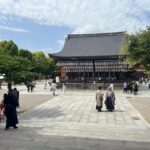
Kiyomizudera is famous for its wooden stage and the sweeping city views from that elevated viewpoint. If you’re visiting during cherry blossom season or autumn leaves season, the views tend to be especially memorable, but you don’t have to be there on those exact dates to appreciate the drama of the viewpoint. Even outside peak seasons, this is one of those places where the main “wow” comes from the combination of temple architecture and the sightlines down toward the city.
Practical tip: this is one of Kyoto’s popular crowd magnets, so keep your expectations realistic. You’ll do better if you treat it like an experience you enter slowly—take a minute to orient yourself, enjoy the stage view, then move on before your energy drains.
Fushimi Inari: the torii climb you’ll feel in your calves
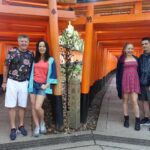
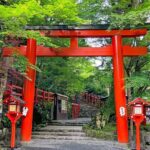
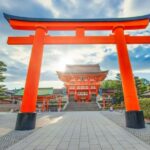
Next comes Fushimi Inari Taisha, with around 70 minutes to explore. This is the torii-gate experience: thousands of vermilion torii gates form a path that climbs the sacred mountain. The scale is what hits you first. Even when the crowd moves quickly, the gates keep extending upward, and you start to feel like you’re walking into a long story rather than just taking pictures.
This stop works well on a guided route because the guide helps you manage the flow—where to start, how to keep moving, and how to make the time count. One of the best parts of tours like this is that you often get options: if you want to chase the deeper sections of the shrine walk, you can. If you’d rather stick to the most iconic gate corridors for photos, you can do that too.
Consideration: there’s real walking here. The torii trail rises, and you’ll be on your feet for a good stretch even if you don’t go to the farthest points. Wear comfortable shoes with grip. This is not a place for slick soles.
The bus transfer and lunch: how the schedule protects your energy
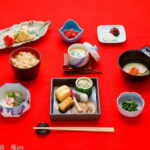
Between major walking stops, you’ll take a bus/coach ride (about 50 minutes) and then you’ll have lunch at a local restaurant for about 50 minutes. Lunch is included as a Kyoto-style buffet.
This is a key part of the tour’s design: the buffet isn’t just about convenience. It gives you a stable “reset” point in the middle of a packed day. You can refuel, cool off, and get out of the flow of temples for a bit.
A practical note that matters: the tour says you shouldn’t bring your own food and drinks into the restaurant. So if you like carrying snacks, plan to use them outside the meal location or skip them altogether and rely on the buffet.
If you’re sensitive to crowds, lunch time can also be your breather. Try to eat steadily rather than rushing—especially if you want to keep your energy up for the afternoon walking.
Arashiyama in two parts: Bamboo Grove and Tenryu-ji
After lunch, the tour reaches Arashiyama for about two hours of sightseeing. This is where Kyoto changes mood. You’re still in a tourist-famous area, but Arashiyama gives you those calmer, nature-forward moments—especially around the bamboo.
The Bamboo Grove is the star. Expect a quiet, green atmosphere with the sound of leaves rustling as you walk. In practice, that means you’ll want to slow down and enjoy the sensory part of the experience, not just grab shots. Bamboo paths can be narrow and crowded, so patience pays off.
From there, you also visit Tenryu-ji, a Zen temple in the Arashiyama area and a UNESCO World Heritage Site. Tenryu-ji is known for its gardens and peaceful atmosphere. Even if you’ve seen photos before, there’s something about experiencing the scale in person: the gardens are designed to be looked at, not raced through.
How the timing works: the two-hour Arashiyama block has to cover both bamboo time and temple time. That means you should expect a paced visit, not a long, slow wander. Go in with a mindset of “enough time to appreciate,” not “I’ll study every detail.”
Best for: this section is ideal when you want a break from the heavier temple crowd energy at the earlier stops.


Kinkaku-ji (Golden Pavilion) and a craft stop with real souvenir value
In the afternoon, the tour visits Kinkaku-ji (Golden Pavilion) for about 45 minutes. The sight is famous for a reason: a striking gold-toned pavilion surrounded by picturesque gardens and reflecting ponds. It’s the kind of place where the architecture and the water effects combine into a built-in photo moment.
Forty-five minutes can sound short until you remember how this works at Kinkaku-ji. You’ll spend part of the time moving through viewing areas, then part of the time waiting for the angle that shows the pavilion and reflections best. This isn’t a “walk past it and leave” site, but it also doesn’t require a half-day.
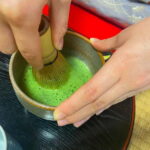
After Kinkaku-ji, you’ll have time at a visitor center (around 30 minutes). That matches the tour’s craft focus: the Kyoto Handicraft Center is included as a highlight, with a chance to learn about traditional Japanese crafts and shop for souvenirs tied to Kyoto’s artistic heritage. This is one of the most practical differences between a typical temple-only day and a tour that feels more like a cultural sampling.
My advice: use this stop with intention. If you want gifts, make quick decisions rather than drifting. If you want to browse, set a limit for yourself—because it’s easy to lose track of time while comparing items and techniques.
Price and value: what $70 covers (and why it can be worth it)
At about $70 per person, this tour isn’t trying to be the cheapest way to see Kyoto. But when I look at value, I see several things that justify the cost if you’re the type of traveler who wants structure.
Here’s what you get for your money:
- An English guide (real-time help beats guessing).
- Air-conditioned bus transport between districts.
- Lunch included as a Kyoto-style buffet.
- Entrance fees included for Kiyomizudera, Tenryu-ji, and Kinkaku-ji.
Those temple entrance fees and lunch alone can add up fast if you were doing everything independently. And the guide saves you time and stress in crowded areas like Fushimi Inari and Kiyomizudera, where knowing how to move matters.
So the cost makes more sense if you:
- want key sights in one organized day,
- like the comfort of the bus,
- prefer having lunch handled,
- don’t want to coordinate tickets and routes between far-apart neighborhoods.
The price can feel less satisfying if you already know the route well and you’re comfortable skipping guided structure.
Who this Kyoto bus tour suits best (and who should skip it)
This tour is a strong match if you want a guided highlights circuit without overthinking logistics. It’s also a good fit if you:
- enjoy temple and shrine walking but want it organized,
- like the idea of including a craft-center stop for souvenirs,
- appreciate built-in meal timing,
- prefer an English-speaking guide rather than self-guiding through crowded spots.
It’s not a great match if you:
- have trouble walking or hate long stretches on your feet (this tour involves a lot of walking),
- need wheelchair access (the tour is not wheelchair accessible),
- are pregnant (not suitable),
- plan to bring large luggage (large luggage isn’t allowed on the tour).
Also, it’s not a private tour. That means you’re sharing the route and timing with other people, which can be a plus for some and a mismatch for others.
A few practical tips to make the day smoother
- Shoes matter. Between Fushimi Inari and the other walking sections, comfortable footwear is non-negotiable.
- Pack light. Large luggage isn’t allowed, and you’ll be moving through crowded areas and bus transfers.
- Plan for crowds. Popular sites can be busy, so be patient and aim to enjoy the experience rather than trying to “win” the photo.
- Follow lunch rules. Don’t bring your own food and drinks into the restaurant.
If you want to maximize your enjoyment, go into each stop with a simple goal: get the stage view at Kiyomizudera, enjoy the torii-walk rhythm at Fushimi Inari, slow down inside Arashiyama’s bamboo, and then appreciate the pavilion-and-pond effect at Kinkaku-ji.
Should you book this Kyoto Golden Route sightseeing tour?
Book it if you want a guided, bus-supported way to cover Kyoto’s most famous highlights in one day, with lunch handled and several key temple entrances included. It’s especially appealing if you like the idea of getting help from an English guide and you’d rather spend your time looking at Kyoto than managing tickets and transit.
Skip or consider another option if your main goal is slow, independent wandering, or if walking long distances is difficult for you. This tour is designed for momentum, not for extended breaks at every stop.
If you’re a first-time Kyoto visitor who likes a structured plan (with just enough flexibility to focus where you want), this is a solid pick for a value-focused day.
FAQ
What’s included in the tour price?
The tour includes an English guide, an air-conditioned bus, lunch (Kyoto-style buffet lunch), entrance fees for Kiyomizudera Temple, Kinkaku-ji (Golden Pavilion), and Tenryuji Temple.
How long is the tour?
The duration ranges from 260 to 570 minutes, depending on the scheduled time you book.
Where do I meet the tour?
You meet at Kyoto Station, Hachijo Exit Tourist Bus Parking Area (in front of KYOTO AVANTI). You’ll be told the exact meeting place by email about 7 days before.
Is lunch provided?
Yes. Lunch is included as a Kyoto-style buffet, and the lunch time is about 50 minutes.
Do I need to buy temple entrance tickets?
No for the included sites. Entrance fees for Kiyomizudera, Tenryuji, and Kinkaku-ji are covered.
Is this a private tour?
No. It’s not a private tour, and you’ll be part of a group with other guests.
How much walking is involved?
This tour involves a lot of walking, and it isn’t recommended if you have trouble walking.
Is it wheelchair accessible?
No. The tour is not wheelchair accessible, and it’s also not suitable for pregnant women.