Gion has a way of looking like a postcard. This short tour turns that feeling into something you can actually understand, starting at the riverside Gion Shirakawa and ending in the geisha district lanes where evening life starts to show.
I really like two parts in particular: the chance to catch sight of a geisha, and the way the route mixes major stops with quiet backstreets. I also appreciate that guides such as Mai and Dan tend to explain what you’re looking at, not just where to stand.
One thing to plan for: this is still a walking tour with uneven streets and temple steps, so it’s not a great fit if you have mobility limitations or use a wheelchair.
In This Review
- Key moments that make this tour worth your time
- Start smart: how the tour sets up the best Gion experience
- Meeting point at Macdonald Shijo Ohashi: easy, but go early
- Gion Shirakawa Canal: the postcard view that actually means something
- Tatsumi-jinja and Yasaka Shrine: Kyoto’s spiritual spine in walking distance
- Tatsumi-jinja Shrine
- Yasaka Shrine
- Edo-period townhouses and quiet lanes: what you’re really learning
- Ninenzaka and Hōkan-ji: old stone steps, real temple rules
- Ninenzaka
- Hōkan-ji Temple
- Yasui Kompira-Gu Shrine and the run toward Hanamikoji-dori
- Yasui Kompira-Gu Shrine
- Hanamikoji-dori
- Why the guides make or break this tour (and which names to watch for)
- Pace, rain, and photos: what to expect so you don’t get caught off guard
- Price and value: $23 for a tight slice of Kyoto culture
- Who should book this tour, and who should skip it
- Quick checklist before you go
- Should you book this Gion geisha culture walking tour?
- FAQ
- How long is the tour?
- Where do I meet the guide?
- Do I need to speak Japanese?
- What are the main places you visit?
- Is photography allowed?
- Does the tour run in bad weather?
- What should I bring with me?
- Is the tour suitable for wheelchair users or mobility impairments?
- Is there a chance to see a geisha?
Key moments that make this tour worth your time
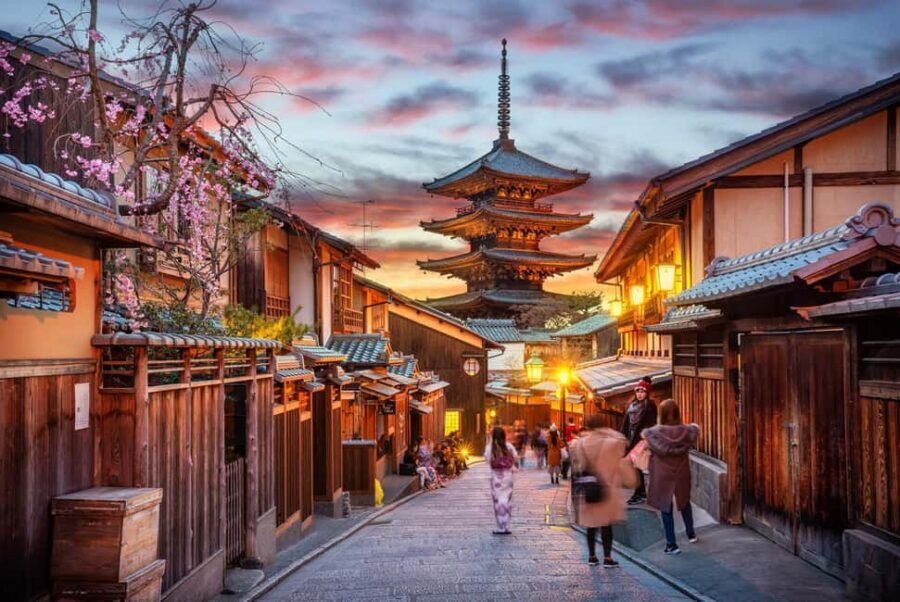
- Riverside start at Gion Shirakawa: willow trees, tea houses, and stone paths that set the mood fast
- Tatsumi-jinja Shrine: a chance to see a deeply local landmark as you move through the neighborhood
- Yasaka Shrine stop: a major Kyoto shrine area that helps you connect culture and daily life
- Walk through Ninenzaka and temple streets: classic historic lanes where the city’s old layout still matters
- Hanamikoji-dori at the end: a smart finish in the geisha district where sightings are possible
- English guide storytelling: several guides are noted for clear answers and pacing that keeps things fun
Start smart: how the tour sets up the best Gion experience
This is a focused, two-hour walking tour built for people who want more than a quick photo loop. You’re not racing across Kyoto trying to check boxes. Instead, you’re moving through a small slice of Gion where the scenery, the shrines, and the traditional district layout all connect.
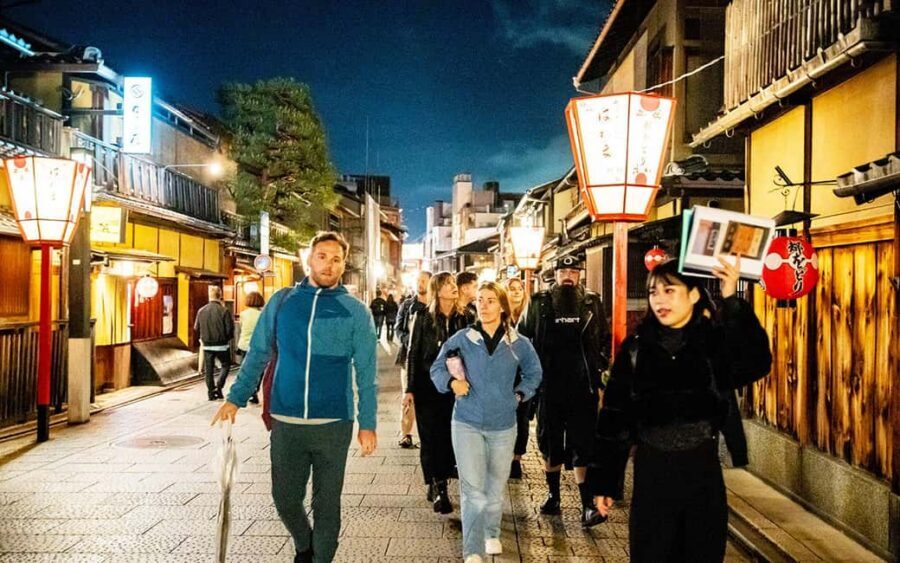
A big part of the value is the timing. The tour ends on Hanamikoji-dori, the core geisha-district street. That’s exactly where you may catch a glimpse of a geisha heading to an evening engagement. If you can choose a later departure, you often get calmer lanes and a more natural feel to the neighborhood.
You can also read our reviews of more tours and experiences in Kyoto.



Meeting point at Macdonald Shijo Ohashi: easy, but go early
You meet at the Macdonald 四条大橋店 (Macdonald Shijo Ohashi), at 105-1 Hashimoto-cho, Shimogyo-ku, Kyoto-shi, Kyoto. There will be a guide holding a sign that says [Local Guide Stars], waiting at the side of the building because the front gets very busy.
Practical tip: arrive a few minutes early and position yourself at the side entrance where the guide stands. Kyoto crowds can make a “where are you” moment surprisingly stressful, especially before a walking tour.
Gion Shirakawa Canal: the postcard view that actually means something
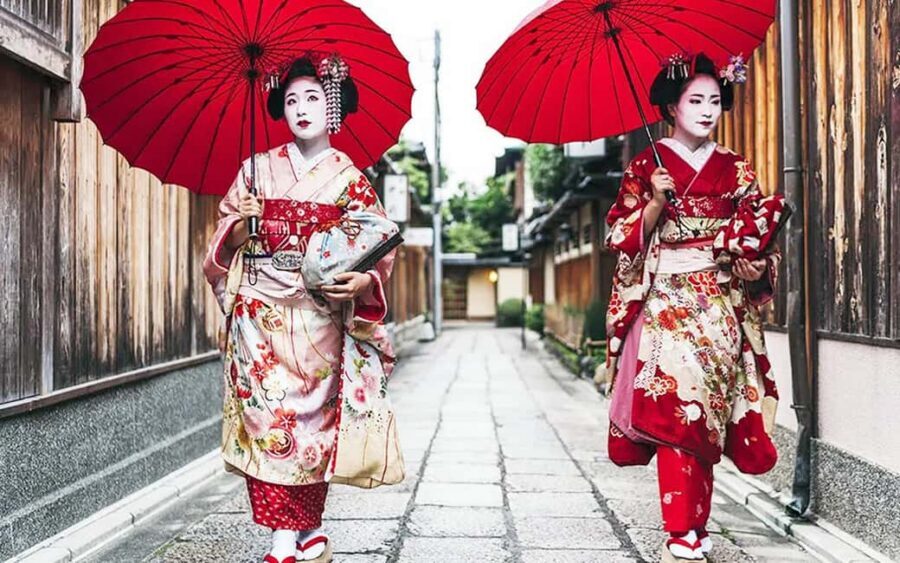
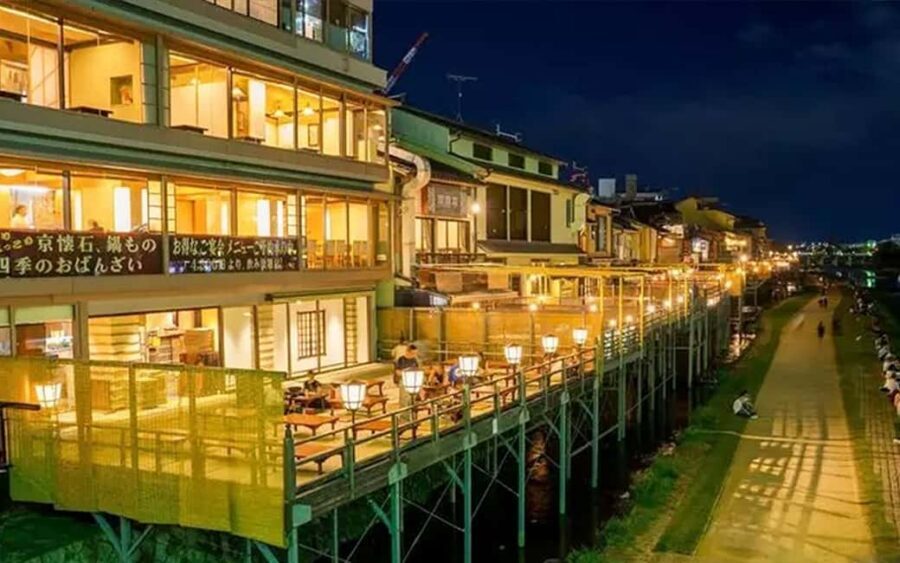
The tour begins in Gion Shirakawa, a scenic riverside lined with willows, traditional tea houses, and stone-paved paths. This isn’t just pretty scenery. It’s a good place to start because it visually teaches you what Gion is: a district shaped by water, craft culture, and careful streetscapes.
As you walk, you’ll get photo stops and guided explanations along the way. Even if you’re not obsessed with architecture, the canal area helps you understand the mood the rest of the tour is chasing. You’ll notice how the streets feel designed for a slower rhythm, not a sprint.
Tatsumi-jinja and Yasaka Shrine: Kyoto’s spiritual spine in walking distance
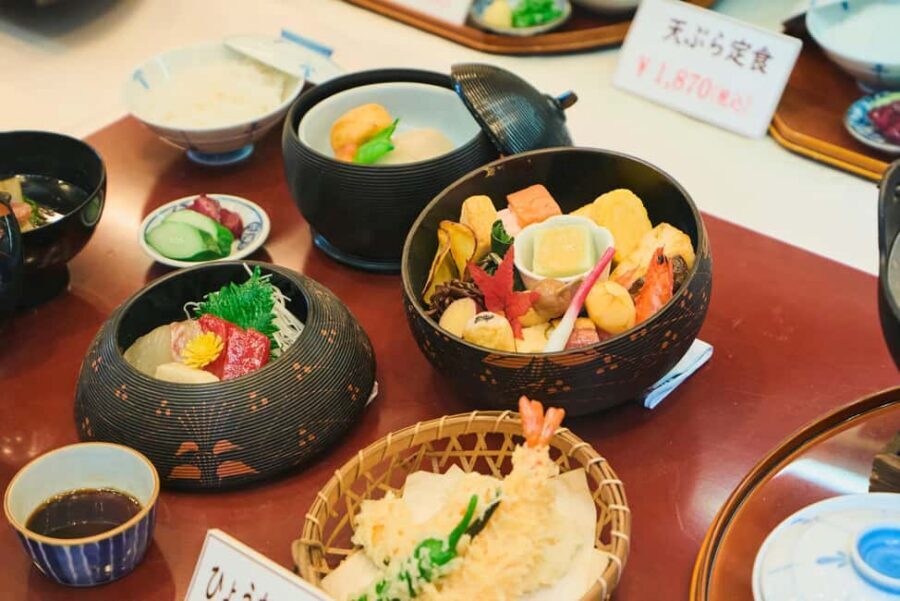
Next come the shrine stops, and this is where the tour gives you context you can’t easily pick up from a guidebook alone.
Tatsumi-jinja Shrine
At Tatsumi-jinja Shrine, you’ll pause, learn, and walk on. Shrine areas in Kyoto are often where you see the layers of daily devotion and local tradition in the same space. The visit also breaks up the walking with something meaningful, not just a scenery stop.



Yasaka Shrine
Then you move to Yasaka Shrine, one of the best-known shrine areas in Kyoto. Even if you’ve seen pictures before, standing there with a guide changes the experience. You start connecting the shrine setting to the surrounding neighborhoods and the way people move through the district.
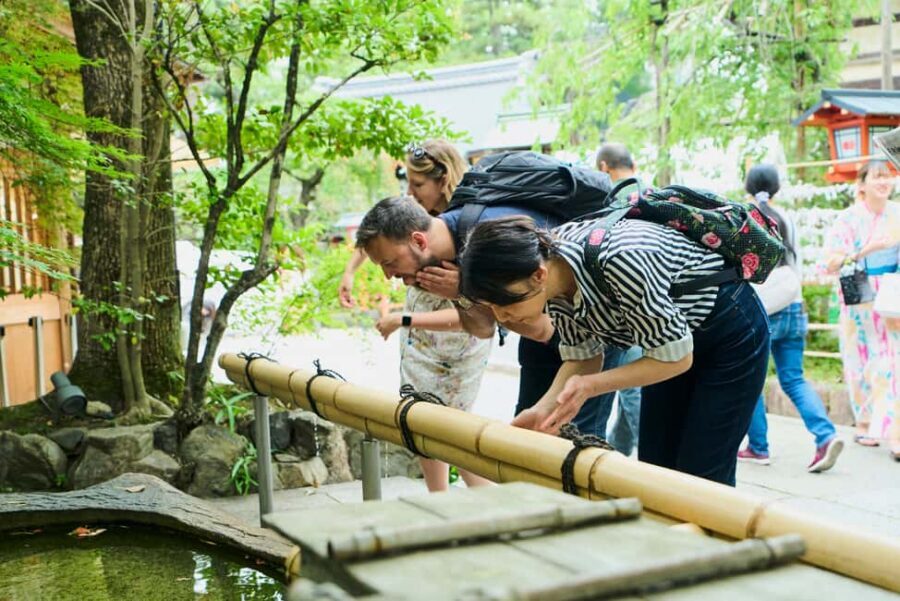
Practical note: photography is allowed, but no flash photography inside temples. So keep your flash off and use normal camera settings or your phone’s low-light mode.
Edo-period townhouses and quiet lanes: what you’re really learning
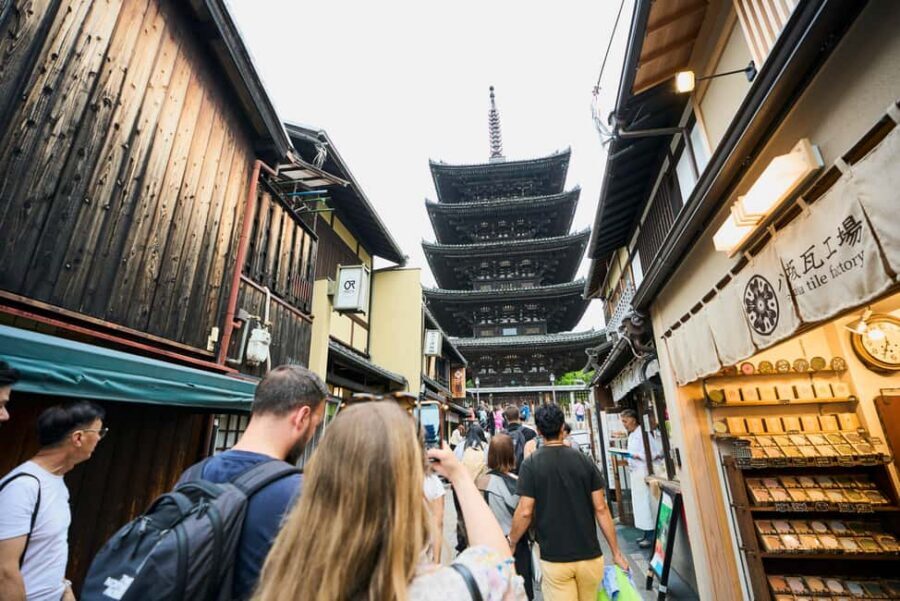
A huge part of the tour’s appeal is the mix of well-known sights and quieter lanes. You’ll pass areas with old wooden townhouses that reflect the Edo-period feel of Kyoto streets. That matters because Gion isn’t only about a single famous street. It’s about the network of smaller lanes that shaped daily life.
In the quieter backstreets, the city feels like it has edges that don’t get scraped away by crowds. This is where the tour helps you slow down. Your guide’s commentary tends to turn simple street views into something you can read: why certain buildings face the way they do, how the lanes feel intimate, and why the neighborhood looks the way it does.
This is also where you’re most likely to feel the tour’s main promise: exploring Gion in a way that feels respectful of the district, not like a theme park.
Ninenzaka and Hōkan-ji: old stone steps, real temple rules
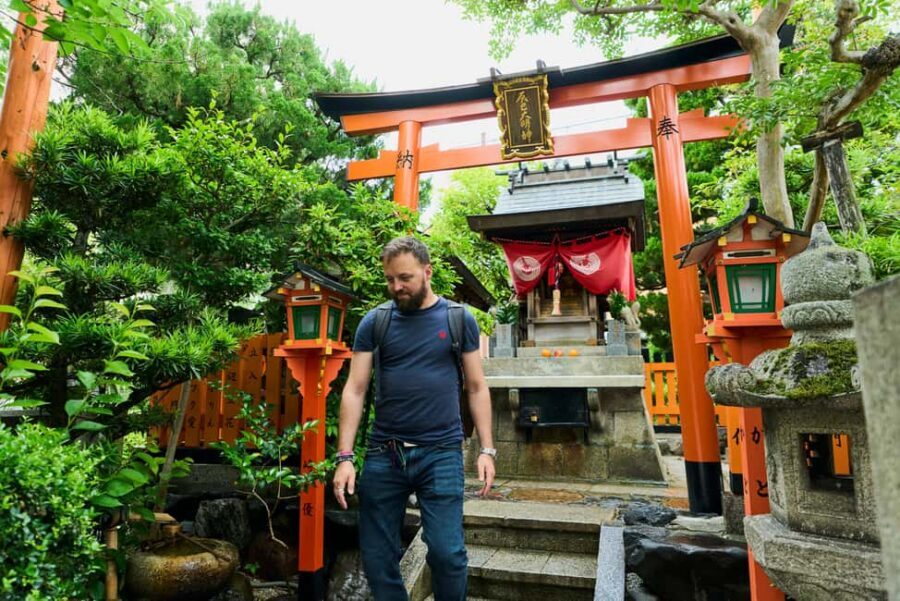
From the shrine area, the walk brings you through streets that look like they belong in old Kyoto postcards.
Ninenzaka
Ninenzaka is a classic historic lane stop. You’ll have time for photos and guided context as you move along. The reason this stop works within a short tour is simple: it visually links the shrine-and-district sections to the broader traditional Kyoto atmosphere.
Hōkan-ji Temple
At Hōkan-ji Temple, you’ll again get a photo stop and guided walk-through time. This is a key moment because temples have rules, and those rules shape your experience. Remember the no flash instruction inside temples. If you’re using a phone, turn off any flashlight effects before you enter indoor areas.
Also bring comfortable shoes. Even in good weather, Kyoto’s old-street surfaces and temple steps can feel more tiring than you’d expect.
Yasui Kompira-Gu Shrine and the run toward Hanamikoji-dori
After Hōkan-ji, the tour keeps moving toward the core geisha district.
Yasui Kompira-Gu Shrine
You’ll visit Yasui Kompira-Gu Shrine, where the walk includes guided learning and time to look around. This stop adds variety: you get a different shrine setting rather than repeating the same style of landmark.
Hanamikoji-dori
Finally, the tour ends on Hanamikoji-dori. This is the heart of the geisha district, and it’s specifically where you may catch a glimpse of a geisha on her way to an evening engagement.
Now, a reality check that’s worth hearing: sightings aren’t guaranteed. What the tour does better than a DIY walk is maximizing your odds by getting you into the right places in an orderly way, with a guide who knows how to keep the group moving respectfully.
You’ll also learn about geisha training, graceful dances, and the craftsmanship behind kimonos and hairstyles. That background turns what might look like a quick visual moment into something you can better appreciate, even if you only spot a glimpse.
Why the guides make or break this tour (and which names to watch for)
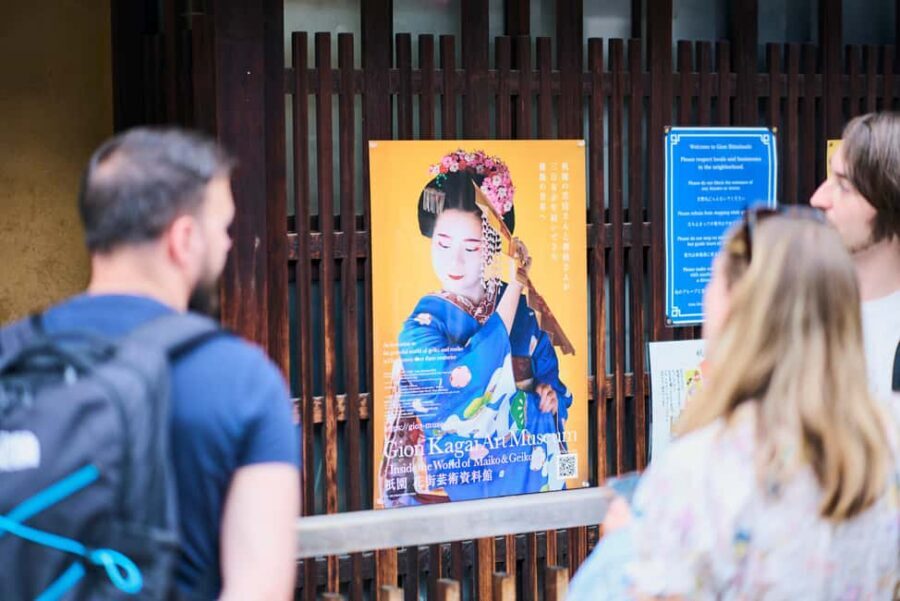
A short walking tour lives and dies by the guide’s pacing and clarity. The guide lineup here seems to be a big strength, based on repeated praise in the best reviews.
You’ll see names such as Isako, Mai, Oliver, Dan, Wajid, Uta, Takumi, and Alex. The common thread is how they explain things in a way that keeps you engaged while also answering questions. Several guides are also noted for making the tour feel fun, not stiff, and for giving practical extras like restaurant recommendations afterward.
If you’re the type who likes to ask questions, this matters. I’d rather do a two-hour tour with a guide who answers clearly than spend that time wandering with only vague impressions.
Pace, rain, and photos: what to expect so you don’t get caught off guard
The tour is designed for walking, not for long sit-down breaks. Expect a steady flow: photo stops, short guided segments, and regular walking between neighborhoods.
Bring water and sunscreen. Kyoto weather can change fast, and even mild sun can surprise you on a long lane walk.
Rain is not a deal-breaker here. The tour takes place even in rainy weather, so pack an umbrella or raincoat. That also means footwear matters. If you step onto old stone or temple steps in slick conditions, you’ll feel it.
Photo-wise:
- You can take photos, including at photo stops.
- Flash photography is not permitted inside temples.
If your phone camera struggles in low light, pre-check your settings. Late-day geisha-district lighting can be dim, and you’ll want clean shots without needing flash.
Price and value: $23 for a tight slice of Kyoto culture
At $23 per person for two hours, the value is all about focus. You’re paying for three things:
- An English-speaking local guide who helps you understand what you see.
- A route that links shrines, historic lanes, and the geisha district without wasting time.
- A shot at a culturally meaningful moment—a geisha sighting—plus the context to appreciate it.
If you tried to stitch this together on your own, you could do it, but the real cost is your time and the quality of your understanding. A good guide helps you avoid wandering in circles and helps you read streets that can feel mysterious even when you’re standing in front of something famous.
Who should book this tour, and who should skip it
This tour is a strong fit if you:
- Want a first-time-friendly introduction to Gion and Kyoto’s traditional district layout
- Care about learning what you’re looking at, especially around geisha culture
- Prefer a short walking format that’s easier to combine with other Kyoto plans
- Like nighttime energy, when the lanes may feel calmer and more natural
It’s not a great fit if you:
- Need wheelchair-friendly routes or have mobility limitations, because this is not listed as suitable for wheelchair users
- Expect lots of sitting breaks or barrier-free temple access
Quick checklist before you go
- Comfortable shoes you can walk in for two hours
- Sunscreen and water
- Umbrella or raincoat (the tour runs in rain)
- No flash photography inside temples
Should you book this Gion geisha culture walking tour?
Yes, I’d book it if your goal is to understand Gion fast and walk away with a clearer picture of how shrine culture and geisha-district life connect. The route makes sense for a short stay, and the end point at Hanamikoji-dori is exactly where an evening sighting might happen.
I’d skip it if walking uneven streets is a problem for you, or if you only want to chase photos with no interest in cultural context. But for most people doing Kyoto for the first time, this is a practical, well-priced way to see the district with guidance and not just a camera.
FAQ
How long is the tour?
The tour lasts about 2 hours.
Where do I meet the guide?
Meet at マクドナルド 四条大橋店 (Macdonald Shijo Ohashi store).
Do I need to speak Japanese?
No. The tour is led by an English speaking local guide.
What are the main places you visit?
You’ll go to Gion Shirakawa and several traditional sites including Tatsumi-jinja Shrine, Yasaka Shrine, Ninenzaka, Hōkan-ji Temple, Yasui Kompira-Gu Shrine, and you finish on Hanamikoji-dori.
Is photography allowed?
Yes, photography is allowed. Flash photography is not permitted inside temples.
Does the tour run in bad weather?
Yes. The tour takes place even in the rain, so bring an umbrella or raincoat.
What should I bring with me?
Bring comfortable shoes, water, and sunscreen.
Is the tour suitable for wheelchair users or mobility impairments?
No. It is not suitable for people with mobility impairments or wheelchair users.
Is there a chance to see a geisha?
The tour includes a chance to spot a geisha, especially as you finish on Hanamikoji-dori where evening engagements can happen.