REVIEW · FUSHIMI INARI TOURS
Kyoto: Fushimi Inari-taisha y Kiyomizu-dera (Spanish Guide)
Book on GetYourGuide →Operated by Kansai4U · Bookable on GetYourGuide
Red gates. Lots of them.
This Spanish-guided Kyoto route is interesting because it strings together Fushimi Inari-taisha and Kiyomizudera with a walking chain of smaller stops that feel like real local sightseeing, not just a checklist. I especially love the chance to slow-walk the torii path at Fushimi Inari and soak up the quiet rhythm before it gets busy, and I also like how Kiyomizudera is timed so you can enjoy the famous wooden platform views from the hill.
One thing to consider: it’s a moderate walking day with a climb at Fushimi Inari using trails and stairs. If you’re dealing with mobility limits, the tour won’t be a good fit, and even otherwise, you’ll want comfortable shoes and a calm pace.
In This Review
- Key points before you go
- Meeting at JR Inari and setting your pace
- Fushimi Inari-taisha: the torii trail that keeps going
- The moderate climb: stairs and trails you should plan for
- Train to Pontocho: a lunch reset before the quieter stops
- Otani Hombyo and Otani Cemetery: where the day slows down
- Kiyomizudera on the hill: temple time and the famous wooden platform
- Higashiyama streets and Sannenzaka shopping time
- Price and value at about $76 for 7 hours
- Guide quality matters: Spanish storytelling vs. direction on the ground
- Who this tour fits best (and who should skip)
- Should you book this Spanish-guided Kyoto day?
- FAQ
- Where is the meeting point?
- How long is the tour?
- What language is the guide?
- What’s included in the price?
- Is transport included between stops?
- Is the tour very walking-heavy?
- Can I bring a baby stroller or travel with an unaccompanied minor?
- Is there free cancellation?
Key points before you go
- Thousands of red torii at Fushimi Inari, with time to explore side altars along the trail
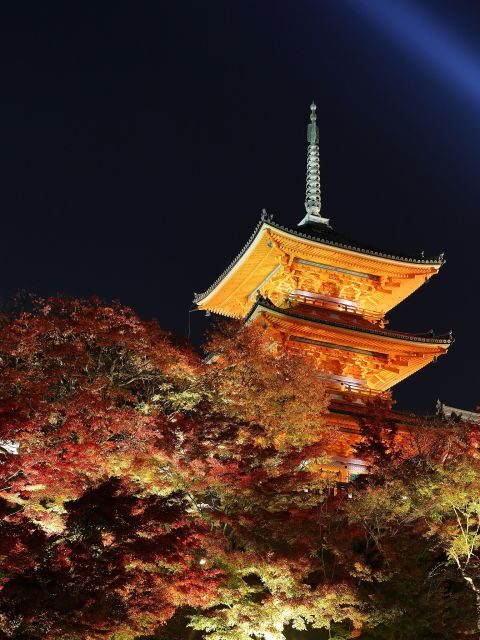
- Kiyomizudera’s hilltop viewpoints plus temple time on a structured route through Higashiyama
- Otani Hombyo Temple and Otani Cemetery offer a quieter, off-the-main-path feel
- A built-in lunch break in Pontocho keeps the day from feeling rushed
- Spanish live guide can make or break how much story you get at each stop
- Moderate effort: stairs and uneven walking are part of the experience at Fushimi Inari
Meeting at JR Inari and setting your pace
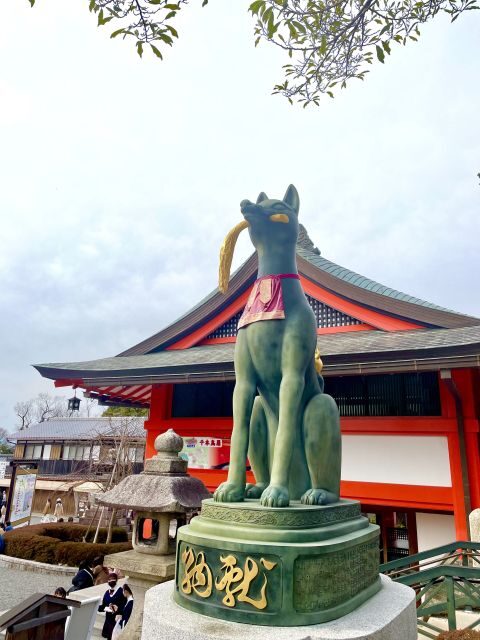
You start at Fushimi-Inari Station (right in front of JR Inari), next to the fox statue. That’s a handy landmark if you’re the type who likes to get oriented fast, and it usually helps you avoid that awkward first-minute confusion.
From there, the tour’s rhythm is very walk-and-pause: you get a long block of time at Fushimi Inari, then the day keeps moving with short train and walking segments. Because the schedule includes a temple climb and multiple walking stretches, I recommend you treat this like a day hike with culture breaks. Drink water when you can, and don’t feel pressured to rush to the top.
Also note the guide language is Spanish. If you speak Spanish comfortably enough to follow explanations while walking, you’ll get more out of the route. If Spanish is only comfortable at a slower pace, just plan on listening for key themes rather than catching every detail.
You can also read our reviews of more guided tours in Kyoto


Fushimi Inari-taisha: the torii trail that keeps going
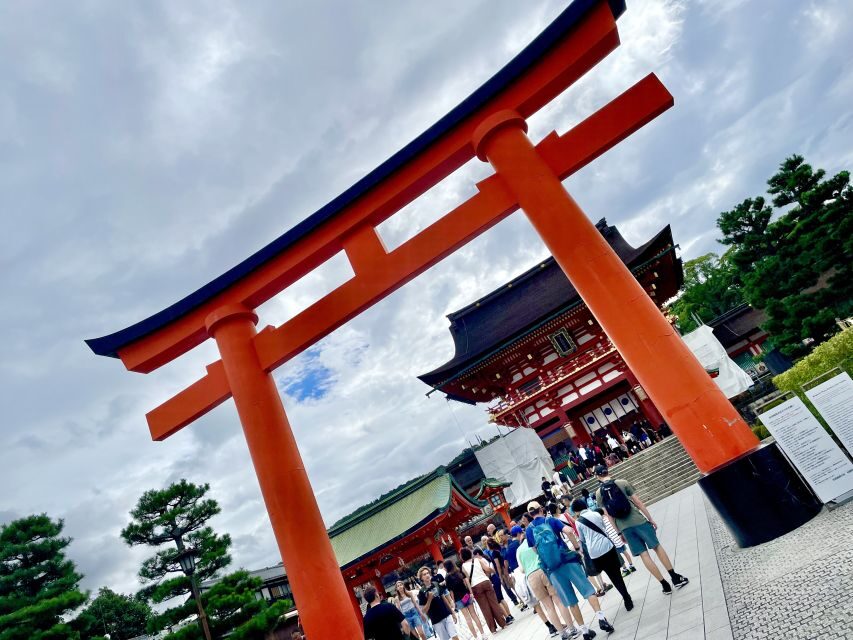
Fushimi Inari-taisha is the star of this day. You’re looking at thousands of red torii gates that form a tunnel-like path rising into the mountain. The tour gives you about 3.5 hours here, which matters because the torii experience isn’t just the big photo spot—it’s the steady movement, the narrowing paths, and the way side altars and smaller shrines pop up along the route.
What I like about this kind of guided time is that you can focus on walking and atmosphere while someone helps you notice what you’d otherwise miss. The tour specifically includes guided exploration of the sanctuary, plus scenic views along the way. That means you’re not stuck doing a fast walk-through just to say you were there.
Here’s a practical thought: because the torii route climbs and uses stairs, plan your energy. Even if you don’t go as far as you think you should, you still get a meaningful torii walk. The day works better when you pick a personal turnaround point and keep the rest of the experience enjoyable rather than exhausting.
The moderate climb: stairs and trails you should plan for
The tour is labeled as moderate physical effort, and that’s accurate. At Fushimi Inari, you’ll be climbing the mountain via trails and stairs. That can mean lots of steps, uneven surfaces, and the kind of steady uphill that makes your legs feel it later.
This is also why the tour isn’t suitable for people with mobility impairments. If stairs are an issue for you even on a normal day, this one will likely feel stressful instead of scenic.
My advice is simple:
- Wear comfortable shoes with grip for stone and steps.
- Bring comfortable clothes you can move in for a sustained uphill walk.
- If you feel winded, stop early. Don’t wait until you’re too tired to enjoy the views.
And yes, if you’re sensitive to crowds, you’ll still likely see busy moments. The best defense is to keep walking consistently and take short pauses instead of stopping for long stretches right at major choke points.
Train to Pontocho: a lunch reset before the quieter stops
After Fushimi Inari, you take a short train ride (about 15 minutes) to the next part of the day. Then you get about an hour of break time and lunch in Pontocho.
I like this timing because Pontocho gives you a calmer mental reset. You go from mountain steps to street life, and the scheduled break helps you recharge so the rest of the route feels easier to enjoy.
Even if you don’t plan to eat a big meal, use this hour strategically: grab something you’ll actually digest well, and don’t forget to check the weather. Kyoto mornings can be one thing and afternoons another, especially when you’re moving between slopes and streets.
Otani Hombyo and Otani Cemetery: where the day slows down
Next come two stops that add variety. You’ll walk about 30 minutes before reaching Otani Hombyo Temple (Mausoleum of Shinran). The tour gives you around 45 minutes there, including a guided visit and walking/pass-by time, plus scenic views along the way.
Then there’s Otani Cemetery, with about 30 minutes that includes a photo stop, guided visit, sightseeing, and walking.
What’s valuable here is the contrast. Fushimi Inari and Kiyomizudera can dominate your attention because they’re the headline sites. Otani gives you a different pace and a different kind of atmosphere—more contemplative, less about chasing one dramatic viewpoint.
Even if you’re not a deep expert in religious architecture, these stops work because you’re still in the flow of the day’s main theme: a route through Shintoism and Buddhism. You’re not just moving between landmarks; you’re watching how places with spiritual meaning show themselves through space, gardens, and pathways.




Kiyomizudera on the hill: temple time and the famous wooden platform
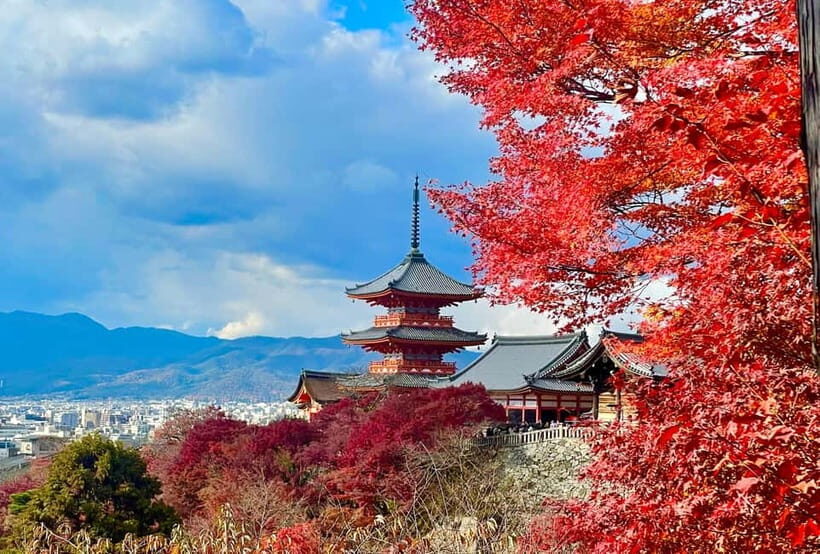
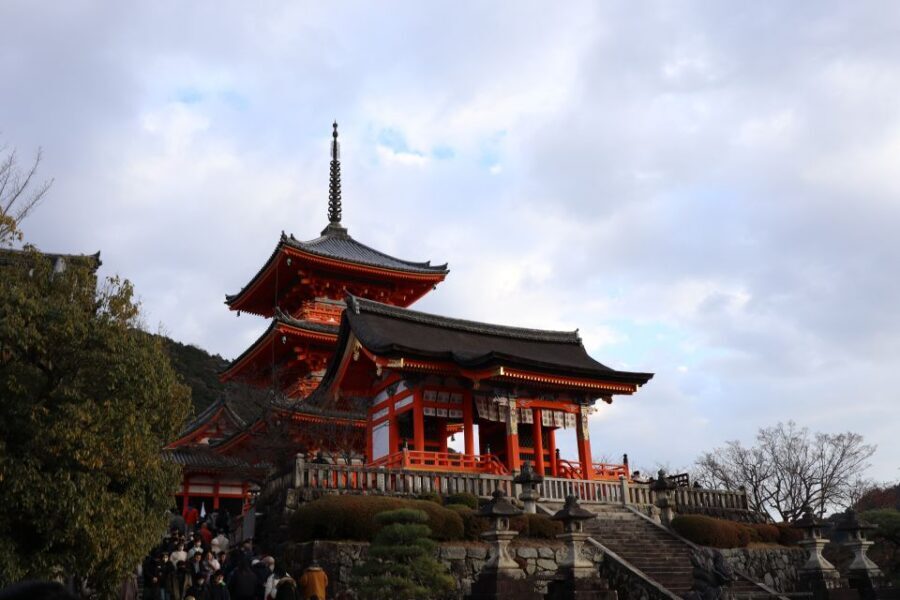
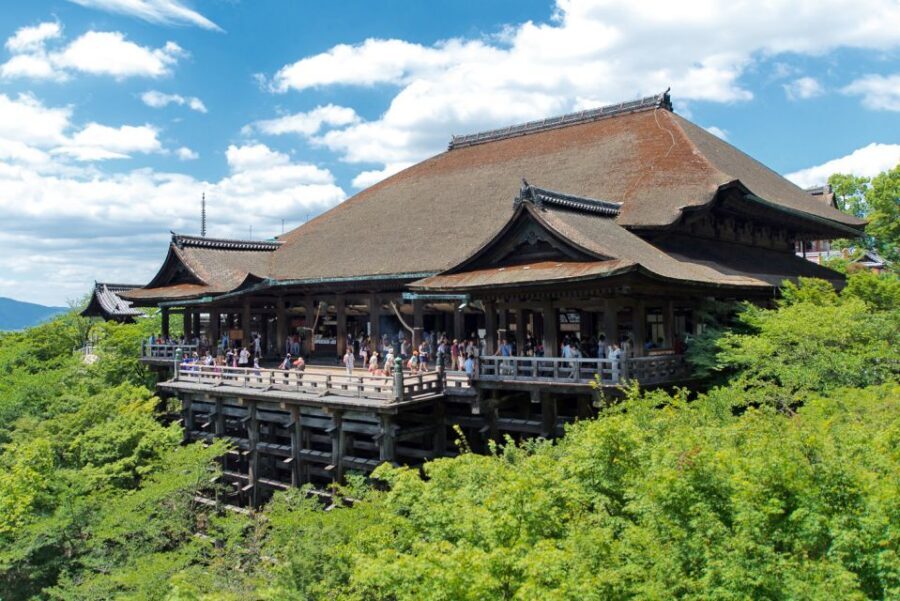
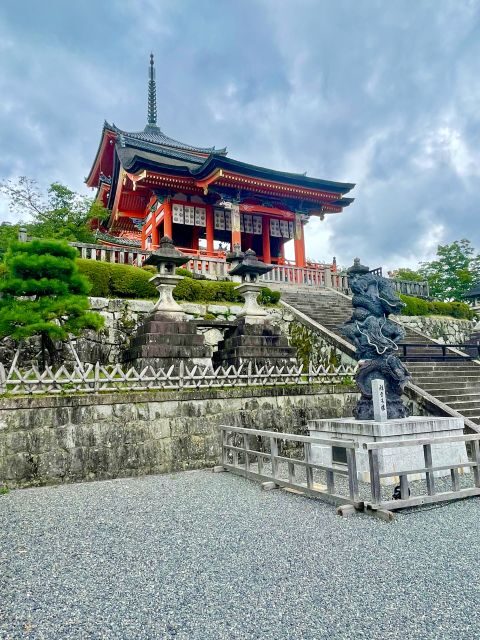
After the Otani segment, you move on to Kiyomizudera, which the tour describes as a majestic temple on a hill with stunning views. You get about 1.5 hours here, including guided tour, photo stop, sightseeing, walking, and scenic passes.
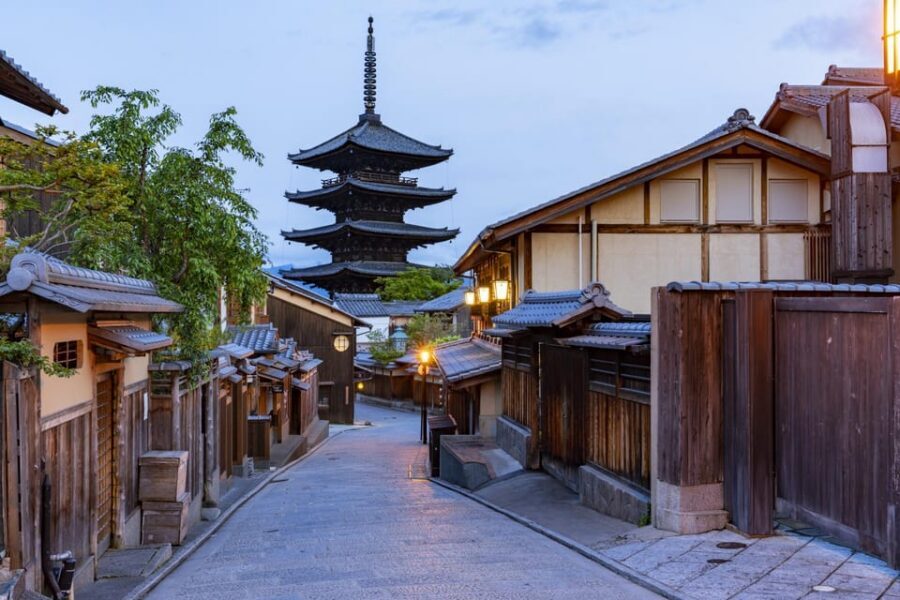
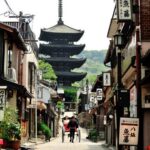
You’ll also walk through historic streets in the Higashiyama neighborhood before reaching the temple. That matters. The approach helps you feel the change from Kyoto station-style movement into older street patterns and sightseeing lanes.
At Kiyomizudera, the big visual is the wooden platform that extends over the cliff. Even if you’ve seen photos online, seeing it in person is different because you’re positioned with real scale and real distance. The tour also includes time inside the temple to appreciate the main hall and to explore the serene gardens around it.
Here’s what to do to get good value from the time: prioritize the platform viewpoints first, then let the inside and gardens take their own pace. If you spend too long shopping or photographing every doorway detail immediately, you can end up rushing the platform, which is the core highlight of this stop.
Higashiyama streets and Sannenzaka shopping time
After Kiyomizudera, the tour continues with a 30-minute stop in Sannenzaka, including guided time, shopping, and walking/pass-by.
This is the part of the day where you can trade structured sightseeing for personal wandering. Sannenzaka is the kind of street area where small goods, snacks, and souvenirs tempt you quickly. Since the time is limited, go in with a plan:
- Decide early if you want a souvenir, a snack, or just photos.
- Keep your purchases light so they don’t slow you down for the final walkout.
The tour ends at 1-chōme-286-1 Kiyomizu, Higashiyama Ward, Kyoto, 605-0862, Japan. That puts you right in the neighborhood where it’s easy to keep exploring on your own after the guided portion ends.
Price and value at about $76 for 7 hours
For $76 per person over 7 hours, the value depends on what you want from a guide.
What you’re getting:
- Guided tour at Fushimi Inari
- Guided tour at Kiyomizudera
- Kiyomizudera entrance ticket included
- A Spanish live guide across the day’s main walking segments
- Time for lunch/break in Pontocho
What’s not included:
- Transport from Fushimi Inari to Kiyomizudera (you do use train during the day, but the ticketing or segment costs aren’t listed as included for that transfer)
So, is it worth $76? If you like having someone help connect the dots—why you’re seeing what you’re seeing at each stop—then it can feel like a fair deal for two major sites plus guided time. If, however, you’re the type who expects very detailed storytelling and historical context at every temple and shrine, you may find the experience varies more than you hoped.
In fact, I’ve seen two very different guide impressions: one guide was described as kind and personable, while another was praised as fantastic and attentive. That tells me the guide quality can strongly shape your take on the day. If you’re booking with Spanish comfort in mind, pick this tour especially if you want companionship and clear direction on where to look—rather than a lecture-style history deep dive.
Guide quality matters: Spanish storytelling vs. direction on the ground
This tour lives or dies by how the Spanish guide narrates and paces the day. The itinerary includes multiple guided components, but the depth of explanation can affect how satisfying it feels.
One review described a guide, Miriam, as very kind, but the guest felt the tour didn’t deliver the history-style details they expected and compared it to more of a company than a true tour. Another review highlighted Alejandro as fantastic and attentive.
My practical takeaway: if you want more than just walking and key sights, come with a mindset of asking questions. If something doesn’t feel covered enough during the group stops, speak up during natural pauses. A good guide can steer you toward the specific parts of Fushimi Inari and Kiyomizudera that match your interests.
Who this tour fits best (and who should skip)
This is a strong fit for:
- People who want a full, guided day combining two top Kyoto spiritual landmarks
- Anyone comfortable with moderate walking and stairs
- Travelers who like to mix famous sights with quieter stops like Otani Hombyo and Otani Cemetery
- Spanish speakers who want a live guide while moving through busy areas
It’s not a good fit for:
- Anyone needing wheelchair access or mobility support (it’s not suitable)
- People who rely on baby strollers (strollers aren’t allowed)
- Unaccompanied minors (not allowed on this tour)
If you’re traveling with older adults or anyone with knee/foot issues, I’d rethink this or choose a less stair-heavy option. You can absolutely enjoy Kyoto, but this specific day is built around climbing and continuous walking.
Should you book this Spanish-guided Kyoto day?
Book it if you want a structured way to see Fushimi Inari-taisha and Kiyomizudera in one day, with guided time that saves you from figuring out everything alone. The $76 price can feel reasonable for a 7-hour plan with two guided main sites and an included temple ticket.
Skip it if you strongly expect deep, detailed historical interpretation at every stop, or if stairs and trails make you uneasy. Also consider the guide-variable factor: some experiences are very positive, while others found the storytelling lacking for the price.
If you do book, the smartest move is to treat this as a walking day first and a history lesson second. Wear the shoes, plan your pace, and let the torii and hilltop temple views do the heavy lifting. You’ll get a Kyoto day that feels like you moved through the city on foot, not just photographed it from a corner.
FAQ
Where is the meeting point?
You meet en frente de la estacion JR Inari, al lado de la estatua del zorro.
How long is the tour?
The duration is 7 hours.
What language is the guide?
The live tour guide speaks Spanish.
What’s included in the price?
Included are guided tours to Fushimi Inari and Kiyomizudera, plus the Kiyomizudera entrance ticket.
Is transport included between stops?
Transport from Fushimi-Inari to Kiyomizudera is not included.
Is the tour very walking-heavy?
It involves moderate physical effort, including climbing the mountain at Fushimi Inari using trails and stairs.
Can I bring a baby stroller or travel with an unaccompanied minor?
Baby strollers are not allowed, and unaccompanied minors are not allowed.
Is there free cancellation?
Yes, you can cancel up to 24 hours in advance for a full refund.