REVIEW · KYOTO
Early Half Day to Kyoto Highlights
Book on Viator →Operated by Mandala Japan Experience · Bookable on Viator
8 a.m. makes Kyoto feel manageable. This early half-day walking route hits Kyoto’s top sights while you move by public transport and learn the culture behind the places, not just how to stand for photos, with time left for your own afternoon plans. The small group format and start time help you beat the heaviest crowd crush, especially around the most famous shrine.
What I like most is the pacing. You get a guide-led plan that keeps things moving across three big areas, and you’re not left wandering or guessing at the order of sights. I also really appreciated the Indra-led feel: friendly, story-driven explanations about Shinto and Buddhism, plus smart tips for what to notice as you walk.
One drawback to consider: the tour price does not include everything. You’ll want to budget for Kinkakuji entrance (¥500) and public transportation (¥1,300 per person), and gratuity is not included.
In This Review
- Key things that make this tour worth your morning
- Why this 5-hour morning route works
- Meeting at Kyoto Tower Starbucks: your easy launchpad
- Fushimi Inari: thousands of red gates, with Shinto explained
- Arashiyama Bamboo Forest: nature walk plus Japanese society context
- Kinkakuji Golden Pavilion: Buddhism, history, and the entrance fee reality
- Getting back to Kyoto Station: finishing strong at Kyoto Tower
- Price and value: what you pay versus what you still cover
- Who this tour suits best (and who might want a different style)
- The weather and schedule reality check
- Should you book this Early Kyoto Highlights tour?
- FAQ
- How long is the Kyoto highlights tour?
- What time does the tour start?
- Which stops are included?
- Is Kinkakuji entrance fee included?
- Do I have to pay for public transportation?
- Can I cancel for free?
Key things that make this tour worth your morning
- Early start to dodge the worst crowd pressure
- Max 8 people with real question time, so it feels close to a private outing
- Indra’s guiding style: clear context plus practical pacing
- Three “name-brand” Kyoto stops in one efficient half day: Fushimi Inari, Arashiyama Bamboo, Kinkakuji
- Simple meeting point at Kyoto Tower Starbucks, easy to find before you start walking
Why this 5-hour morning route works
Kyoto can be overwhelming fast: big sights, lots of walking, and lines that seem to multiply after 10 a.m. This tour fixes the main problem by starting early and moving in a tight loop across the city. With a 5-hour format, you still get the big highlights without feeling like your entire day disappears.
The route is also built around contrast. You go from a Shinto icon (the red-gate climb at Fushimi Inari) to nature and quiet (Arashiyama’s bamboo walk), then finish at a Buddhist site where you can slow down and take in architecture and meaning at Kinkakuji. That mix is great if you want a taste of Kyoto’s different “modes” rather than just repeat temple photos.
Finally, you’re not expected to figure out everything alone. You travel by public transport with your guide, so you get the rhythm of the day: where to gather, when to move, and what to focus on at each stop. That’s what makes the half-day plan feel smooth instead of rushed.
You can also read our reviews of more tours and experiences in Kyoto.



Meeting at Kyoto Tower Starbucks: your easy launchpad
You start at Starbucks Coffee – Kyoto Tower Sando, right by Kyoto Station. The meeting point matters more than people think. When a tour begins in a chaotic area, you waste time trying to locate your group; when it begins at a clear landmark, you can focus on the day.
You also get an initial buffer: the first stop is short, about 15 minutes. In that time, you typically get settled, confirm you’re in the right place, and start walking as a group. It’s a small thing, but it sets the tone. You don’t sprint from station to shrine; you get your bearings first.
One practical note: since you’re starting at 8:00 a.m., plan to arrive a few minutes early. Kyoto mornings can feel calm, but it’s still a station area, and you want zero stress before the walking begins.
Fushimi Inari: thousands of red gates, with Shinto explained
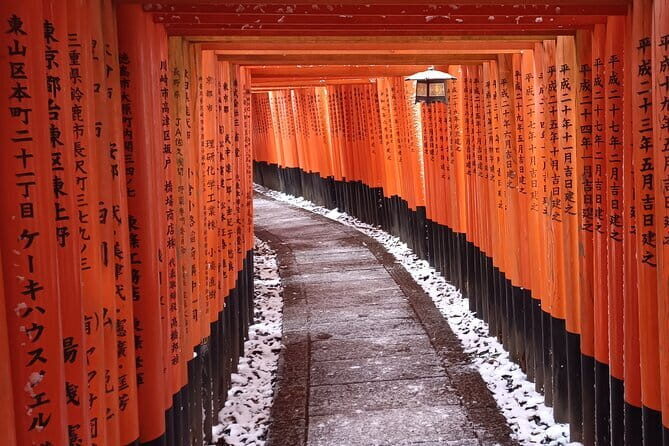
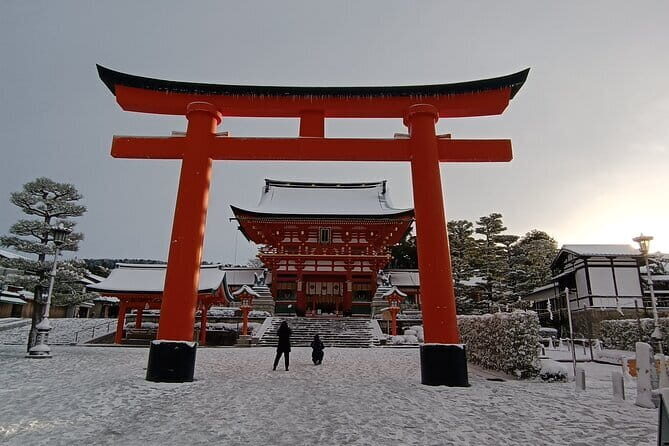
Fushimi Inari-taisha is the headline in Kyoto for a reason. You’ll spend about 1 hour 30 minutes here, and the core experience is obvious even from the outside: the shrine famous for its thousand red gates. It’s one of those places where the setting does half the work.
What makes this stop feel different is the cultural framing. You’re not just shown a path; you learn the most important ideas behind Shintoism while you walk and look out over the shrine views. That context helps you understand why the gates are there and what the space represents, so the place lands beyond the photo.
Because this tour goes early, you’re aiming to see the gates without the worst of the crowd crush. That’s a real advantage. Narrow paths and stair-like sections can become slow with larger groups, and early timing makes the walking experience more comfortable.
Practical advice for this stop: wear shoes that handle uneven stone and lots of steps. Even if you don’t go to the furthest points, the walk adds up quickly. Also, bring a small water bottle if you run warm—morning air can still feel active once you’re moving.
Arashiyama Bamboo Forest: nature walk plus Japanese society context
Next comes Arashiyama Bamboo Forest, another major Kyoto draw, with around 1 hour 30 minutes in the area. The bamboo setting is exactly what it sounds like: tall stalks, a shaded-feeling walk, and scenery that gives you a pause from the temple-and-gate intensity of the morning.
The value here is the way the guide connects the scenery to something human. You’ll learn about Japanese society while enjoying the natural surroundings. That kind of commentary turns the forest from a “see it once” stop into a place that adds meaning to your overall day.
This is also the spot where your pace can reset. After the climb and crowds potential at Fushimi Inari, bamboo gives you calmer walking time. It’s long enough to enjoy the atmosphere, but not so long that you lose momentum before Kinkakuji.
A tip that helps most people: don’t treat it like a single photo spot. Use the time to walk slowly through different angles and gaps in the bamboo. The feeling changes as you move, and the guide’s explanation gives you something to look for beyond the obvious.
Kinkakuji Golden Pavilion: Buddhism, history, and the entrance fee reality
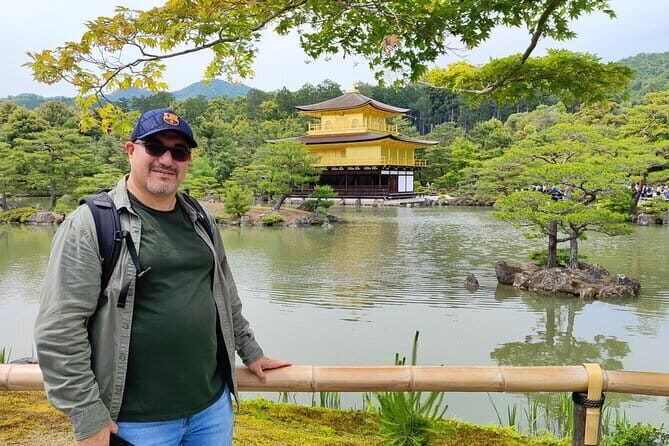
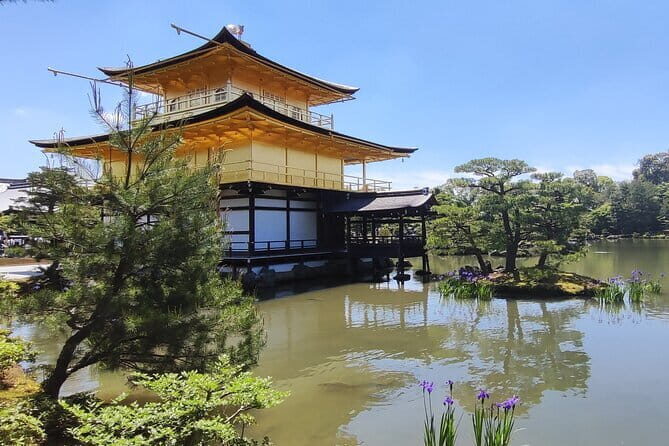
Kinkakuji is where the day reaches its most iconic visual payoff. You’ll have about 1 hour 30 minutes at the Golden Pavilion, which is described as the second most visited tourist spot in Japan. Expect plenty of attention on the building itself—especially where light hits the structure.
This stop also comes with deeper context. You’ll learn about Buddhism in Japan and the history of the temple while you enjoy the views. That matters because Kinkakuji isn’t just a pretty facade. It’s a site with religious purpose, and understanding that helps you notice details that you’d otherwise skip.
Important practical detail: the Kinkakuji entrance fee is not included. The listed cost is ¥500 per person. In other words, your tour price covers the guiding and the structure of the day, but you still need to pay admission at the gate.
If you want an even smoother experience, bring your energy for this final “big stop.” Your guide will keep you moving, but you’re also likely to feel more photo-time pressure here. A good mindset helps: plan to look first, photograph second, and don’t stress if you can’t capture every angle.



Getting back to Kyoto Station: finishing strong at Kyoto Tower
After Kinkakuji, you return toward your starting area. The last stop is Kyoto Station Building, with about 15 minutes to wrap up and end back at the meeting point. That end location is convenient because Kyoto Station is a transit hub, so you can switch plans fast for the rest of your day.
This structure also keeps the experience from dragging. A half-day tour can easily feel like it ends too late or too slowly; here, the final segment is short and purposeful. You leave with a sense of completion rather than fatigue that sticks with you into the afternoon.
If you’re heading out for lunch or an additional activity after the tour, Kyoto Station is a smart pivot point. You’ll have options nearby, and you won’t need to solve transportation from a far-off neighborhood.
Price and value: what you pay versus what you still cover
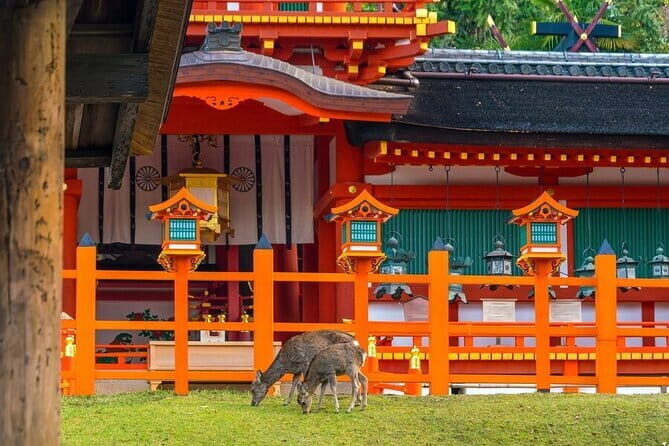
The tour price is $94.71 per person, and it includes an experienced local guide with good English plus the tour structure across major highlights. It also uses a mobile ticket, which is simple for check-in and reduces friction.
Two categories are not included, and you should treat them as part of the real budget:
- Kinkakuji entrance fee: ¥500 per person
- Public transportation: ¥1,300 per person
Also note that gratuity is not included.
So is it good value? In my view, yes—if you want efficiency and context. You’re paying for more than walking from A to B. You’re paying for an early-start plan, a group size capped at 8, and a guide who keeps the schedule tight while explaining Shinto and Buddhism in practical, human terms.
If you plan to do these sights independently, you’d still spend money and time on transport and admissions. The real question is whether you’ll actually assemble the day efficiently enough to match this pacing. If you’d rather spend your energy looking at Kyoto instead of figuring out the route, this format usually pays off.
Who this tour suits best (and who might want a different style)
This works well if you:
- Want three top Kyoto highlights in a single morning
- Like culture explanations while you walk, not after the fact
- Prefer a small group where you can ask questions
- Appreciate early timing to make the experience feel easier
It may feel less ideal if you:
- Want a long, unstructured temple day where you can linger for hours at one site
- Don’t enjoy stairs or steady walking
- Are strict about minimizing extra fees, since Kinkakuji admission and transit are separate
The good news is the tour is positioned as suitable for most people, and the schedule is designed as a true half-day experience rather than an all-day marathon.
The weather and schedule reality check
This experience requires good weather. If it gets canceled due to poor conditions, you’ll be offered a different date or a full refund. Kyoto mornings can change quickly, so it’s smart to have a flexible plan for your wider day.
Should you book this Early Kyoto Highlights tour?
Book it if you want a smooth, early itinerary that strings together Kyoto’s biggest names without making you wrestle with transit or timing. The morning start, the tight half-day flow, and the way the guide adds context—especially with Indra’s story-driven approach—make it feel like more than a checklist.
Skip it or reconsider if you’re trying to avoid all extra costs and prefer to pay only for what you directly choose at each site. Also, if you’re sensitive to walking and steps, you may want to look for a slower or more stationary option.
For most people who want “Kyoto highlights done right” in one morning, this tour is a strong bet.
FAQ
How long is the Kyoto highlights tour?
It runs for about 5 hours.
What time does the tour start?
It starts at 8:00 am.
Which stops are included?
You visit Starbucks Kyoto Tower Sando, Fushimi Inari-taisha Shrine, Arashiyama Bamboo Forest, Kinkakuji Temple, and then return to the Kyoto Station Building area.
Is Kinkakuji entrance fee included?
No. The Kinkakuji Golden Pavilion entrance fee is listed as ¥500 per person and is not included.
Do I have to pay for public transportation?
Yes. Public transportation is listed as ¥1,300 per person and is not included.
Can I cancel for free?
Yes. You can cancel up to 24 hours in advance for a full refund, and the experience requires good weather—if it’s canceled due to poor weather, you’ll be offered a different date or a full refund.