REVIEW · DINING EXPERIENCES
Authentic Maiko Experience&Kyoto Dinner (Free drink) at Noh Stage
Book on Viator →Operated by 舞妓さんと楽しむ京都の四季 · Bookable on Viator
Maiko, shamisen, and kaiseki in one calm room. This Kyoto night isn’t a big, loud tourist show. You’ll enjoy an intimate Noh stage evening that follows real ozashiki manners, with a format built from deep hanamachi connections. I love the way the maiko dances to live shamisen right in front of you, not through a soundtrack or a distance between “them” and “us.”
I also love the closeness of the interaction: you’re not just watching. You’ll get introductions, a Q&A, a two-shot photo, and time to talk. One possible drawback: the photo time has clear rules—wear socks or tabi for the Noh stage, and you can’t eat or drink while you’re up there.
In This Review
- Key things to know before you go
- Why this Maiko dinner feels different from a typical show
- The Noh stage setting: performance, photos, and quiet drama
- Kaiseki dinner plus unlimited drinks: what “value” actually means here
- The full 2-hour flow: from 5:50 PM doors open to 8:00 PM end
- 5:50 PM to around 6:00 PM: doors open and a calm start
- 6:00 PM: gather on the 2nd floor of the Noh stage
- Welcome toast, then dinner starts
- Maiko and jikata enter; live shamisen begins
- Greetings, introductions, and a practical Q&A
- Two-shot photo with the maiko, then conversation
- Ozashiki games on the Noh stage, powered by live shamisen
- The interaction level: photos, Q&A, and how to make it work
- Location: Okazaki area convenience for a 6 PM start
- Who should book this Maiko experience (and who might not)
- Price and logistics: is $150 worth it?
- Should you book this Maiko dinner at the Noh stage?
- FAQ
- What time does the experience start?
- Where does it take place?
- How long is the experience?
- What’s included in the price?
- Is there a dress or foot requirement for the photo time?
- What kind of entertainment do you get besides the maiko dance?
- Is there an interpreter?
- How many people are in a group?
- Can I cancel for a refund?
Key things to know before you go

- Small-group setup (max 20) that keeps the evening feeling personal
- Noh stage photo time (socks/tabi required) before dinner and performances start
- Live jikata shamisen paired with the maiko’s dancing
- Kaiseki-style meal plus unlimited drinks for 2 hours
- Kyoto-certified interpreter guide to support smooth conversation
- Ozashiki games on the stage as part of the real flow of the evening
Why this Maiko dinner feels different from a typical show
Kyoto is full of “maiko experiences,” and many are basically theater. This one tries to act like an actual ozashiki evening: structured, polite, playful in the right places, and paced for conversation rather than camera work.
The biggest difference is the tone. Instead of rushing you through a few set beats, the program leans on etiquette and presentation the way it’s done in refined settings. That matters because your questions, your timing, and even where you look all shape the mood. When the event respects the form, the maiko’s performance and your participation feel connected, not staged.
You’ll also notice the format stays intentionally compact. With a maximum of 20 people, you’re not swallowed by a crowd. The evening has enough space for greetings, introductions, and that short-but-real feeling of sitting inside Kyoto culture for the night—not hovering at the edges.
You can also read our reviews of more tours and experiences in Kyoto
The Noh stage setting: performance, photos, and quiet drama

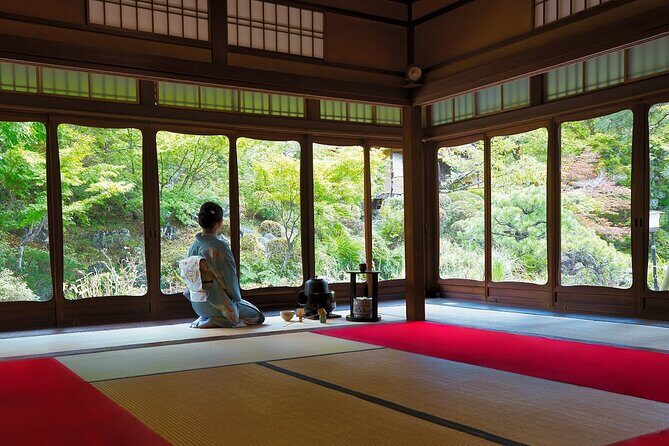
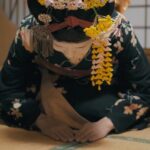
A Noh stage isn’t just a backdrop. It’s a specific kind of space—wood, lines, and a sense of stillness—that changes how a dance reads. When the maiko performs there, the movement carries differently than it would in a modern hall.
You also get a rare chance to see the stage before the evening turns serious. After doors open, you’ll have free photo time on the Noh stage. That’s a practical perk for you: it’s your moment to get your bearings, take pictures, and understand the layout before the dance begins.
The rules are simple but important. Plan to bring socks or wear tabi. No bare feet is stated, and eating or drinking isn’t allowed on the stage during that photo time. If you’re the type who likes to snack while you photograph, you’ll have to adjust. The upside is that it keeps the area respectful and comfortable during the most delicate part of the event.
Kaiseki dinner plus unlimited drinks: what “value” actually means here

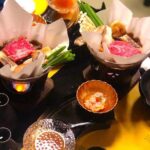
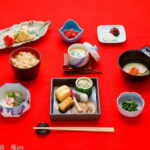
Let’s talk about the part you’ll remember after the performances: the food. You’re not just getting a small tasting or a generic boxed meal. The program centers on a kaiseki-style dinner alongside the cultural program, and it’s timed to feel like a proper course flow during the evening.
And then there are the drinks. You get unlimited drinks during the two-hour experience window. That’s not a throwaway add-on. It changes the experience for you because it keeps the social side easy. With drinks available, conversation doesn’t feel like a chore, and you can relax between the dance beats and the games.
On paper, $150 for two hours sounds like a splurge. In practice, you’re paying for several things at once: live shamisen and dance close to you, a guided interpreter support system, and a dinner experience built into the cultural rhythm. If you’re already in Kyoto for a short stay and want one high-impact evening, this format can be a strong value compared with piecing together separate events (and separate transport time).
The full 2-hour flow: from 5:50 PM doors open to 8:00 PM end

Here’s how the evening runs, and why each step matters.
5:50 PM to around 6:00 PM: doors open and a calm start
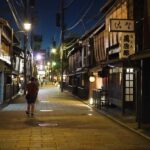
Doors open at 17:50. If you arrive early, you can relax in the 1st-floor café space. This is a good buffer. Kyoto nights can start with a little walking and getting settled, so having a “landing zone” helps you show up calmer for the cultural part.
This is also where you should get your essentials ready: socks/tabi for the stage photo time, your camera/phone charged, and your questions lined up. Once you’re inside the main timing block, the evening moves.
You can also read our reviews of more tours and experiences in Kyoto
6:00 PM: gather on the 2nd floor of the Noh stage
At 18:00, everyone gathers on the 2nd floor of the Noh stage. The schedule is designed so you’re oriented first, then the experience ramps up.
There’s a free photo window on the Noh stage, and it’s the first time you’ll be close to the performance space. You’ll want to treat this like a warm-up: take a couple of photos, check angles, and then be ready to shift into dinner mode without lingering too long.
Welcome toast, then dinner starts
After the stage photo time, there’s a welcome toast and the dinner starts. This is when the evening becomes a true sit-down experience, with the meal paired to the program.
If you’re someone who worries that cultural shows mean missing the food part, don’t. Here, the meal is part of the pacing, not something you grab later.
Maiko and jikata enter; live shamisen begins
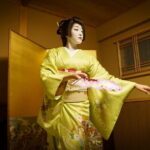
Next comes the entrance of the maiko and the jikata (the live shamisen player). This is one of the most important parts of the whole night. Live shamisen changes the feel: tempo, texture, and that slight emotional lift you don’t get from a recording.
Then the maiko performs on the Noh stage to live shamisen. Since you’re seated close, you’ll likely notice details you’d miss from afar—how she uses space, how stillness and gesture work together, and how the rhythm shapes the movement.
Greetings, introductions, and a practical Q&A
After the dance, there are greetings and self-introductions. Then you get a kimono and kanzashi introduction, followed by Q&A.
This is where the evening becomes more than watching. If you’ve ever wondered how kimono elements relate to age, season, or daily life, the Q&A format is exactly what you’re looking for. You can ask questions that make the night feel anchored in reality.
Two-shot photo with the maiko, then conversation
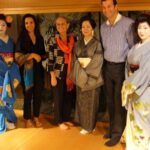
You’ll have a two-shot photo on the Noh stage. It’s a clear, guided moment—no scrambling, no awkward line chaos.
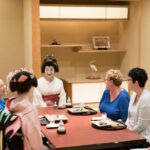
After that, there’s conversation time with the maiko. This is one of the reasons people call it intimate. You’re not just trying to interpret a performance; you’re engaging in a short, human exchange.
Ozashiki games on the Noh stage, powered by live shamisen
The evening finishes with ozashiki games on the Noh stage, with live shamisen adding energy. Games are playful by design, and because they’re on the same stage space as the dance, the night stays coherent.
By the time you reach the end (20:00), you’ll understand how the pieces connect: etiquette leads to performance, performance leads to conversation, conversation leads to games, and games close the loop.
The interaction level: photos, Q&A, and how to make it work

This experience is built around active participation, and that’s good news if you like talking and learning. You’ll get multiple touchpoints:
- greetings and self-introductions
- kimono/kanzashi overview plus Q&A
- two-shot photo
- conversation time
- ozashiki games
To get the most out of it, come with 3–5 questions you actually care about. Keep them simple. Ask about what’s hard, what’s practiced, or what visitors often misunderstand. The interpreter guide support makes it easier to get clear answers, but your curiosity still drives the quality of the conversation.
Also, be mindful of camera behavior. You have a photo window on the stage before the performance, and then the event shifts into meal and conversation. That structure helps you avoid turning the whole night into a filming sprint.
Location: Okazaki area convenience for a 6 PM start

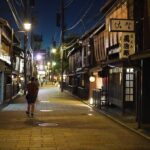
The meeting point is at Okazaki, Sakyo Ward, near public transportation. Start time is 6:00 pm, with doors open at 17:50. In practical terms, plan to arrive a little early so you can settle and handle stage-photo requirements before the evening becomes tightly timed.
Because the program ends back at the meeting point, you’re not dealing with late-night transfers or confusing drop-offs. That matters on Kyoto evenings when public transport is still running but getting around can feel like a puzzle.
Who should book this Maiko experience (and who might not)

This is a strong fit if you:
- want a smaller-group Kyoto cultural evening (max 20)
- care about live performance and not just a photo
- enjoy eating while being part of a program
- like guided Q&A with interpreter support
- want unlimited drinks as part of a hosted dinner atmosphere
You might think twice if you:
- dislike dress or footwear rules (stage photo time requires socks/tabi)
- want a long, unstructured evening with lots of wandering time (this is clearly a scheduled 2-hour flow)
- are expecting a large “festival” vibe
Price and logistics: is $150 worth it?

$150 for about two hours is steep if you compare it to a casual meal. But this isn’t just dinner. You’re paying for:
- live shamisen and maiko dancing on a Noh stage
- kaiseki-style dining
- ozashiki games with live accompaniment
- close interaction: Q&A, conversation time, and a two-shot photo
- unlimited drinks during the event window
- interpreter support and a Kyoto-certified guide presence
That combo is where value comes from. If you try to recreate it on your own, you’d spend time and money juggling separate tickets, separate dining reservations, and separate cultural programming. Here, it’s bundled into one hosted evening with a tight schedule and a maximum group size.
Should you book this Maiko dinner at the Noh stage?
Yes—if you want one evening in Kyoto that feels both elegant and genuinely interactive, this is a smart booking. The live shamisen setting, the Noh stage atmosphere, and the structured conversation time are the big reasons to choose it.
Before you say yes, check your comfort with the stage-photo rules (socks/tabi) and the fact that the evening runs on a clear timetable from 17:50 to 20:00. If that structure sounds good, you’ll probably love how the night moves like an actual ozashiki gathering rather than a rushed spectacle.
FAQ
What time does the experience start?
Doors open at 17:50, and you gather on the 2nd floor of the Noh stage at 18:00. The experience ends at 20:00.
Where does it take place?
It takes place at Japan, 606-8344 Kyoto, Sakyo Ward, Okazaki Enshōjichō, 9165 岡崎庵. The activity ends back at the meeting point.
How long is the experience?
It runs for about 2 hours.
What’s included in the price?
Meals (kaiseki-style dinner) and free/unlimited drinks for the experience duration, plus the maiko’s dance up close, a two-shot photo, conversation time, and ozashiki games.
Is there a dress or foot requirement for the photo time?
For the free photo time on the Noh stage, socks or tabi are required. Bare feet are not indicated as allowed, and you cannot eat or drink on the Noh stage during photo time.
What kind of entertainment do you get besides the maiko dance?
You’ll also have live shamisen (played by the jikata), plus ozashiki games on the Noh stage.
Is there an interpreter?
Yes. A Kyoto-certified interpreter guide is included.
How many people are in a group?
The experience has a maximum of 20 travelers.
Can I cancel for a refund?
Yes, free cancellation is available. You can cancel up to 24 hours in advance for a full refund. Changes made less than 24 hours before the experience’s start time aren’t accepted.