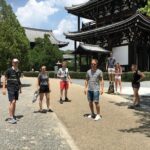
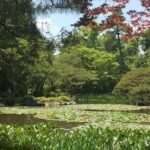
One mountain view, one bamboo corridor, and monkeys. That’s a lot for one afternoon, and it’s why this Kyoto bike tour works so well. You get a guided loop through Arashiyama with bike rental included, plus temple and garden time, without turning the trip into a leg-busting walking day.
I particularly like two things: first, the chance to reach the Iwatayama Monkey Park with a manageable climb and a serious payoff view over Kyoto; second, the mix of big-name Arashiyama stops with smaller, less-crowded shrine-and-temple moments along the way.
One thing to consider: you do need moderate physical fitness for the monkey park section, and you’ll be outdoors. If your day is tight or the weather turns, plan to stay flexible.
In This Review
- Key things I found most compelling
- Why riding Arashiyama by bike makes sense in 4 hours
- Getting started at Saga-Arashiyama Station (and how to prep)
- The Iwatayama Monkey Park climb: the best view in the loop
- Bamboo Forest Street: photo time that doesn’t feel rushed
- Tenryu-ji Temple Sogenchi Teien: a break that feels “Kyoto”
- Togetsukyo Bridge: iconic views with minimal time wasted
- Bikes, helmets, bottled water, and guide support: where the value really is
- Group size and pace: the calm side of a famous area
- Who should book this Kyoto bike tour (and who might skip it)
- Should you book this afternoon Kyoto bike tour?
- FAQ
- How long is the afternoon Kyoto bike tour?
- What is the price per person?
- Where does the tour start and end?
- What’s included in the tour price?
- What are the main stops on the route?
- Is there an e-bike option?
- How much walking is involved?
- How big is the group?
- Does weather affect the tour?
Key things I found most compelling
- Small group size (max 8) keeps the pace calmer and easier for photos.
- Standard city bikes + helmets + bottled water mean you can show up and go.
- Iwatayama has a payoff view after a roughly 20-minute walk up to the park.
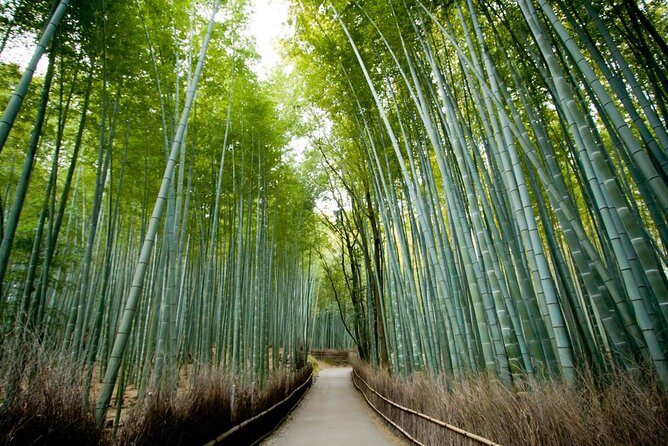
- Bamboo Forest Street is built for photos, with a focused stop and time to linger.
- Tenryu-ji Temple’s Sogenchi Teien garden gives you a quieter, high-quality cultural break between rides.
- The whole route loops back to Saga-Arashiyama Station, which is simple and convenient.
Why riding Arashiyama by bike makes sense in 4 hours
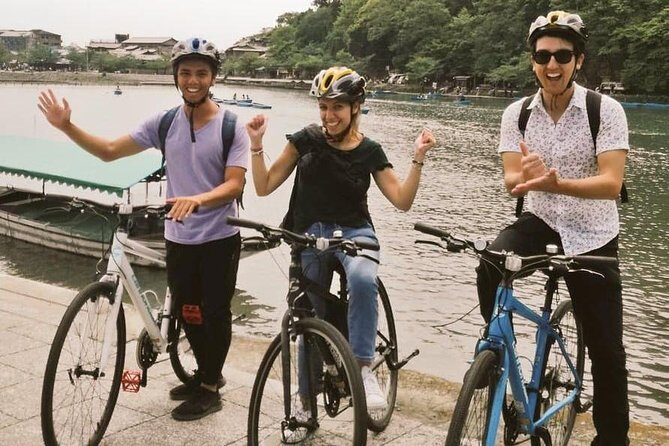
Arashiyama can feel like two different places at once: parts look picture-perfect and iconic, while other parts are the calm, local streets you actually want to experience. This tour threads that needle. You spend the afternoon cycling between key locations, rather than spending hours waiting for trains or walking long stretches in the crowds.
The timing also matters. At roughly 4 hours, you’re not trying to cram Kyoto into a single day. Instead, the route is built around a short list of high-impact stops: Monkey Park Iwatayama, Bamboo Forest Street, Tenryu-ji Temple (Sogenchi Teien), and Togetsukyo Bridge. Each stop gets a practical chunk of time, so you’re not rushing your photos or your garden stroll.
And since you start and finish at Saga-Arashiyama Station, you don’t need to build a mini transportation plan around the tour. That alone is underrated value in Kyoto, where the best plans still involve a lot of walking.
You can also read our reviews of more cycling tours in Kyoto
Getting started at Saga-Arashiyama Station (and how to prep)
The tour meets at Saga-Arashiyama Station (address: 11-1 Sagatenryūji Kurumamichichō, Ukyo Ward, Kyoto). The start time is 1:00 pm, and the tour ends back at the same meeting point.
You should also know these basics before you go:
- No hotel pickup or drop-off. You’ll get there on your own via public transit.
- The tour is near public transportation, so it’s easy to plug into an itinerary.
- You’ll have a bilingual native English-speaking guide, which helps when you’re moving fast and don’t want to stop every few minutes to figure things out.
What to bring: light layers and comfortable footwear. The bike ride itself is designed to be easy for most people, but you will do a walk up to the monkey park. If you tend to feel tired quickly on stairs or slopes, that climb is the piece worth respecting.
The Iwatayama Monkey Park climb: the best view in the loop
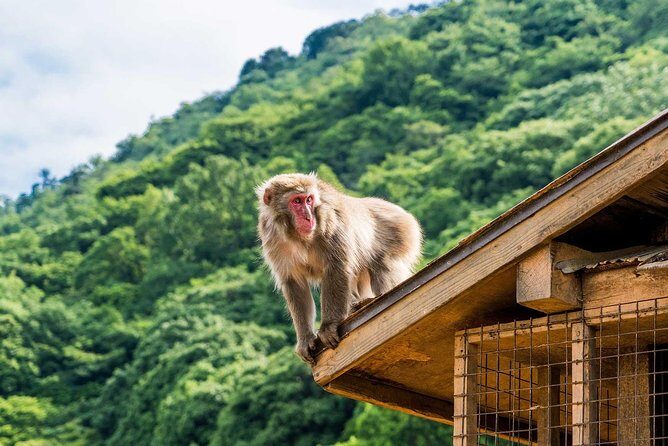
Stop 1 is Monkey Park Iwatayama. You start with a pleasant 20-minute walk up to the top, then you’re there for about 1 hour 15 minutes total, with admission included. This is where the tour earns its name: you’re visiting an area known for freely roaming Japanese macaques.
The practical upside is that the time at the park isn’t just a quick peek. You get room to slow down, catch a view, and wait for monkey sightings to happen naturally. The payoff is also spelled out in the experience design: you’ll be rewarded with an amazing view of Kyoto City from the mountain.
A note from the vibe of the experience: one of the strongest themes from guides in past tours is how they handle timing and group movement. Guides like Peter, Ray, and Yuki have been praised for making it feel organized and fun, even when the day is hot or busy. So if you’re the type who gets stressed when you can’t see how the day will flow, this is a good format.
Main consideration: it’s not a flat stroll. The tour asks for moderate physical fitness, so if a 20-minute uphill walk is a deal-breaker for you, you’ll want to rethink the monkey park portion.
Bamboo Forest Street: photo time that doesn’t feel rushed
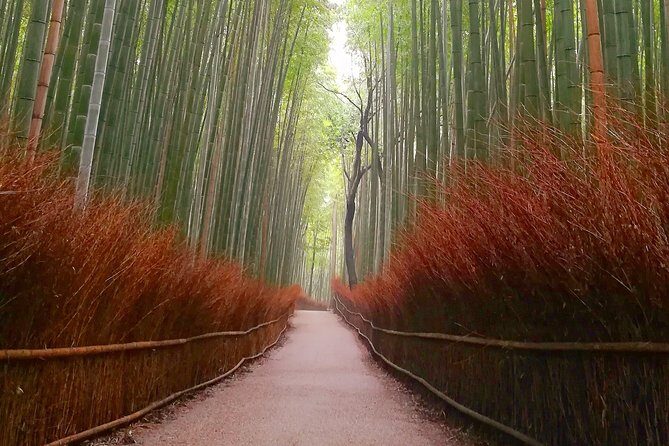
Next comes Bamboo Forest Street, with 25 minutes set aside and admission included. The tour frames this section as a top soundscape of Japan, which makes sense in a place where your eyes and ears both register the bamboo all at once. You’re not just biking through a landmark; you’re given focused time to stand still, look around, and take photos.
This stop is one of the main reasons I’d book the tour even if I already planned to visit Arashiyama. Most people end up spending their bamboo time standing at the edges, or they rush because they’re trying to keep up with a long day. Here, you get a block of time built around the bamboo itself.
Photo tip from the structure: since the tour is short and guided, your best photos are likely to happen when you’re not sprinting between viewpoints. Use the 25 minutes to try a few different angles—close-up bamboo textures, wider shots from the street, and anything that captures people moving through the corridor.
Tenryu-ji Temple Sogenchi Teien: a break that feels “Kyoto”
Stop 3 is Tenryu-ji Temple Sogenchi Teien, a World Heritage site. You get about 25 minutes here, also with admission included, and the tour positions it as one of Kyoto’s most beautiful gardens.
This is a smart middle stop in the day. After monkeys and bamboo, the garden works as a reset. The rhythm changes from lookout-and-photo mode to a slower stroll-and-watch mode, where details matter more than speed.
Also, Tenryu-ji being part of a bike route is practical. Kyoto gardens are often easiest to enjoy when you’re not fighting for time. Having a scheduled window helps you avoid the trap of arriving, rushing, and leaving before you actually see the garden.
You’ll get the most out of this stop if you use those 25 minutes to slow down. Don’t treat it like a checklist. Walk it like you have time, because in this loop, you do.






Togetsukyo Bridge: iconic views with minimal time wasted
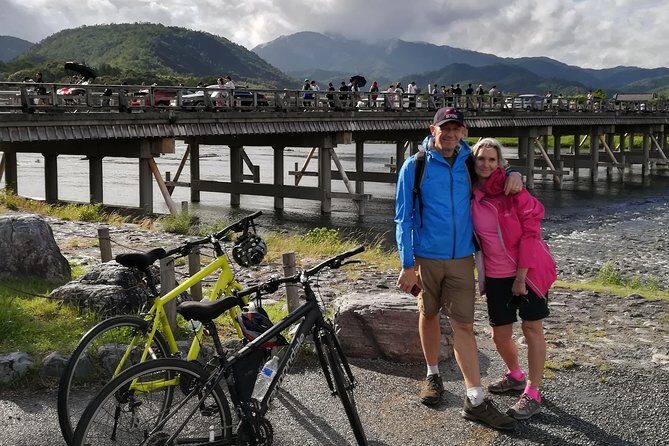
Stop 4 is Togetsukyo Bridge, with only 10 minutes in the schedule. That might sound short, but it’s exactly what you want for an iconic photo spot. The goal here is to capture the scenery and move on, rather than spending half your tour hovering.
This brief bridge stop also helps the tour avoid the common Arashiyama problem: arriving at the busiest photo moments and getting stuck. With a guided loop and a small group cap, you’re better positioned to keep moving and still get the classic view.
In other words: think of the bridge as a highlight clip in a longer movie. It’s there to deliver the “yes, that’s the Kyoto I expected” moment without stealing the entire afternoon.
Bikes, helmets, bottled water, and guide support: where the value really is
Let’s talk about what you actually get for $106.12 per person, since it’s easy to misread price on tours. Here, the value is tied to the inclusions:
- Bicycle and helmet rental
- Bottled water
- Admission fees for each stop
- English-speaking bilingual guide
- Mobile ticket
So you’re not paying for a guide plus transportation only. You’re also getting entry costs and gear. And because you’re using standard Cannondale city bikes (not e-bikes unless you request otherwise), the tour keeps things consistent and predictable. One of the practical wins reported in tours like these is that the bikes are comfortable for people who don’t bike often, with a route described as flat and easy aside from the monkey park walk.
About guides: multiple named guides appear in the experience’s reputation, including Yuki, Rob, Peter, and Ray. The recurring strengths are safety-minded handling, strong English, and a knack for story-telling that stays tied to the places you’re seeing. Ray in particular gets praised for being very considerate and helpful with small comfort issues in real conditions.
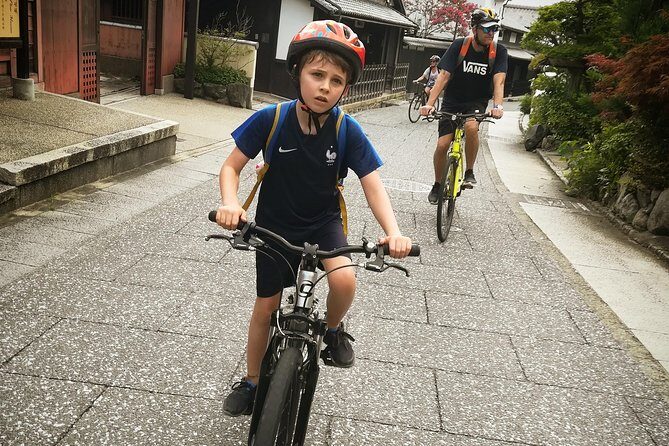
If you want to be extra comfortable, e-bikes and youth bikes are available upon request (additional fee may apply). That’s the right lever if you’re traveling with kids, or if you’d rather reserve your energy for the viewpoints and gardens.
Group size and pace: the calm side of a famous area
This tour caps at 8 travelers, which is a big deal in Arashiyama. In crowded places, small groups mean:
- easier photo moments without constant stop-and-go,
- less confusion about where to gather,
- a pace that feels like a plan rather than a sprint.
Reviews also highlight this kind of practical experience: family-friendly riding, clear navigation on busy days, and guides who handle picture stops without turning the day into chaos. The overall format is designed for efficiency—covering several top sites while still feeling like you’re not just moving from one line to the next.
Still, remember: the monkey park section includes that uphill walk. Even with a small group, that’s a physical moment. If you’re bringing older adults or someone with limited mobility, it’s worth thinking hard about whether that climb will feel doable.
Who should book this Kyoto bike tour (and who might skip it)
This tour is a strong fit if you:
- want to see Arashiyama’s key sights in one afternoon,
- like biking because it saves time and keeps the energy up,
- enjoy a mix of nature and culture—bamboo and macaques, then a garden at Tenryu-ji,
- prefer a small-group experience.
It’s also family-friendly in the sense that the format supports mixed ages: one reason people recommend it is that it changes the pace from pure walking to a more manageable ride. That said, you should still consider the moderate physical fitness requirement because of the monkey park walk.
You might skip it if:
- you don’t feel comfortable with an uphill walk of about 20 minutes,
- you want a purely relaxed stroll itinerary with no cycling,
- you’re visiting with a schedule that can’t handle weather-dependent outdoor time.
Should you book this afternoon Kyoto bike tour?
My take: book it if you want the best kind of Kyoto afternoon—efficient, scenic, and guided—without sacrificing the chance to linger. The biggest reasons are practical: bike rental is included, you get admissions included, and the loop is built around a short list of places that are worth your time.
It’s also the right choice if you like feeling guided but not trapped. The order of stops gives you variety: mountain viewpoints and monkeys first, then bamboo and gardens, and finally the classic bridge photo.
If the idea of climbing to Monkey Park Iwatayama feels like too much, then don’t force it. Everything else in the tour may still appeal, but that one physical section sets the tone for who this works for.
If that walk is fine, I’d say you’re looking at a smart value for money: you’re paying for a guided afternoon that handles transportation, gear, and entry costs in one package.
FAQ
How long is the afternoon Kyoto bike tour?
It runs for about 4 hours.
What is the price per person?
The listed price is $106.12 per person.
Where does the tour start and end?
It starts at Saga-Arashiyama Station and ends back at the same meeting point.
What’s included in the tour price?
Included are a bicycle, helmet, bottled water, admission fees, and a native English-speaking bilingual guide.
What are the main stops on the route?
The tour includes Monkey Park Iwatayama, Bamboo Forest Street, Tenryu-ji Temple Sogenchi Teien, and Togetsukyo Bridge.
Is there an e-bike option?
E-bikes are available upon request for an additional fee. Standard city bikes are used otherwise.
How much walking is involved?
The monkey park stop includes a 20-minute walk up to the top before you spend time at the park.
How big is the group?
The tour has a maximum of 8 travelers.
Does weather affect the tour?
Yes. The experience requires good weather, and if it’s canceled due to poor weather you’ll be offered a different date or a full refund.