REVIEW · SAMURAI EXPERIENCES
Samurai Training with Modern day Musashi in Kyoto
Book on Viator →Operated by Yushinkan Co., Ltd. (株式会社勇進舘) SETO Yushin · Bookable on Viator
Two swords, one focused dojo session. I love how this Kyoto experience turns the cinematic idea of the samurai into hands-on kata practice led by Sensei Yushin and his team, with Jordan teaching alongside John. The highlight for me is the two-katana performance you get to see up close.
My favorite parts are the detailed setup and the training pace. You’ll dress in full samurai gear (dōgi, obi, hakama), then learn how to draw, sheath, and wield with real attention to form in a small group that stays calm and personal with only a handful of participants.
One thing to plan around: mat cutting with a real katana is not currently offered, so if your main goal is smashing targets, you may feel a little let down.
In This Review
- Key things I’d circle before you book
- Finding the dojo and setting expectations in central Kyoto
- Dressing in dōgi, obi, and hakama (and why it matters)
- Sword safety and realistic practice with iaito
- Learning the katana kata form step-by-step
- The dojo lesson beyond sword moves
- Watching the master: performances with one, then two katanas
- Price and value in Kyoto: what $132.65 buys you
- The one real limitation to know: mat cutting is currently out
- What to bring and how to prepare
- Who this Kyoto samurai training fits best
- Should you book Samurai Training with Modern-day Musashi in Kyoto?
- FAQ
- Where is the meeting point for the session?
- How long is the Samurai Training with Modern-day Musashi?
- What age is required to participate?
- Do I need any sword experience?
- Will we cut mats with a real katana?
- Is cancellation free?
Key things I’d circle before you book
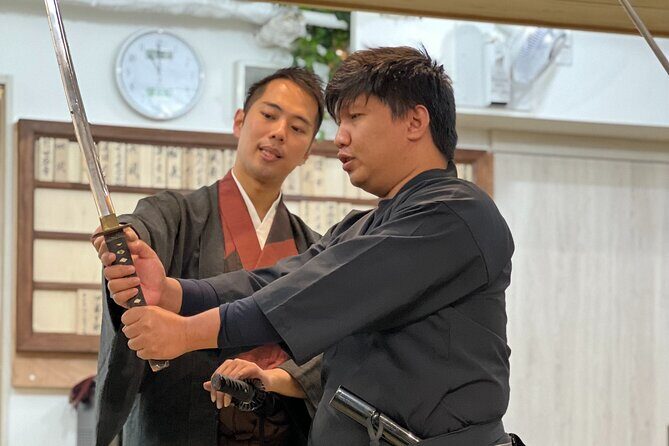
- Actual dojo practice rather than a quick show, with a real training atmosphere
- Dōgi, obi, hakama dressing time that makes the lesson feel authentic from minute one
- Structured sword basics: draw, sheath, and wield with safety in mind
- A taught katana kata form you can take home as muscle memory
- Two-katana master performance plus other demonstrations
- Small group class size (typically 6 per class) for more individual correction
Finding the dojo and setting expectations in central Kyoto
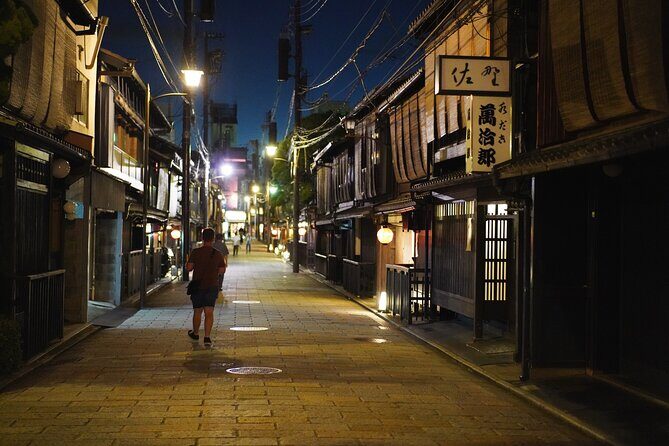
This experience starts in Nakagyo Ward near public transportation, at 452-4 Matsugaechō, Nakagyo Ward, Kyoto (604-8034). Once you arrive, the biggest thing to notice is that this feels like a real place people train, not a warehouse attraction. One person on the staff makes it clear you’re there to learn the way a dojo runs: with etiquette, focus, and instruction that doesn’t treat you like a passive audience.
The session itself runs about 1 hour 45 minutes (often 1.5 to 2 hours depending on how many people are in the class). That timing matters. It’s long enough to teach you the basics and guide you through an actual routine, but short enough that you won’t spend your whole day stuck in training.
You should also expect moderate physical effort. You’ll be dressing in traditional training clothing and moving through controlled sword forms. If you’ve never done anything like this, that’s fine, but you’ll want to be comfortable standing and following movements carefully.
You can also read our reviews of more tours and experiences in Kyoto.


Dressing in dōgi, obi, and hakama (and why it matters)
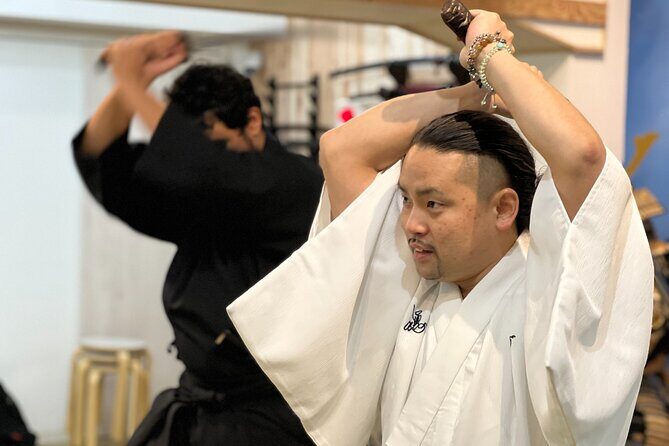
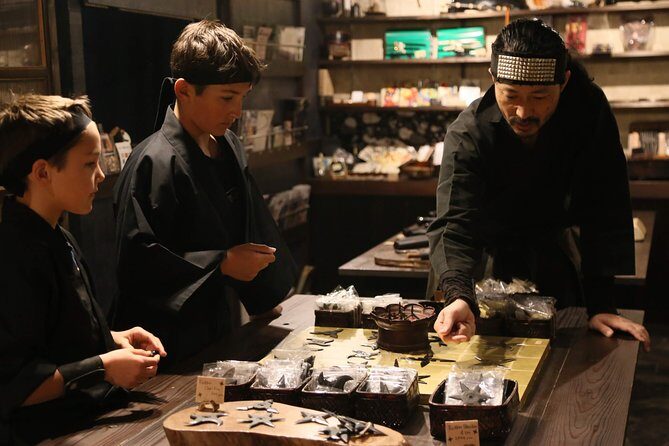
The first real step is getting into the training gear: dōgi, obi, and hakama. It’s not just a costume moment. When your clothing is set up the way the practice is meant to be done, your movement changes. You learn how the routines are supposed to fit the body, the stance, and the flow of the kata.
You’ll also get an instant “mindshift” from the dressing process. It signals you’re stepping into a martial culture where discipline and respect are part of the curriculum. In a short class, that shift is powerful because it helps you take the later sword work seriously.
If you’re coming with kids or teens, this is often the part that grabs them first. The gear photos turn out great, but the better payoff is that the gear makes the kata feel like a real routine, not just a performance.
Sword safety and realistic practice with iaito
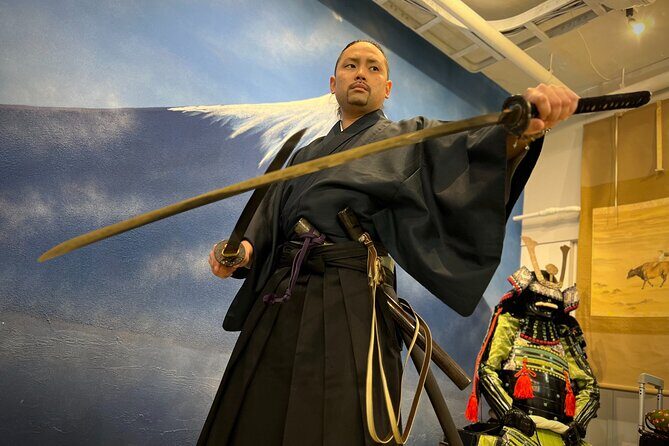
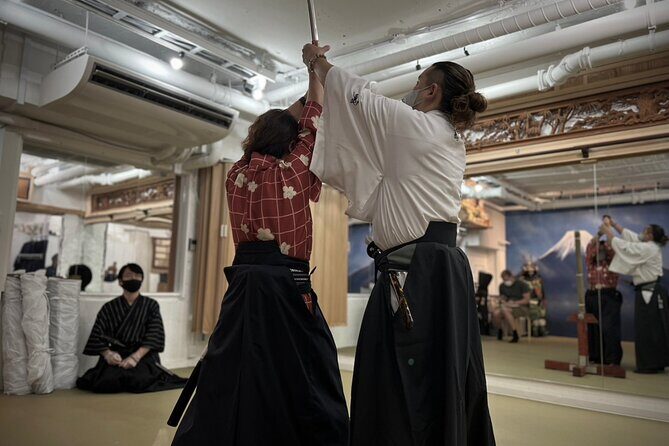
Let’s talk safety, because this type of experience is only fun if you feel in control. The class focuses on how to handle the sword correctly: drawing, sheathing, and wielding with careful technique. In practice, that’s where many first-timers gain confidence fast.
A key point for your expectations: the training uses iaito for safe practice. That means you can learn authentic movements without the constant worry of sharp-blade chaos. You still get the feel of the tool and the rhythm of the kata, but in a way that keeps the class moving smoothly.
From the way instructors correct form, you’ll notice they don’t just say do this and move on. You’ll get adjustments that help you align the draw, stance, and wrist position so the kata looks right and feels controlled. That kind of correction is a big reason the class stays worth it even if you’re not a lifelong martial arts person.
Learning the katana kata form step-by-step
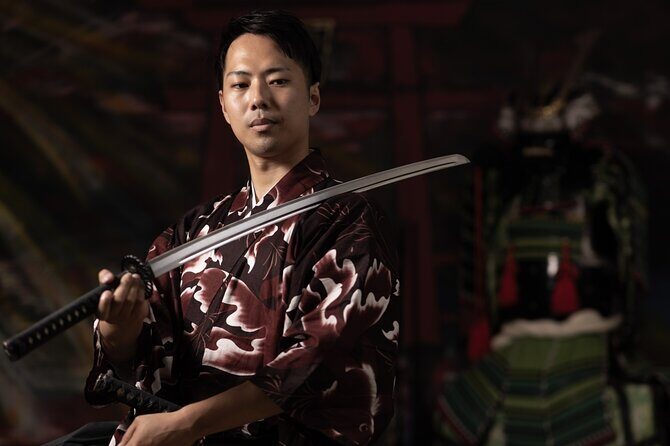
After the basics, you’ll work through an actual katana kata (form). This is the part that turns the whole experience from dress-up into real training.
Here’s what you can expect as the lesson unfolds:
- You’ll start from basic positions and learn the mechanics of draw and sheath
- You’ll practice how to wield and control the blade during a routine
- You’ll then follow the kata form taught by the instructors
What makes this valuable for you is that kata isn’t random motion. It’s structured practice that builds timing: where your feet go, how your hands travel, and how your posture stabilizes the blade path. Even in a short session, you can feel the difference between flailing and controlled movement.
Also, the class format supports learning. With small groups (typically up to 6 participants per class, though the number may rise when there aren’t many booking parties), you’re more likely to get personal feedback. That’s not a minor detail. It’s the difference between watching someone do a demo and actually getting your technique corrected.
The dojo lesson beyond sword moves
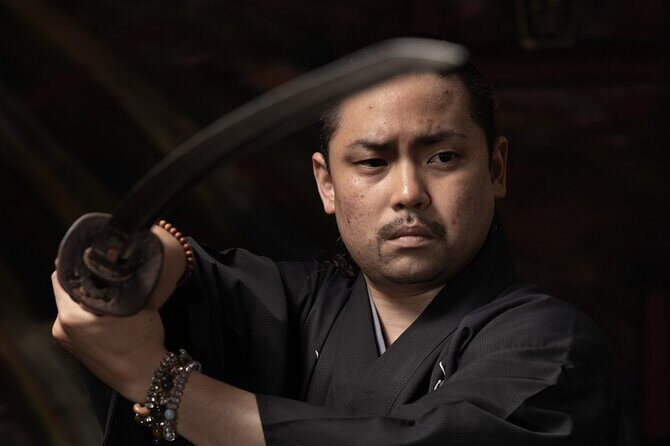
The training isn’t only physical. You’ll also receive instruction about samurai culture and swordsmanship, including what swords were used for and who historically used them. You’ll hear context on traditions and the mindset behind the practice, which helps you understand why the routines are so formal.
One thing I like: the talk supports the movement. Instead of learning “history” as facts floating in the air, you hear it as a reason for etiquette, discipline, and the structure of sword training.
And because the instructors are teaching in a dojo environment, you’ll see that the atmosphere matters. It encourages you to slow down and act like a student, not just a tourist holding a sword for a few minutes.
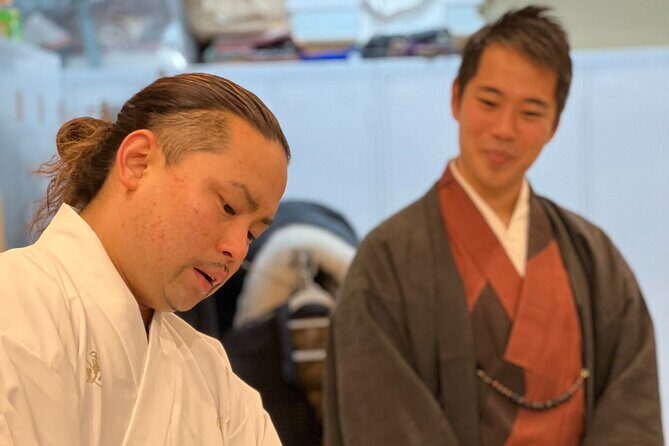
In many classes, you’ll also meet and interact with the instruction team—commonly Sensei Yushin, with Jordan assisting instruction, and John helping with communication. That mix is great if you want an experience that feels both authentic and understandable.




Watching the master: performances with one, then two katanas
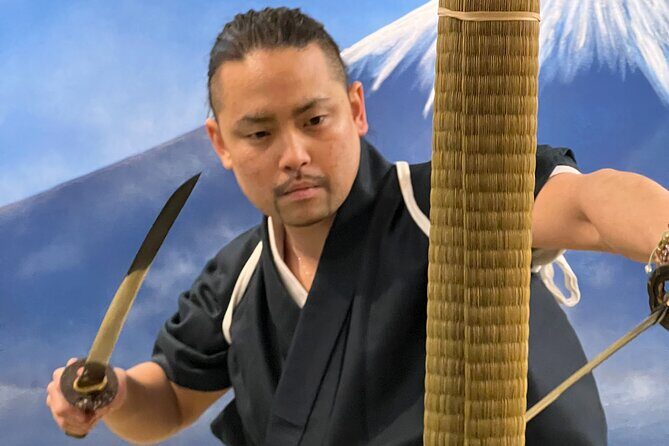
You’re not just practicing. You also get to watch the master demonstrate. The most memorable visual element is the two-katana performance by the master, something you won’t typically see in standard tourist “samurai costume” shows.
You should also expect additional sword demonstrations that explain the blade and its parts. Some classes include time to see a real samurai sword and learn how components are made and what you’re looking at when you see an actual blade.
This matters for your enjoyment. It gives you a model of what the kata is trying to become. You’ll understand that the kata practice isn’t “just a routine.” It’s a disciplined way to express control and intention.
If you like taking photos and videos, ask if it’s allowed during the hands-on portion. In at least some sessions, participants have had the chance to capture video and photos while working through the kata.
Price and value in Kyoto: what $132.65 buys you
At $132.65 per person, this isn’t a cheap add-on. But it also isn’t a five-minute photo-op. You’re buying:
- A real dojo session in a training environment
- Guided dressing in traditional gear
- Hands-on instruction for draw, sheath, and wield
- An actual kata you practice with correction
- Master demonstrations, including the two-katana performance
- A class designed for small groups, not mass tourism
The value question really comes down to your goal. If you want an authentic, practical taste of dojo training with real instructor time, it can feel like a good deal. If what you want is a full-contact show with a lot of action, you might be disappointed by the training-focused pace and the current limitation on cutting.
Also, with prices like this, timing helps. This is around 1.5 to 2 hours, which means you’re not paying to sit and watch for most of your time. You’re actively doing the work.
The one real limitation to know: mat cutting is currently out
I want to flag this clearly so you don’t book with the wrong mental picture. Mat cutting with a real katana is not currently offered. That lines up with how the class stays focused on safe, structured training.
You may still see demonstrations with swords, and you may learn parts of the tradition tied to blade handling. But if you’re specifically traveling to “cut things with a real sword,” plan for a different kind of payoff: technique, kata practice, and the performances.
The good news is that many people end up happier with this setup once they’re standing in the dojo. Controlled instruction can feel more impressive than chaos, especially when you watch the master’s two-katana skill afterward.
What to bring and how to prepare
You don’t need special gear. The key prep is mindset and comfort.
Bring:
- Comfortable shoes and socks (you’ll likely move your feet a bit as you learn stances)
- A water bottle if you’re coming in from walking and temple stops
- Questions you actually want answered about sword etiquette or technique
Plan your physical comfort. The movements are controlled, but you should be willing to stand and repeat forms.
Language-wise, you can expect help communicating. Classes have included instruction in English and Japanese, typically handled through the instructor team.
Finally, be ready to treat this like training. Keep your focus during instruction, and you’ll get far more out of the kata practice.
Who this Kyoto samurai training fits best
This is a strong match if you want:
- An authentic dojo feel in Kyoto
- Small-group instruction where you get corrections
- A hands-on lesson that includes a taught kata form
- A memorable demonstration, especially the two-katana performance
It’s also great for families. Many classes include teens and adults together, and the structure works for mixed ages, as long as everyone meets the minimum age.
Who might skip:
- If your priority is guaranteed mat cutting or lots of high-impact action, the current cutting limitation may not fit your expectations
- If you want only sightseeing without active participation, this will feel too “involved”
Should you book Samurai Training with Modern-day Musashi in Kyoto?
Yes, you should book it if you want an authentic, structured dojo experience where you dress the part, learn core sword basics, practice an actual kata, and then watch the master’s two-katana skill. The small-group setup and the focus on safe, real technique make the session feel like a genuine class rather than a quick tourist show.
If you’re mainly chasing mat cutting with a real katana, consider whether the current format matches your goal. In that case, you may be better choosing a different style of samurai-themed experience.
If your goal is technique, tradition, and a moment you’ll remember because you actually trained, this one is an easy yes.
FAQ
Where is the meeting point for the session?
The meeting point is 452-4 Matsugaechō, Nakagyo Ward, Kyoto, 604-8034, Japan. The activity ends back at the meeting point.
How long is the Samurai Training with Modern-day Musashi?
Expect about 1 hour 45 minutes (roughly 1.5 to 2 hours). The exact time can vary depending on the number of participants.
What age is required to participate?
You must be 12 years or older to join.
Do I need any sword experience?
No prior sword experience is required. The session starts with how to dress and then teaches you basic handling like how to draw, sheath, and wield a katana, followed by a taught kata form.
Will we cut mats with a real katana?
Mat cutting with a real katana is not currently offered. The class includes demonstrations and kata practice focused on technique and safe training.
Is cancellation free?
Yes. You can cancel for a full refund up to 24 hours in advance of the experience start time. If you cancel within 24 hours, the amount paid is not refunded.