REVIEW · GEISHA & MAIKO TOURS
Simple Plan with Maiko
Book on GetYourGuide →Operated by B.B.Advisors Inc. AN KYOTO · Bookable on GetYourGuide
Kyoto is one of the few places where Maiko culture feels alive. In this 90-minute Simple Plan, you get a front-row seat to a tea ceremony demonstration, then the best part: you can ask Maiko questions directly and follow it up with close photos and traditional dance.
I especially like how the program is structured for real curiosity, not just watching from the dark. The photo moment with a lucky charm (the Senjyafuda) also feels more personal than the usual souvenir-only setup.
One thing to consider: the room layout can make sightlines tougher from farther back, so if you really care about seeing the dance up close, think about paying for a better seat category.
In This Review
- Key Things You’ll Notice Right Away
- Kyoto Maiko Time in the Gojo Area, Without the Fancy Setup
- The 90-Minute Flow: Tea, Questions, Photos, Dance, and a Game
- Tea Ceremony Demonstration: What You’re Actually Getting (and Not Getting)
- The Q&A Session: The Best Part of the Whole Program
- Dance Performance Up Close: Elegance You Can See in Your Own Body Language
- Photo Time and the Senjyafuda Lucky Charm
- The Interactive Game: How to Join Without Feeling Put on the Spot
- Price and Value: Is $38 a Smart Deal?
- Room Setup, Stairs, and How to Make It Easy on Yourself
- Who Should Book Simple Plan with Maiko
- Should You Book It? My Take
- FAQ
- Is making matcha or tea included in the Simple Plan?
- What is the duration of Simple Plan with Maiko?
- Where do I meet for the experience?
- Is the venue a traditional ochaya house?
- Is there an elevator, and is it wheelchair accessible?
- What if I need to cancel?
Key Things You’ll Notice Right Away
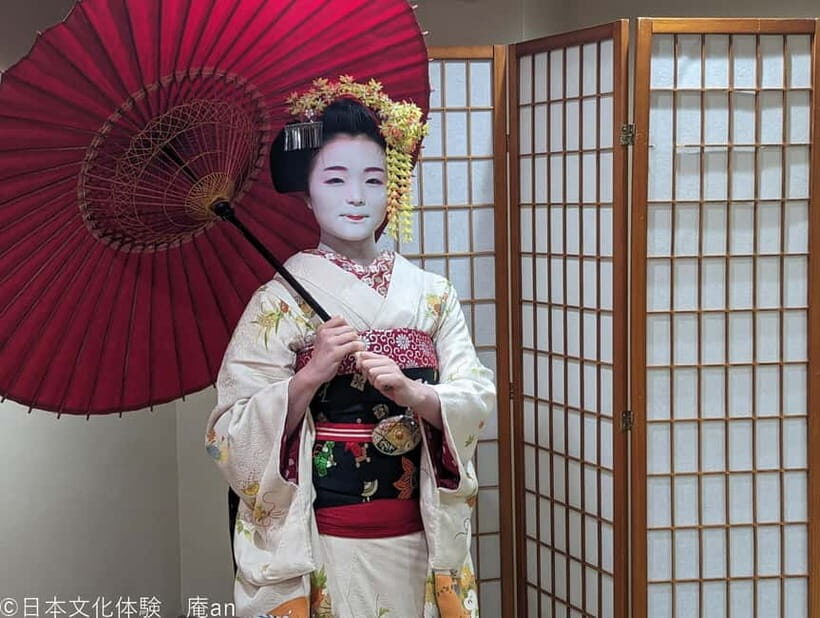
- Direct Q&A with Maiko: you’re not stuck guessing what to ask.
- Tea ceremony demonstration: graceful etiquette, with no pressure to participate in tea-making.
- Two traditional dances: movements tied to seasons, love stories, and everyday life.
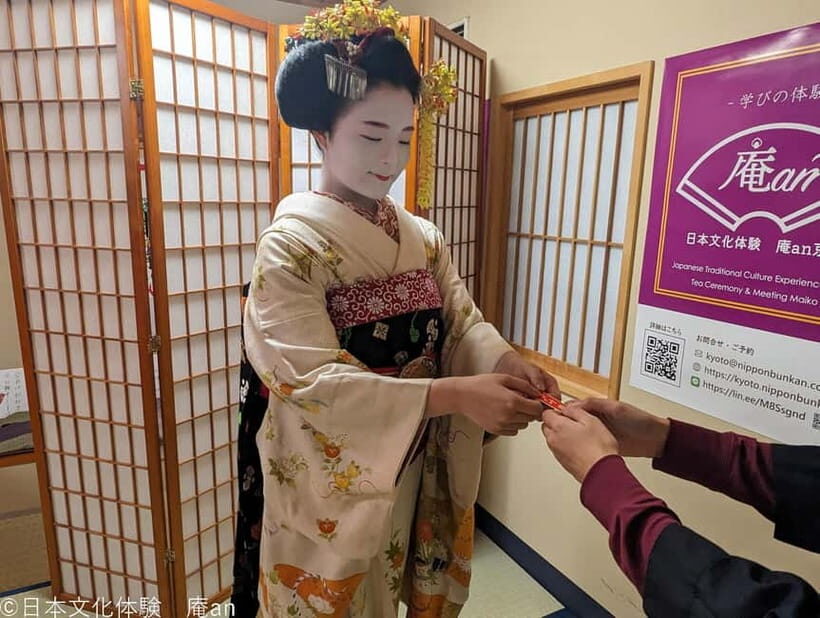
- Close photo time plus Senjyafuda: a lucky charm presented alongside your commemorative shot.
- Interactive game with Maiko: a fun break from being a quiet audience member.
Kyoto Maiko Time in the Gojo Area, Without the Fancy Setup
This experience takes place in Honshu, Japan, and centers on meeting a Maiko in Kyoto. It’s priced at $38 per person and runs about 90 minutes, which is a nice sweet spot: long enough to learn something, short enough to fit into a busy Kyoto day.
The meeting point is easy to find: it’s about a one-minute walk from Exit 1 of Subway Karasuma Line Gojo Station. The store entrance faces Gojo-dori, so you’re not hunting down hidden alleys with wet shoes and bad luck.
Now, here’s an important reality check. The venue is not an ochaya-style traditional house. It’s located in a building, but the atmosphere is relaxed and the staff are friendly. No special prep is needed. In other words, you can show up as you are and focus on the experience instead of playing dress-rehearsal for Kyoto.
Also, the program is designed around a professional performer, so you’ll be expected to participate in the experience components. If you don’t join in, entry isn’t allowed.
You can also read our reviews of more tours and experiences in Kyoto.


The 90-Minute Flow: Tea, Questions, Photos, Dance, and a Game
The best way to think about this plan is as a smooth, guided sequence of cultural moments. You’re not just watching one thing—you’re rotating through several parts, each with a different kind of “up close.”
Here’s how the time typically moves:
- Greeting from Maiko
You start with a welcome moment that sets the tone. This isn’t stiff or overly formal. It’s the kind of introduction that helps you feel comfortable enough to ask questions later.
- Tea ceremony demonstration by Maiko
You’ll observe a tea ceremony with the same kind of precision and etiquette you’d expect in Kyoto. The idea here is watching the grace of movement and the rules behind it, not performing the ritual yourself.
- Q&A session
This is the highlight for many people. You can ask questions directly and get insight into her world—daily life, personal interests, and the details that make Maiko culture feel real instead of museum-still. The translation is provided as much as possible, and the host/translator helps keep things moving so you’re not stuck waiting for someone to summarize.
- Take photo with Maiko + Senjyafuda
Then comes the commemorative photo right beside her. After the photo, Maiko presents a lucky charm called Senjyafuda. The charm detail matters because it turns a photo-op into something you carry home with a story attached.
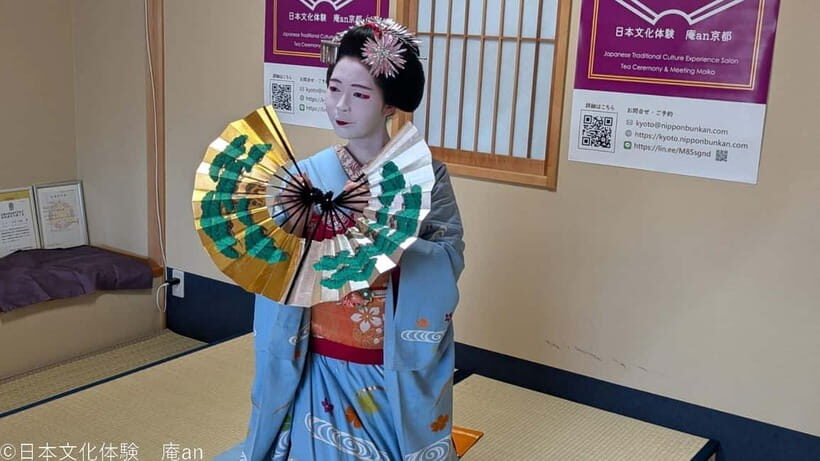
- Maiko’s dance performance (two traditional dances)
You’ll see two dances that express themes such as Japan’s seasons, love stories, and everyday life. Watch how the hands and posture communicate meaning. Even if you don’t know the background, the pacing and body language do the talking.
- Interactive game with Maiko
This part is what breaks up the “only watching” pattern. There’s usually a simple game, with guests invited to join if they want. Even if you’re shy, cheering and clapping still turns you into part of the room’s energy.
The last stretch includes a short chatting time after Maiko leaves the room. If you’re the type who asks one more question after an activity ends, this is where that can happen.
One more practical note: depending on the situation, you may see a Geiko instead of a Maiko. That’s not the end of your experience—it’s still within the same cultural world—but it’s good to know so you don’t walk in expecting one strict outcome.
Tea Ceremony Demonstration: What You’re Actually Getting (and Not Getting)
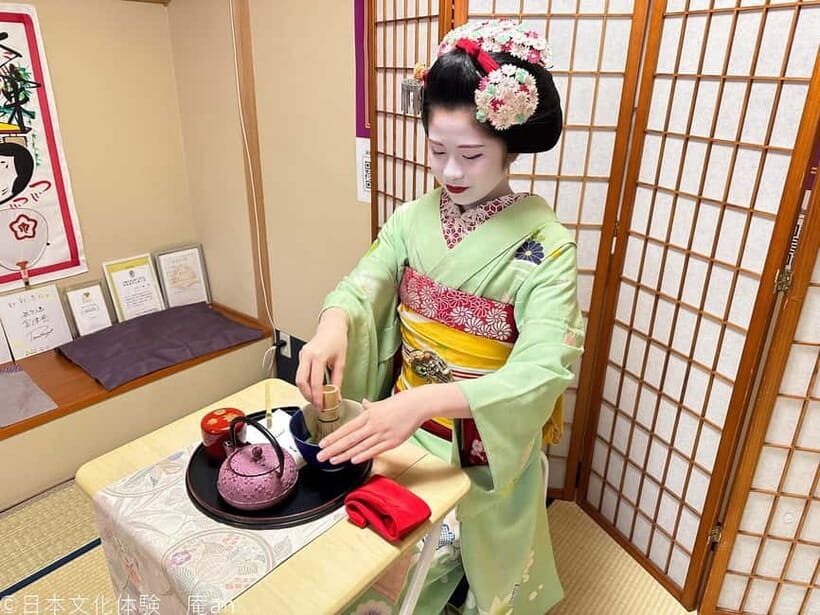
This is a big point for expectation-setting. In the Simple Plan, you’ll watch a tea ceremony demonstration. You will not be making tea or doing tea-making as part of this basic package.
If you want to participate in making tea yourself, there’s a separate option called Tea Ceremony with Maiko Premium. So if your goal is hands-on matcha or tea preparation, don’t book this expecting you’ll be working at the equipment.
What you will get is the etiquette and the visual rhythm: the controlled movements, the careful pacing, and how everything looks and feels when it’s done by a professional. That’s still valuable. Watching someone perform a tradition with calm focus tells you more than you’d think, especially if you’re trying to understand why Maiko training is so strict about details like posture and timing.
The Q&A Session: The Best Part of the Whole Program
If you’re the type who likes real answers, this Q&A is built for you. The program is set up so you can ask questions directly, and that changes everything.
Instead of just wondering how they wear kimono or how the hairstyles stay perfect all day, you can ask. Instead of trying to read meaning into dance movements from a distance, you can ask what you’re noticing. The translator/host also plays a role here, keeping the atmosphere lively and making sure people feel included.
A useful tip: go in with 2–4 questions ready. You don’t need to write a whole script. Just having a starting point helps. Questions that often fit the moment include:
- what a normal day looks like in terms of routine
- how kimono and hairstyles are chosen and handled
- what it’s like performing dances and welcoming visitors
Even if your question is simple, it usually lands well because it’s personal and practical.
Dance Performance Up Close: Elegance You Can See in Your Own Body Language
The dance section isn’t just about entertainment. It’s also where you learn how Maiko express stories and seasons through movement. You’ll see two dances with themes that connect to Japan’s cycles, romance stories, and daily life.
Here’s the thing: if you sit too far back, you may lose small details—especially hand positions and facial expression. Some people have found the room arrangement makes visibility harder from farther back, with tables and seating creating a view problem. So if this dance part is your main reason for booking, I’d treat the seat choice seriously.
There are optional seating upgrades:
- SS seat (first row): 3,300 JPY
- S2 seat (second row): 2,200 JPY
- S3 seat (third row): 1,100 JPY
Even if you don’t consider yourself a “front-row person,” this is one case where paying a bit more can help you actually see what makes the dance so precise.


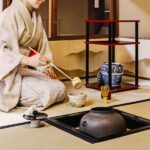

Photo Time and the Senjyafuda Lucky Charm
The close photo moment is straightforward but special in a Kyoto way. You take a commemorative photo right beside Maiko, not from a tiny line behind ropes and stanchions.
After that, she presents a lucky charm called the Senjyafuda. That detail gives the whole moment extra weight. You’re not just taking a picture; you’re receiving something symbolic at the same time.
For photos, keep it simple:
- have your camera/phone ready before it’s your turn
- hold steady for a brief moment
- don’t rush the handover of the charm—let it feel like the gift it is
Also, since the venue is in a building, lighting can vary by room. If your phone struggles in low light, consider turning on night mode or using a quick test photo before the main session begins.
The Interactive Game: How to Join Without Feeling Put on the Spot
The game is a fun twist because it turns the event from a lecture into something social. The program encourages interaction, and volunteers are welcome. If you don’t want to play, watching is still part of the experience—you just clap and cheer.
One realistic consideration: people vary in confidence. If you’re shy, it’s easy to think you’ll be too late to join. The good news is you can still participate by supporting. Kyoto hospitality doesn’t require everyone to run the show; it needs a room that responds.
And yes, the performers are professionals—so the game is entertaining to watch even if you know you’re not going to win.
Price and Value: Is $38 a Smart Deal?
At $38 per person, the Simple Plan covers a lot of ground for 90 minutes. You’re not paying only for one segment. You’re paying for a bundle: tea ceremony demonstration, Q&A, a photo with a lucky charm, dance performances, and an interactive game.
The main thing that changes the value equation is what you expect to walk away with.
If you want hands-on tea-making, this isn’t the match. That’s why the premium option exists. If you’re okay with watching the tea ceremony instead of making it, then this package offers a lot of cultural content without jumping to a pricier format.
Where value can feel uneven is if you expected snacks or drinks to be included. The program notes a snack and drink option for 500 JPY, and a seat upgrade menu exists too. So if you arrive hungry, you’ll want to either eat beforehand or plan to add the snack option.
Some people also have commented that the room setup can affect viewing, especially in back rows. That matters because when you can see the dance details clearly, you get more “payoff” from your ticket.
Room Setup, Stairs, and How to Make It Easy on Yourself
This venue is wheelchair accessible, but it’s not elevator-accessible. There’s no elevator, and you’ll need to take stairs to reach the venues inside the building. If you’re traveling with mobility needs, plan your timing and bring a little patience.
Sightlines are also part of the “how easy this feels” equation. Some people have had trouble seeing the performance clearly due to room arrangement and tables. If you care about seeing Maiko’s dance movements closely, seat selection is your friend.
The program runs within operating hours from 10:00 to 17:00. If you’re booking later, reservations received after 17:00 are processed the next day.
Also, English translation is provided as much as possible. If you specifically want to add translation, you’ll need to contact the organizer.
Who Should Book Simple Plan with Maiko
This is a strong fit if:
- you’re in Kyoto and want a real Maiko encounter without spending a lot
- you love questions and want direct answers during a Q&A session
- you’re excited by tea ceremony etiquette, traditional dance, and a little participation through games
It’s also a good option for couples and solo travelers who want a structured experience that doesn’t eat an entire afternoon.
It’s less ideal if:
- your top priority is hands-on tea-making
- you need guaranteed front-row sightlines and don’t want to consider seat upgrades
- you’re sensitive to crowding or room layout issues
Kids can attend too. Children under 2 can be free if they sit on a parent’s lap (and if a seat or meal is needed, pricing rules apply). So it can work for families with very young children.
Should You Book It? My Take
I think this is worth booking if you want a well-paced, culturally focused 90-minute experience centered on Maiko presence. The biggest draw is the direct Q&A, plus the photo and Senjyafuda moment. Add the tea ceremony demonstration and dance, and you get a full “taste” of Maiko culture without needing extra add-ons.
If you book, do it with two expectations straight:
1) this plan is more about watching and learning, not making tea yourself
2) choose seating wisely if you care about dance visibility
If that matches your style, you’ll likely feel like you got a lot for your money.
FAQ
Is making matcha or tea included in the Simple Plan?
No. This Simple Plan includes a tea ceremony demonstration, but it does not include making tea yourself. If you want to participate in making tea, choose Tea Ceremony with Maiko Premium.
What is the duration of Simple Plan with Maiko?
The program is about 90 minutes.
Where do I meet for the experience?
Meet at a location about a one-minute walk from Exit 1 of Subway Karasuma Line Gojo Station. The store entrance faces Gojo-dori.
Is the venue a traditional ochaya house?
No. It’s located in a building, with a relaxed atmosphere and friendly staff.
Is there an elevator, and is it wheelchair accessible?
It is wheelchair accessible, but there is no elevator. You will need to take stairs to reach the venues inside the building.
What if I need to cancel?
You can cancel up to 8 days in advance for a full refund. After that, a cancellation fee applies, and cancellation won’t compensate for travel expenses to the venue.