REVIEW · DINING EXPERIENCES
Maiko Night Performance with Kaiseki-style Kyoto cuisine Dinner
Book on Viator →Operated by Beauty of Japan · Bookable on Viator
A Kyoto night becomes unforgettable when Maiko performance meets a real dinner setting. This 3.5-hour outing has a simple rhythm: bus to Shozan Resort Kyoto, watch traditional music and dance up close, then slow down with a garden stroll and skyline views. It’s built for people who want culture without the planning headache.
What I like most is how the evening is structured around the performance and the setting, not just a quick stop. You’re also getting a Kyoto-style Kaiseki dinner timed to the show, plus an on-board audio system in multiple languages. One thing to consider: guidance can be Japanese-forward, so you’ll want to rely on the multilingual audio if you’re not fluent.
In This Review
- Key things to know before you go
- Maiko Night Shows: Why This Kind of Kyoto Experience Works
- Price and Value: What $100.15 Buys You (and What It Doesn’t)
- Getting From Kyoto Station: Bus Timing and How the Evening Starts
- Shozan Resort Kyoto: The Dinner Show Combo (Kaiseki-Style + Maiko)
- Kyoto-style Kaiseki dinner: what to expect
- The Maiko performance: the main event
- After Dinner: Garden Strolls and Traditional Architecture at Night
- Higashiyama-sancho Park: The View Stop That Makes the Night Feel Complete
- Group Size, Comfort, and the Language Reality Check
- Who Should Book This Maiko + Dinner Night
- Should You Book This Maiko Dinner Performance Tour?
- FAQ
- How long is the Maiko performance and dinner tour?
- Where does the tour start?
- What time does the tour depart?
- What’s included in the price?
- Are drinks included with dinner?
- Can I request vegetarian meals or food allergies?
- Is there an audio guide, and what languages are available?
- Does the tour include hotel drop-off?
- What ticket do I get, and how should I handle it?
Key things to know before you go
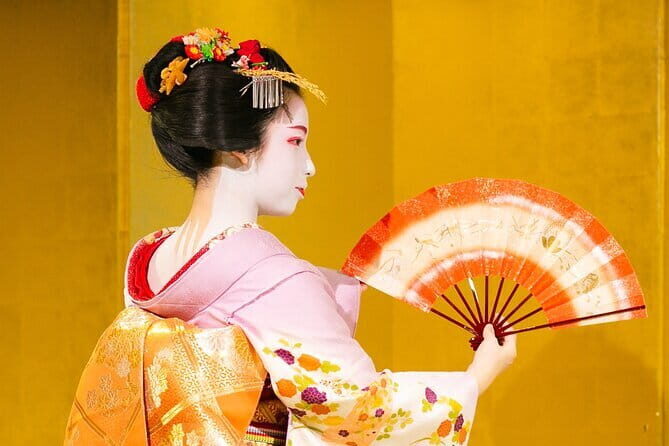
- Maiko vs. Geisha: you’ll see an apprentice Maiko (not the same role as Geisha) performing traditional songs, dances, and instrument pieces like shamisen or koto.
- Shozan Resort Kyoto is part of the show: after dinner, there’s time for a leisurely walk in the Japanese garden and traditional buildings.
- Audio guide is multilingual: GPS-enabled guidance is offered in English, Chinese, and Korean on the bus.
- Dietary limits are real: dinner is fixed-schedule, and vegetarian options or specific allergy catering aren’t provided.
- Dinner quality depends on expectations: it’s presented as Kaiseki-style, but the meal format may feel more like set-plate dining than a strict multi-step ritual to picky foodies.
- Small-group feel (on a big trip): the tour caps at 35 people and you’ll ride with other Japanese guests too.
Maiko Night Shows: Why This Kind of Kyoto Experience Works
If Kyoto is your theater, Maiko time is the curtain-raiser. A Maiko is an apprentice geiko in Kyoto’s traditions, trained to entertain with singing, dance, and classic instruments. It’s not just background entertainment; the performance is meant to show refinement and practice.
The best part of this evening is that the show isn’t dropped onto your itinerary like a random activity. It’s paired with an actual sit-down dinner in the same venue, so you get into the mood before the first musical cue. Even if you don’t know the meaning behind every moment, the atmosphere and the pacing do a lot of the work for you.
And because Kyoto is famous for subtlety, the dinner focus matches the performance style. The meal is described as Kyoto-style Kaiseki, with an emphasis on natural flavors and careful presentation—especially relevant in a region where mountains make it harder to rely on lots of seafood year-round. That ingredient reality is part of why chefs in Kyoto lean into balance and seasonal choices.
You can also read our reviews of more tours and experiences in Kyoto
Price and Value: What $100.15 Buys You (and What It Doesn’t)

At $100.15 per person, this is not the cheapest way to spend an evening in Kyoto. So you should judge it like a package: you’re paying for transportation from Kyoto Station, admission to the Maiko show, the dinner service, and multilingual audio on the bus.
Here’s where the value usually lands well:
- If your main goal is to see a Maiko performance without scrambling for venues, this setup saves time.
- If you like the idea of combining dinner + show + garden walk in one smooth flow, you avoid the “what do we do next” problem.
- If you’re traveling with limited flexibility in your schedule, a fixed evening start helps you plan the rest of your night.
Where value can feel weaker:
- If you’re a strict Kaiseki purist. The meal is described as Kaiseki-style, but one key review point was that the dinner felt more like boxed/set-plate dining than a full traditional Kaiseki sequence. If your expectation is a very formal multi-course ritual, consider this dinner part of a cultural evening package rather than a top-tier dining event.
- If you care a lot about drinks. Drinks aren’t included, so your total evening cost can creep up.
My advice: decide based on the show. If the Maiko performance is the priority, this package is built to support it.
Getting From Kyoto Station: Bus Timing and How the Evening Starts
The tour begins at Kyoto Station, with a pick-up by bus around 5:30 pm (or 5:40 pm in April). You’re told to arrive at least 20 minutes early, because the bus departs on time and late arrivals aren’t allowed to join. That’s not rare in Japan, but it matters here because this tour runs on a tight evening sequence.
You’ll ride with a Japanese-speaking guide and share the bus with Japanese tourists. On top of that, there’s an on-board audio guide with GPS-enabled guidance in English, Chinese, and Korean. That’s the practical safety net if you don’t read Japanese signs fluently.
One consideration that can affect comfort: the live guide element may be more Japanese-forward than you’d expect. If you’re traveling with English-first expectations, don’t assume every explanation will be translated in real time. Use the audio guide as your main guide for the ride.
Shozan Resort Kyoto: The Dinner Show Combo (Kaiseki-Style + Maiko)
This is the heart of the experience: Shozan Resort Kyoto. Once you’re there, you’ll move into the dinner-and-performance rhythm.
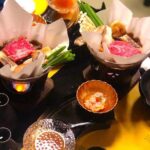
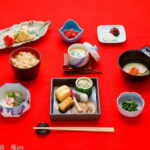
Kyoto-style Kaiseki dinner: what to expect
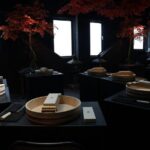
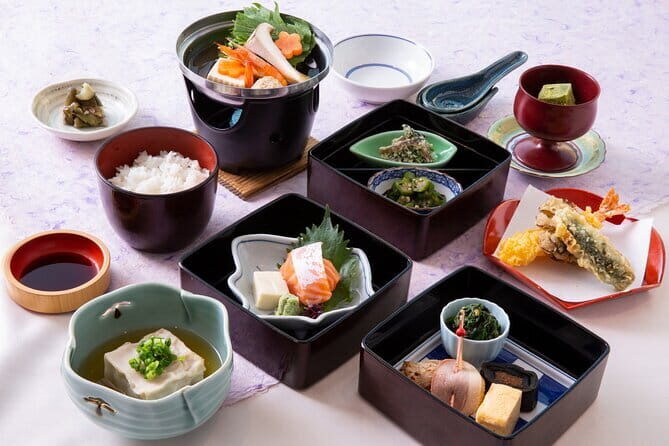
The meal is presented as Kyoto-style Kaiseki with subtle flavors and beautiful plating. There’s also an explanation behind the menu logic: Kyoto’s mountainous geography historically limits seafood variety, which pushes local cuisine toward what’s available and at its best.
Practically, the tour serves meals on a fixed schedule for everyone, and vegetarian options or specific allergy catering aren’t available. So if you have dietary restrictions beyond a simple dislike, you’ll want to plan carefully. This is one of those nights where you shouldn’t count on swapping dishes.
Also note: drinks are not included, so if you want tea, soda, or anything alcoholic, you’ll likely pay extra at the venue.
You can also read our reviews of more tours and experiences in Kyoto
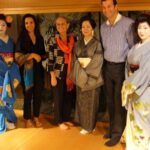
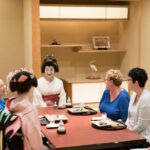
The Maiko performance: the main event
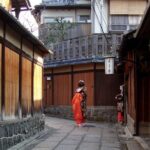
A Maiko’s performance in Kyoto tradition typically includes songs, dance, and classic instrument pieces like shamisen or koto. Even when you don’t understand every lyric, the form comes through: posture, timing, and the careful way the performance builds.
One review detail worth knowing: the Maiko may have a photo moment with guests. If you care about that, it’s worth keeping your phone ready and staying attentive during the performance transitions.
What you should take away: the show is the reason you’re here. The dinner sets the tone, but the Maiko performance is the highlight.
After Dinner: Garden Strolls and Traditional Architecture at Night
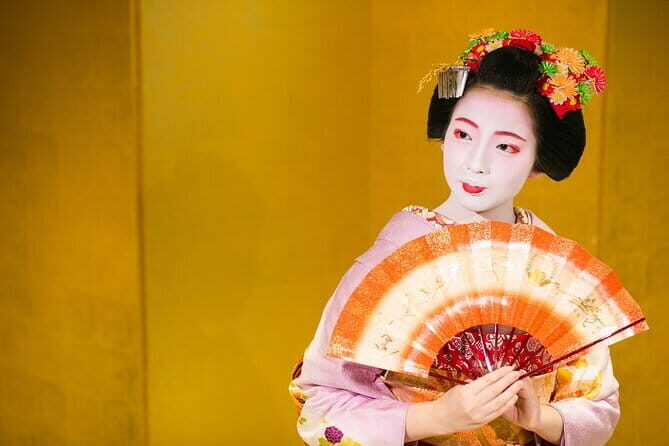
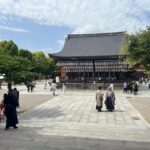
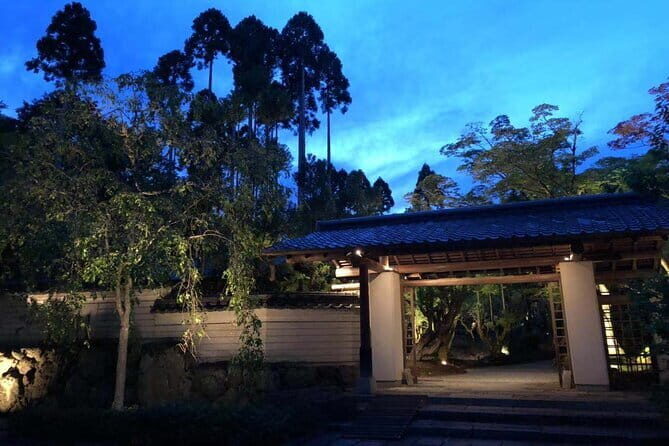
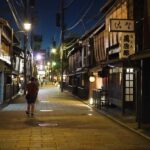
After the show and dinner, you get a slower pace: a leisurely stroll through a Japanese garden and time to admire the venue’s traditional architecture. This is more than a break between “events.” It’s where you get photos that feel Kyoto rather than “event-photo-by-the-venue-wall.”
Night air can make gardens feel different—cooler, quieter, and more atmospheric. The gardens also give you something meaningful to do while the rest of the group resets after dinner. If you’re the type who likes to step away from a crowded room and just wander, this part is a good match.
Practical tip: wear shoes that handle uneven paths. Garden areas often aren’t built for high heels or slippery soles.
Higashiyama-sancho Park: The View Stop That Makes the Night Feel Complete
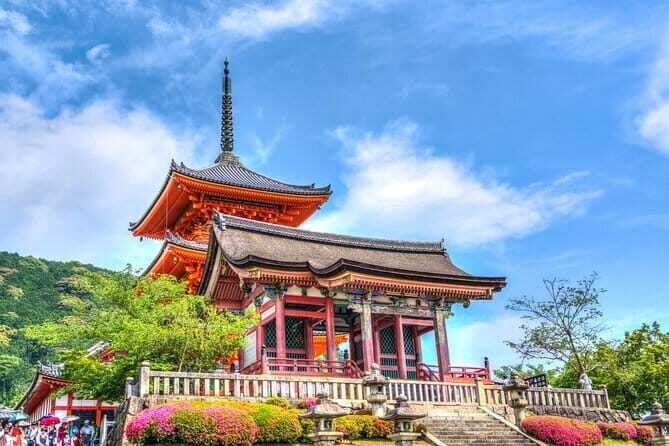
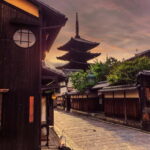
The tour includes a brief stop at Higashiyama-sancho Park, known for its night views of Kyoto. This is where the evening turns from cultural performance to city atmosphere.
This part is short, so don’t treat it like a long sightseeing detour. It’s best for:
- a quick “wow” moment over the rooftops,
- photos with a skyline perspective,
- and a calm transition back toward Kyoto Station.
If skies are clear, you’ll likely enjoy it more. If it’s overcast or rainy, you’ll still get the viewpoint, just with less drama.
Group Size, Comfort, and the Language Reality Check
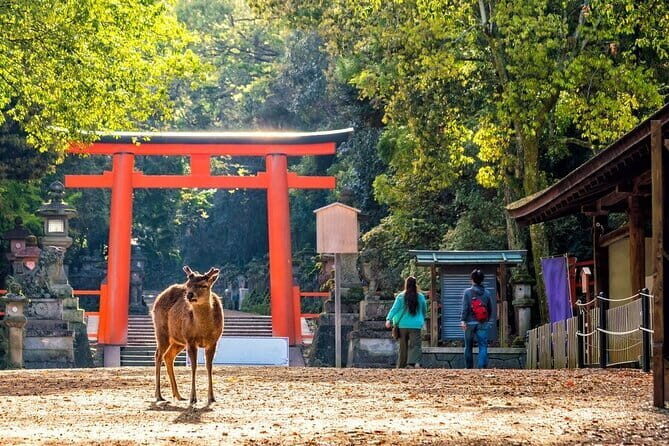
The tour caps at 35 travelers, which helps keep it from feeling chaotic. You’ll also be on a bus ride with other Japanese guests, and that’s part of the texture of the experience.
The language mix is the main “read this before you book” factor. The audio guide provides English, Chinese, and Korean, but there’s also a Japanese-speaking guide accompanying the tour. That means:
- You’ll get multilingual support on the bus.
- You may not get full English narration of every single moment in the same way you would on an English-first tour.
If you’re okay using audio and observing visually, you’ll probably feel fine. If you need a full English explanation at every stop, this is where you might feel disappointed.
Who Should Book This Maiko + Dinner Night
This tour fits best if you want:
- a single-night plan with minimal decision-making,
- the Maiko performance as the main goal,
- a Kyoto-style dinner experience paired with culture,
- and a little extra time for scenery (garden + viewpoint).
It may be less satisfying if:
- you’re extremely picky about what Kaiseki must look like and how it should be served,
- you require vegetarian meals or have specific food allergies,
- or you strongly want an English-speaking guide to explain everything in real time.
If you’re in the middle—curious, respectful of tradition, and focused on atmosphere—this is a good match.
Should You Book This Maiko Dinner Performance Tour?
Book it if your top priority is seeing a Maiko performance with an evening structure that’s easy to follow: bus in, dinner and show, garden wander, and a viewpoint stop. The package format is the value.
Skip or look for another option if you treat Kaiseki as a high bar and you need vegetarian/allergy customization, or if you expect heavy English narration beyond the audio guide. In those cases, you might spend your money on a show you like but a dinner format that doesn’t meet your definition of first-class dining.
FAQ
How long is the Maiko performance and dinner tour?
The total duration is about 3 hours 30 minutes.
Where does the tour start?
It starts at Kyoto Station (Higashishiokoji Kamadonocho, Shimogyo Ward).
What time does the tour depart?
It departs at 5:30 pm. In April, the departure time is 5:40 pm.
What’s included in the price?
Admission to the Maiko performance, a Kaiseki-style Kyoto dinner, transportation from Kyoto Station by bus, and an on-board audio guide (English, Chinese, and Korean).
Are drinks included with dinner?
No. Drinks are not included.
Can I request vegetarian meals or food allergies?
No. Vegetarian options are not available, and the operator cannot cater to specific food allergies.
Is there an audio guide, and what languages are available?
Yes. There is GPS-enabled multilingual audio guidance available in English, Chinese, and Korean.
Does the tour include hotel drop-off?
Yes, complimentary drop-off is offered for Kyoto Tokyu Hotel, RIHGA Royal Hotel Kyoto, and Hotel Keihan Kyoto Grande. Hotel pickup is not included.
What ticket do I get, and how should I handle it?
The boarding ticket you receive also serves as an entry pass for major sightseeing locations. Keep it safe until the end of the tour, and it can be exchanged starting from three days prior to your boarding date. Lost tickets cannot be reissued.