REVIEW · KYOTO PREFECTURE
Kyoto: Ikebana (Japanese Flower Arrangement)
Book on GetYourGuide →Operated by Tondaya, Co., Ltd. · Bookable on GetYourGuide
Kyoto’s flower art is surprisingly practical. This 90-minute ikebana class mixes hands-on arranging with a visit to the historic machiya museum Tondaya in Nishijin. You’ll learn the basics in a calm, guided setting, then your finished work gets a photo moment in front of the garden.
I like that it’s built for beginners, with materials and tools provided and an instructor who leads you step by step. I also like the second half of the experience: you don’t just make flowers—you walk through a 140-year-old machiya filled with artifacts and stories about Kyoto’s living culture.
One thing to weigh: if you’re chasing deep theory, rules, and long demonstrations, the lesson time may feel tight. The schedule is 90 minutes, but the vibe here is about making an arrangement, not delivering a long lecture.
In This Review
- Kyoto Ikebana in Nishijin: The Best Part of This 90 Minutes
- Arriving at Tondaya: Where the Experience Actually Starts
- The Ikebana Backstory: Why 1462 Still Shapes What You Make
- The Lesson Portion: Tools, Seasonal Flowers, and Clear Steps
- Making Your Arrangement: The Moment It Becomes Yours
- The Machiya Part After Flowers: Why Tondaya Matters
- Price and Time: Is $122 Good Value for This Experience?
- Who This Works For (and Who Should Reconsider)
- Photo Tips and Practical Etiquette in a Tatami-Adjacent World
- Should You Book This Ikebana Experience?
- FAQ
- FAQ
- How long is the Kyoto Ikebana experience?
- Where do I meet for the activity?
- Is the ikebana lesson suitable for beginners?
- What do I need to bring?
- Are bare feet allowed?
- Is there English support during the class?
Kyoto Ikebana in Nishijin: The Best Part of This 90 Minutes
- Beginner-focused guidance that’s hands-on from start to finish
- Meet and talk with an ikebana master, with English support when needed
- Seasonal flowers and all tools included, so you can focus on learning
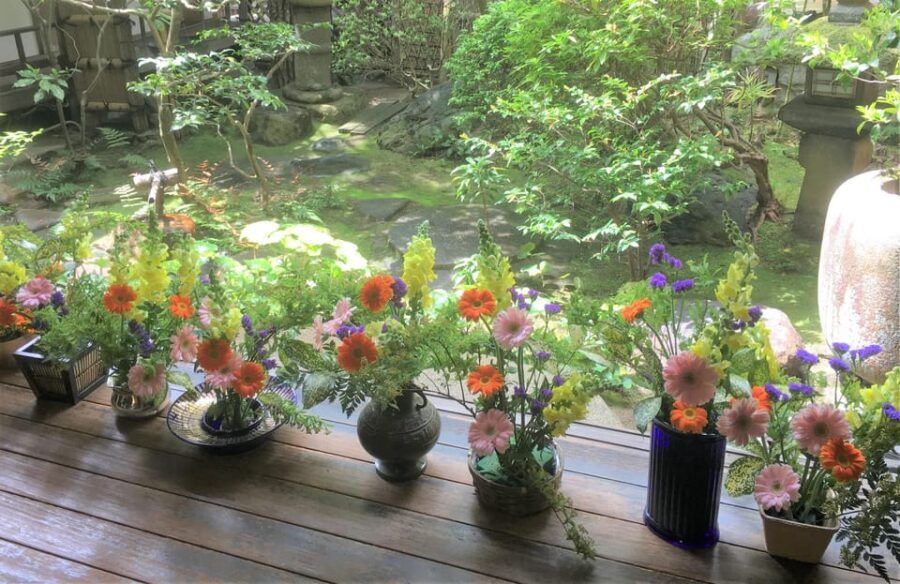
- Your arrangement is displayed for photos in front of the garden
- A machiya museum visit after the class, with 140-year-old character at Tondaya
- Private group format, so the pace can feel more comfortable than a crowd
Arriving at Tondaya: Where the Experience Actually Starts
You meet at Tondaya – Nishijin Japanese Cultural Experience Museum, 697 Ishiyakushichō, Kamigyo Ward, Kyoto, Japan. This matters because the venue is part of the point. A lot of Kyoto activities feel like you’re renting time in a space; here, you’re stepping into a traditional townhouse setting that supports the art lesson.
Before you go in, plan around the footwear rules. Bring socks and wear them during your visit. Bare feet are not allowed, and you should avoid stockings or tights. This is one of those small logistics details that can ruin an experience if you forget—so treat it like you would for an onsen or temple visit.
Also, come on time. The experience is scheduled, and you’ll want a relaxed start—especially if you’re new to Japanese cultural activities and want to understand what’s happening before you’re standing over flowers.
You can also read our reviews of more tours and experiences in Kyoto Prefecture.

The Ikebana Backstory: Why 1462 Still Shapes What You Make
Ikebana didn’t start as casual hobby craft. The origin story goes back to Kyoto in 1462, when an arrangement was admired for beauty and elegance. Unlike purely religious offerings, it was designed to express harmony between nature and human space.
That idea is what you’re really learning, even if no one says it in complicated academic language. In practice, ikedbana is about choosing and placing natural elements so they look intentional—like the space is part of the arrangement, not just a background. You’ll feel that more than you’ll read it, because the instructor will guide you while you handle the materials.
The class is set up for beginners, so you’re not expected to already know terms or rules. What you should expect is a guided path from first steps to a finished piece that looks like it belongs in Kyoto.
The Lesson Portion: Tools, Seasonal Flowers, and Clear Steps
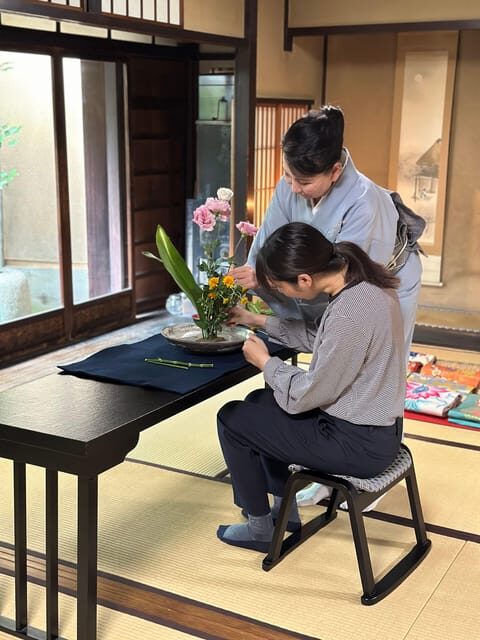
The experience includes materials: seasonal flowers and all necessary tools. That’s a big deal for first-timers. When an activity requires you to bring your own supplies, you can end up spending energy on logistics instead of learning. Here, the provided materials help you concentrate on how to shape the arrangement.
The format is also designed around your instructor’s role. An ikebana master guides the lesson, and the activity is described as suitable for beginners. In plain terms, you can expect to be taught what to do while you do it, rather than just watching.
Language support is part of the design. The instructor can work in English and Japanese. Not every staff member may speak English, so an interpreter is arranged when needed, and a translation device may be used in some cases. For you, the takeaway is simple: don’t worry about arriving with perfect Japanese. Do make sure you’re comfortable asking basic questions during the session if something isn’t clear.
Making Your Arrangement: The Moment It Becomes Yours
This is the heart of the experience. You’ll create a traditional flower arrangement using the seasonal materials provided. The lesson centers on guidance, so you’re not left alone with a table and a bundle of stems.
Two practical things I’d keep in mind while you’re working:
- Expect guidance to happen in real time. You may be corrected on placement or angle as you go, because the goal is a finished arrangement that looks balanced and intentional.
- Slow down enough to absorb the steps. Ikebana is small movements and careful choices. If you rush, it’s harder to understand the logic behind each step.
When your arrangement is done, you don’t just pack it up and leave. Your completed piece is displayed in front of the garden afterward, giving you a setting that’s meant for photographs. That photo moment is more than a nice extra. It reinforces the purpose of the art: the arrangement is meant to be seen in a specific relationship with space, light, and surroundings.
The Machiya Part After Flowers: Why Tondaya Matters
Then you shift from hands-on art to Kyoto’s living heritage. After the ikebana lesson, you’ll be guided through Nishijin Lifestyle Museum Tondaya, a machiya townhouse that’s about 140 years old. It’s designated as a culturally significant landmark by the Kyoto City Government.
If you’ve ever wondered why Kyoto still feels like Kyoto instead of just a collection of old buildings, this is one of the better answers. The museum setup is designed around historically valuable artifacts and stories. You’ll get a deeper sense of how traditional crafts and lifestyles connect, not only as museum objects, but as part of the region’s identity.
The staff are trained across multiple traditional arts, including kimono, tea ceremony, calligraphy, and ikebana. Even if your session is focused on flowers, it helps to be in a place where different arts share the same attention to form and space.
In other words, your ikedbana isn’t floating in isolation. You’re learning it in the same cultural neighborhood that keeps those traditions alive.



Price and Time: Is $122 Good Value for This Experience?
At $122 per person for 90 minutes, this is not a budget activity. So here’s how I’d judge value.
You’re paying for a combination of things that many separate activities would cost individually:
- The ikebana lesson itself, including an instructor/guide
- Materials: seasonal flowers and all necessary tools
- Entrance fee to the museum
- The added experience of visiting Tondaya’s historic townhouse setting
For beginners, the value equation can work well because you’re not paying for guesswork. You’re paying for guidance, materials, and a finished, photo-worthy result—plus a second cultural component in the same booking.
Where value can feel weaker is when your personal goal is more theory-heavy than hands-on. If you want lots of rules, long demonstrations, and deep explanations, you’ll want to confirm the style of instruction you’ll receive. The activity is 90 minutes, but a class can still feel short if the format is fast, practical, and focused on making an arrangement.
My practical advice: before you commit, decide what you want most—hands-on skill or extensive theory. This is built to teach you how to make something.
Who This Works For (and Who Should Reconsider)
This experience is a strong match if:
- You’re a beginner and want a guided first ikebana
- You like structured activities where materials are provided
- You want more than a single craft moment, and you enjoy Kyoto’s traditional townhouse spaces
- You’d like photo-ready scenery without having to engineer it yourself
It may be less ideal if:
- You’re expecting a long, lecture-style deep dive into every principle and rule of ikebana
- You mainly want the history lesson and demonstration, not the actual making part
- Your priority is maximum time, because the schedule is designed around getting you to a finished arrangement within 90 minutes
Also note the group setup. It’s a private group, but the reservation requires a minimum of two participants. If you’re traveling solo, you may need to team up with someone or check whether the organizer can accommodate smaller combinations in practice.
Photo Tips and Practical Etiquette in a Tatami-Adjacent World
Since your arrangement is displayed for photos, it’s worth planning your approach.
Wear clothing you’re comfortable moving in. You’ll be working with flowers, and a lot of Kyoto cultural spaces involve careful movement and attention to where you place things. And since socks are required, make sure your socks are clean and non-slip in a way that feels comfortable on indoor floors.
For the photo moment, arrive with the mindset that you’re photographing the relationship between arrangement and setting. Try a few angles: straight-on for balance, then slight side angles to capture the height and line of the stems.
It’s not about studio perfection. The charm here is that the art is shown in a real traditional space.
Should You Book This Ikebana Experience?
Book it if you want a beginner-friendly way into Kyoto’s flower culture, plus a genuine traditional townhouse experience at Tondaya. The combination of hands-on arranging, included materials, and a photo display makes it feel complete rather than half-finished.
Think twice if you’re mainly seeking lots of formal theory or long demonstrations. This is structured around making an arrangement and seeing it placed in context. If that matches your goal, you’ll likely leave with something beautiful and a clearer sense of what ikebana is trying to do.
FAQ
FAQ
How long is the Kyoto Ikebana experience?
The experience lasts 90 minutes.
Where do I meet for the activity?
Meet at Tondaya – Nishijin Japanese Cultural Experience Museum, 697 Ishiyakushichō, Kamigyo Ward, Kyoto, Japan.
Is the ikebana lesson suitable for beginners?
Yes, the experience is designed for beginners, and you’ll be guided by an ikebana master.
What do I need to bring?
You should bring socks.
Are bare feet allowed?
No. Bare feet are not allowed. You’ll need to wear socks during your visit.
Is there English support during the class?
The instructor can work in English and Japanese. If not all staff members speak English, an interpreter may be arranged, and a translation device may be used when necessary.