REVIEW · FUSHIMI INARI TOURS
Crowd-Free Kyoto: Fushimi Inari, Nijo Castle & Kinkaku-ji
Book on Viator →Operated by JAPAN TRAVEL STAGE · Bookable on Viator
Three big Kyoto sights, minus the stress. This private tour is built for an easier day, with early starts that help you dodge the worst lines and photo crush. You get a guide to connect the dots between shrines, shogun-era power, and the Golden Pavilion so the places make more sense fast.
I also like how the timing is efficient without feeling rushed—Fushimi Inari, Nijo Castle, and Kinkaku-ji fit into about 5 hours at a relaxed pace. One heads-up: admission tickets for Nijo Castle and Kinkaku-ji are not included, so you’ll want some yen ready before you go.
In This Review
- Quick hits on this crowd-free Kyoto highlights tour
- Why this tour is built for real Kyoto timing
- Entering Kyoto Station area: the meeting point that keeps you calm
- Fushimi Inari early: seeing the Senbon Torii before the wave
- Nijo Castle and the Tokugawa palace focus at Ninomaru
- Kinkaku-ji Golden Pavilion: gold leaf and Zen stillness
- The private-guide advantage: what changes versus group tours
- How the 5-hour route holds up in real life
- Price and value: what you’re really paying for
- Who this tour suits best (and who might not)
- Should you book this crowd-free Kyoto tour?
- FAQ
- How long is the tour?
- What are the main stops on this Kyoto tour?
- Is this a private tour?
- Are admission tickets included for all stops?
- Is food or drinks included?
- What if the weather is bad?
- Where do you meet and where does it end?
Quick hits on this crowd-free Kyoto highlights tour
- Private group, relaxed pace: it’s your group only, so you move when your feet (and photos) need to
- Early timing for Fushimi Inari: you’ll see the Senbon Torii before the busiest surge
- UNESCO Nijo Castle access (with extra paid entry): focus on the Ninomaru Palace and Tokugawa-era stories
- Kinkaku-ji Golden Pavilion focus: you’ll spend dedicated time at the gold-leaf temple
- Mobile ticket convenience: handy for check-in once you’re on the move
Why this tour is built for real Kyoto timing
Kyoto rewards people who start early. The “famous sights” list is the same for everyone, which means afternoons can get packed in a hurry. This tour is planned to help you hit the hardest spots first, so you’re not fighting crowds just to get a decent look.
You also get something solo sightseeing rarely gives you: a guide who turns each stop into a story. That matters at places like Nijo Castle, where the meaning isn’t always obvious just by looking. It’s the kind of context that helps you notice details instead of just checking boxes.
The day runs about 5 hours, and it’s practical: you begin near Kyoto Station and end near Kinkaku-ji. That flow is a big deal when you don’t want to spend your whole vacation bouncing across town and recalculating train times.
You can also read our reviews of more tours and experiences in Kyoto.



Entering Kyoto Station area: the meeting point that keeps you calm
The tour starts at the South Square in Kyoto Station, in the Kyoto Station Building area. If you’re staying in Kyoto Station or nearby, this is a straightforward launch pad and not a “find the tiny side street” kind of meeting.
You’ll also like that it’s near public transportation. Kyoto can be confusing if you’re hopping between train lines, so getting on the route early without extra friction is worth something.
This is the kind of start that helps you arrive with energy. And in Kyoto, energy is everything because temple walking adds up fast.
Fushimi Inari early: seeing the Senbon Torii before the wave
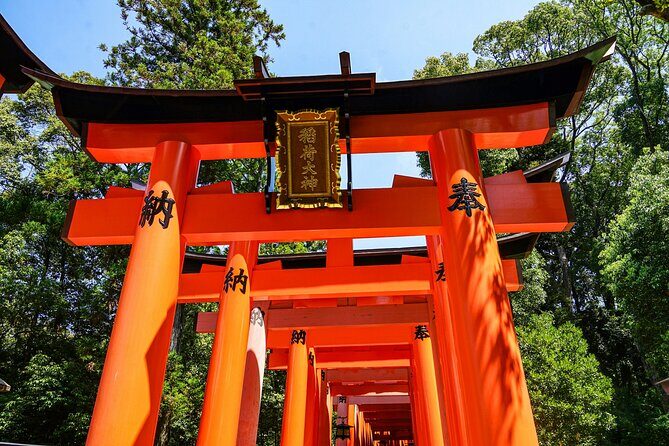
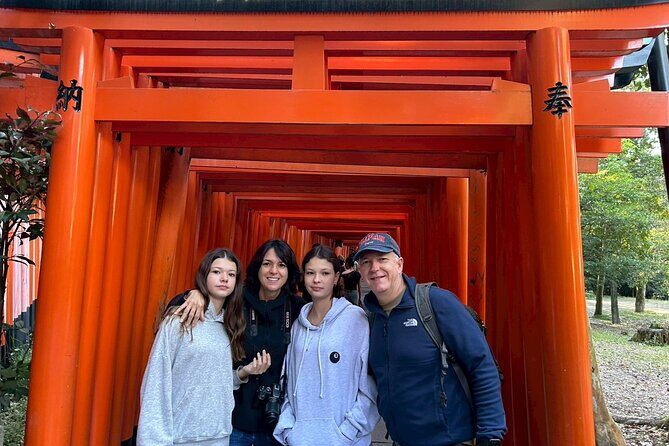
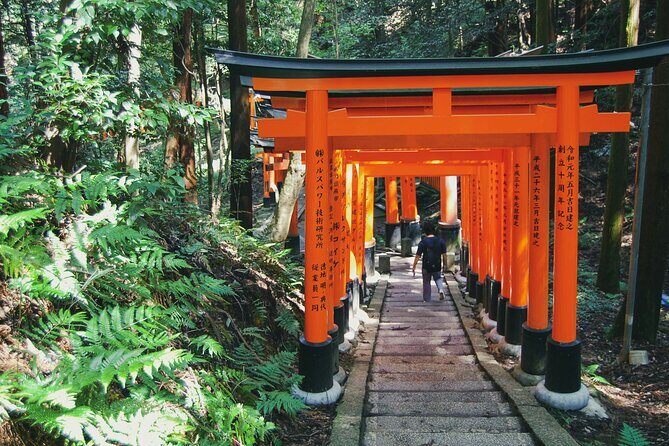
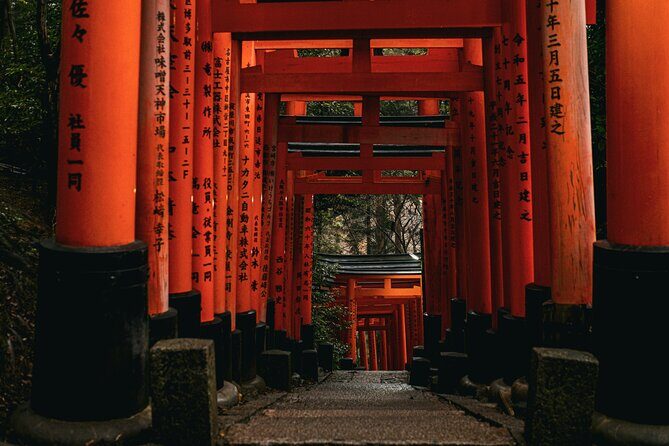
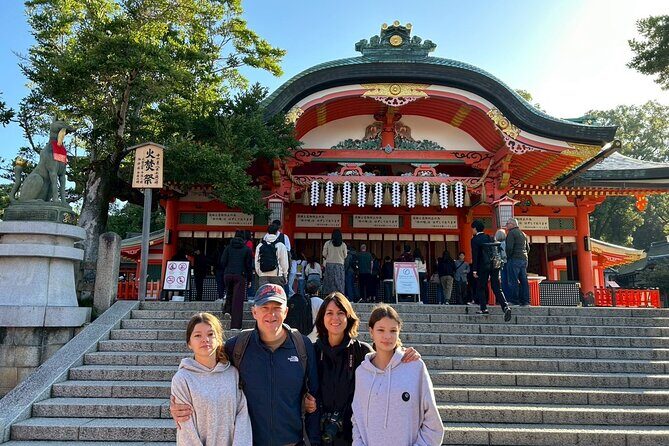
Fushimi Inari-taisha is the star of this route, and you’ll feel why the moment you reach the Senbon Torii—those thousands of red gates that climb upward. The whole place has a sense of momentum, like the shrine pulls you along the path even when you’re trying to slow down.
You’ll spend about 1 hour here, and admission is free. One of the best things about going early is the tone of the crowds. You still get visitors, of course, but the experience is much easier when you’re not standing still every few steps just to pass people.
I also like that your guide can point out what you’re actually looking at as you walk. At Fushimi Inari, the scenery is iconic, but the meaning is deeper than the photo. A good explanation turns those gates from a backdrop into part of the shrine experience.
Practical note: this is a walk with a climb. Even if you don’t go to the very top, you’ll likely cover enough stairs and slopes to feel it. Wear shoes you’d use for a long city day, not sandals meant for perfect weather.
Nijo Castle and the Tokugawa palace focus at Ninomaru
Next up is Nijo Castle, a UNESCO World Heritage site tied to the samurai-era Tokugawa shoguns. This stop is about 1 hour, and admission is not included, so plan for that added cost.
What I find valuable here is the emphasis on the Ninomaru Palace—the former residence of the Tokugawa shogun. If you only have time for one major castle inside Kyoto, this is the kind that gives you a sense of how power was staged in everyday spaces.
Castle buildings can be tricky for first-timers. You might see rooms and hallways, but without context it can feel like “pretty rooms with lots of wood.” A guide helps you understand what mattered back then and why certain design choices weren’t random.
In other words: you’re not just touring a structure. You’re walking through a piece of political theater. That’s also why Nijo Castle pairs well with Fushimi Inari: it keeps the day moving between spiritual symbolism and historical authority.
Kinkaku-ji Golden Pavilion: gold leaf and Zen stillness
Then you’ll head to Kinkaku-ji, famous as the Golden Pavilion. You’ll have about 1 hour here, and admission is not included again, so expect another paid entry.
Kinkaku-ji is one of Kyoto’s most recognizable sights, and that recognition is useful. It gives you a clear goal for your time on-site, rather than wandering and hoping you found the key viewpoints.
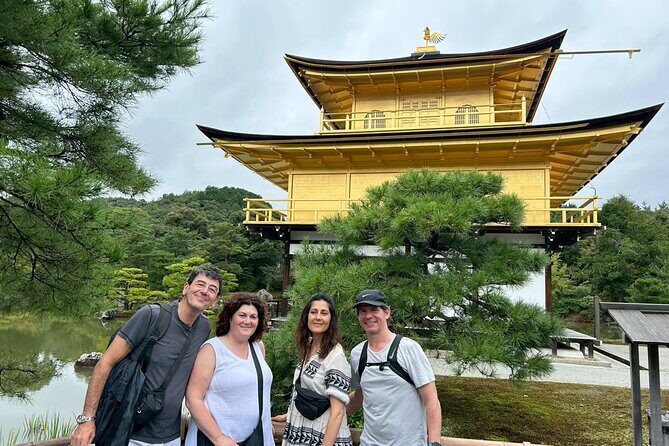
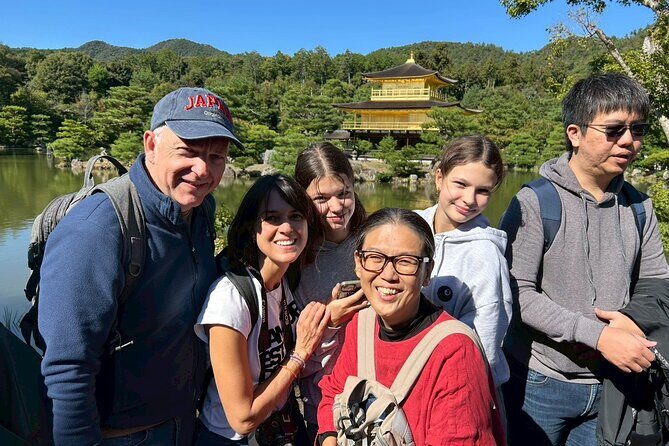
The standout feature is the gold leaf covering the temple buildings. When light hits it right, it looks almost unreal next to the calmer green surroundings. Your guide can also help you understand what you’re seeing, since Zen temple layouts and seasonal vibes often feel more meaningful with explanation.
One practical consideration: the tour notes that weather can affect the experience. That makes sense in Kyoto—fog, rain, and thick cloud can change how the pavilion looks and how comfortable it is to stand outdoors. If conditions aren’t ideal, being flexible with your photo schedule helps a lot.



The private-guide advantage: what changes versus group tours
Here’s what a private format does for your day: it gives you time to breathe. Shared group tours are often timed like clockwork. That’s fine if you like being herded, but if you want to pause for details, private feels better.
The guide also adds context you’d never pull from signage alone. In the reviews tied to this experience, guides including Tom, Ryu, Kazuya, and Maki are praised for knowing Kyoto well and answering questions. That kind of interactive flow is what turns famous stops into personal memories.
I especially appreciate when a guide tells you what to look for before you reach the spot. It helps you avoid walking past the best angles without noticing. And at places like Fushimi Inari, small choices—where to pause, when to look back, when to keep going—change the feel of the whole walk.
Private doesn’t mean chaotic. You still get a structured route. But it’s more like you’re being shown Kyoto rather than following a stampede.
How the 5-hour route holds up in real life
This tour is designed to cover three heavy hitters in about 5 hours. That’s a good length if you want a big Kyoto hit without giving up an entire day.
The order also makes sense. Starting at Fushimi Inari helps you catch the iconic gates in a more manageable mood. Moving next to Nijo Castle keeps the day on a historic track, then finishing at Kinkaku-ji gives you a visually dramatic finale.
The tour ends at Kinkaku-ji (in the Kinkakujichō area). Ending there can save time, especially if you’re planning to return to your hotel afterward. You also won’t have to cram extra “how do I get out of here” logistics into your head while you’re tired.
Food and drink aren’t included. That’s normal for this kind of highlight tour, but it’s a real factor. If you tend to get hungry while walking, you’ll want to plan a simple snack or a quick meal before the tour or after you finish.
Price and value: what you’re really paying for
At $91.96 per person for a private 5-hour day, this isn’t a bargain bus tour price. But it’s also not trying to be luxury. The value comes from three things you’d otherwise spend time (and effort) figuring out:
First, the timing strategy. Hitting Fushimi Inari early so you’re not trapped in crowd bottlenecks is worth real money to anyone who hates line stress.
Second, the guide. Entrance fees at two of the three stops are not included, but the guide covers a lot of “how to understand what you see” time. That context often turns a “cool place” visit into a “I get it now” visit.
Third, the convenience factor: private movement between major attractions with a simple flow from Kyoto Station to Kinkaku-ji. When you add up train planning, route mistakes, and waiting around, time becomes the hidden cost.
If you’re already comfortable using transit and you don’t care much about historical context, a self-guided day can be cheaper. But if you want an easier, guided, early-timed day that hits the big icons without turning into a grind, this pricing can feel fair.
Who this tour suits best (and who might not)
This tour is a great fit if you want Kyoto highlights in one day and you care about seeing them without the worst crowd crush. It’s also ideal for first-timers who want structure and explanations, especially when the sites are famous but not automatically easy to interpret.
It’s also a good choice if your group includes people with different interests. One person wants temple photos, another wants history, and another just wants a calm day. With a guide, you can usually get something satisfying at each stop.
You might want a different plan if you’re trying to keep costs ultra-low. Since Nijo Castle and Kinkaku-ji admissions aren’t included, your final day cost will be a bit higher than the tour price alone.
Should you book this crowd-free Kyoto tour?
If your goal is a smooth, high-impact Kyoto day with a guide and better-than-average crowd timing, I’d book it. The combination of Fushimi Inari early, Nijo Castle’s Tokugawa focus, and Kinkaku-ji’s Golden Pavilion finale is exactly the kind of route that rewards a guided approach.
I’d especially recommend it if you hate wasting vacation hours in lines or if you like learning what you’re looking at while you walk. Bring good shoes, plan for temple entry fees, and keep one meal buffer in mind since food isn’t included.
If that sounds like your style of Kyoto, this tour is a very practical way to get the big three without the stress tax.
FAQ
How long is the tour?
The tour lasts about 5 hours.
What are the main stops on this Kyoto tour?
You’ll visit Fushimi Inari-taisha Shrine, Nijo Castle, and Kinkaku-ji (Golden Pavilion).
Is this a private tour?
Yes. It’s listed as a private tour/activity, so only your group participates.
Are admission tickets included for all stops?
No. Fushimi Inari-taisha Shrine has free admission. Nijo Castle and Kinkaku-ji admissions are not included.
Is food or drinks included?
No. Food and drinks are not included.
What if the weather is bad?
This experience requires good weather. If it’s canceled due to poor weather, you’ll be offered a different date or a full refund.
Where do you meet and where does it end?
You start at the South Square, Kyoto Station Building area, and you end at Kinkaku-ji.