REVIEW · KYOTO CRAFT WORKSHOPS
Calligraphy Experience in Kyoto Townhouse
Book on Viator →Operated by Ami Kyoto · Bookable on Viator
Your next souvenir is written, not bought. This Kyoto townhouse calligraphy workshop mixes Zen-minded technique with hands-on guidance, plus you get to keep what you write. It’s also one of those rare chances to step inside an older wooden home that feels tucked into old Kyoto life.
I like the Zen-rooted focus—it’s not just about copying characters, it’s about slowing down long enough to get the strokes right. I also love that you’ll take home your finished kanji on paper, so the experience leaves a real artifact, not just photos.
One thing to consider: the lesson runs about 1 hour 30 minutes, so it covers basics and feedback, but it’s not long enough for heavy practice or perfect mastery on your first day.
In This Review
- Key things that make this calligraphy class worth your time
- A Kyoto townhouse makes calligraphy feel like more than a class
- What you learn: Zen roots and kanji basics you can actually use
- How the lesson runs: intro, demonstration, then hands-on strokes
- Inside the experience: what you’ll do with your brush and ink
- Your take-home kanji art: a souvenir with actual meaning
- Price and value: is $58.64 worth it?
- Group size and teaching style: why small helps
- Practical details that help you plan your day
- Who should book this workshop (and who might skip it)
- Should you book Calligraphy Experience in a Kyoto Townhouse?
- FAQ
- FAQ
- How long is the calligraphy workshop in Kyoto?
- How much does the calligraphy experience cost?
- What’s included in the price?
- What isn’t included?
- Where do I meet for the experience?
- How many people are in the class?
- Can children or teens participate?
- What is the cancellation policy?
Key things that make this calligraphy class worth your time
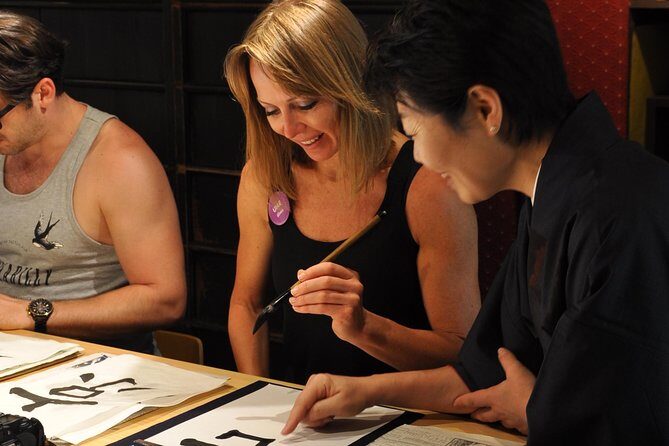
- An 80-year-old Kyoto townhouse setting you can’t easily access on your own
- Zen roots in the lesson, aiming for calm concentration, not speed
- Small-group teaching (max 5 people) with time for instructor feedback
- Hands-on kanji practice right after a short demonstration
- Supplies included, including ink and paper (no shopping needed)
- You keep your finished artwork, so it becomes a true memory
A Kyoto townhouse makes calligraphy feel like more than a class
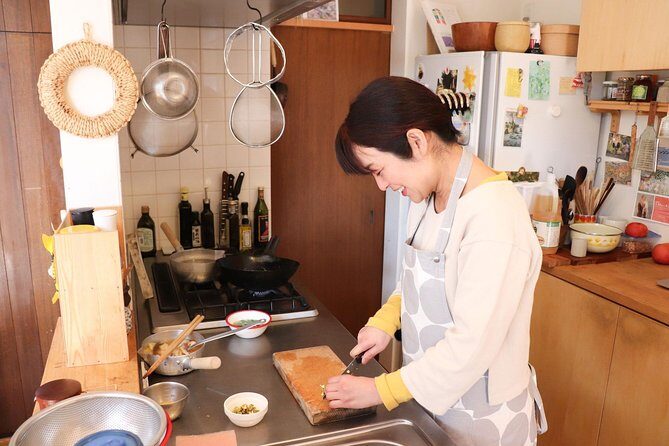
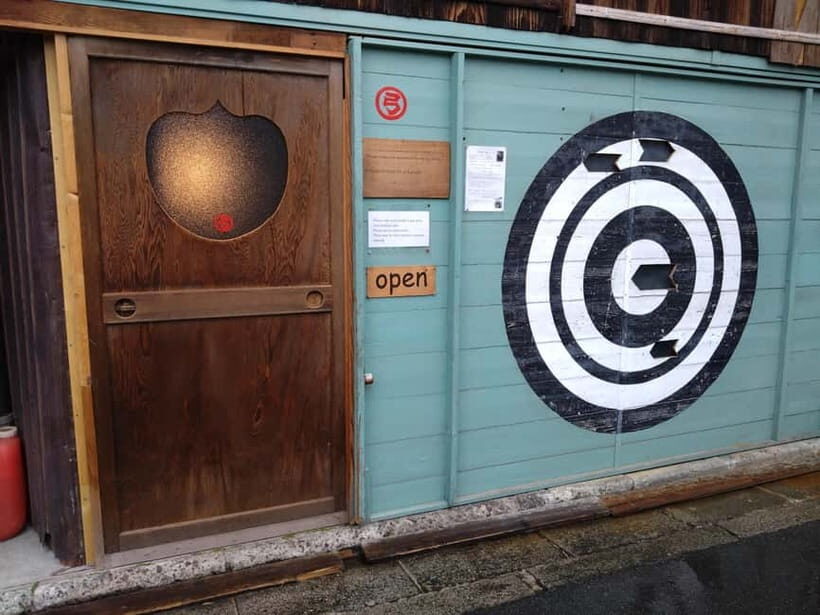
Kyoto does tradition well, but what I like here is the setting does the heavy lifting. You’re not stuck in a generic studio. You’re in a traditional wooden townhouse that’s old enough to feel like the walls remember quiet mornings.
That matters for calligraphy. Writing with ink is physical and mental at the same time—your posture, your breathing, even the pace of your hand all affect the stroke. In a calmer room, it’s easier to do the slow, steady things the art form asks for. Instead of rushing to finish a worksheet, you can actually feel the meditative side of the practice.
The townhouse also adds a practical bonus: you’ll experience a slice of older Kyoto that you wouldn’t get just wandering the streets. It’s one of those “I’m glad I scheduled this” moments.
You can also read our reviews of more tours and experiences in Kyoto.


What you learn: Zen roots and kanji basics you can actually use
Calligraphy here starts with context. You’ll learn essential background about the art form, including its Zen roots, before you touch the brush. That’s not just trivia—when you understand where the discipline comes from, it’s easier to take the technique seriously without feeling intimidated.
The workshop frames kanji as something more approachable than most people assume. Yes, kanji characters can look complicated. But the lesson encourages you to see them more like drawings—built from stroke structure rather than “magic symbols.” It’s a helpful mindset shift, especially if you’ve never written Japanese characters before.
The goal by the end is not perfection. It’s competence: you’ll have the basics down well enough to produce an artwork you can be proud of.
How the lesson runs: intro, demonstration, then hands-on strokes
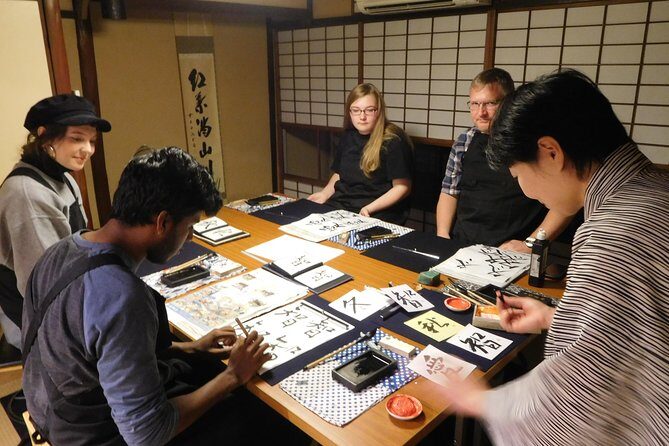
You’ll move through three main phases, and the pacing is designed to keep you from freezing up.
First comes the intro: you’ll get essential knowledge about calligraphy and how it connects to Japanese culture and Zen practice. This is where you learn what to watch for—stroke direction, spacing, and control.
Next is the demonstration. This part is key. A good calligraphy teacher can show you the logic behind the shapes: where the brush travels, how pressure and movement change the line, and why a character can look right even when it isn’t copied exactly like a printed font.
Then you get to the hands-on stage. This is where most people have their fun challenge moment. You’ll practice and create your own piece, guided by instruction and feedback. The point is to learn by doing, not by staring at examples until your hand forgets how to move.
What I appreciate is that the format is structured enough for beginners, but still feels like a real workshop. You’re making something, not just watching.
Inside the experience: what you’ll do with your brush and ink
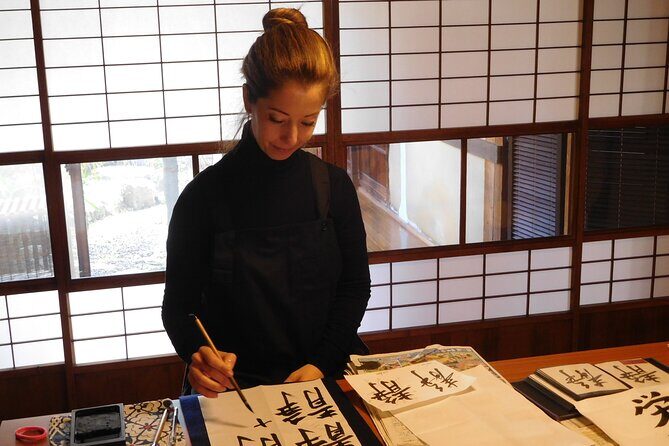
Calligraphy here is described as writing kanji with black ink on white paper. That may sound simple, but it changes your expectations quickly once you try it. Ink behaves differently than pencil. A stroke that’s too fast can wobble. Too heavy can blob. Too light can fade. The brush also doesn’t “draw like a pen”—you’re controlling a tool that responds to your movement.
That’s why feedback matters. In a small setting, the instructor can point out what to adjust—often it’s something small like the angle you’re holding the brush or the order of your strokes. Fixing one thing can improve the entire character.
The workshop includes the basics you need—materials like ink and paper, plus calligraphy utensils rental fee—so you’re not worrying about missing something halfway through. You can arrive, focus on writing, and leave with the thing you made.
Your take-home kanji art: a souvenir with actual meaning
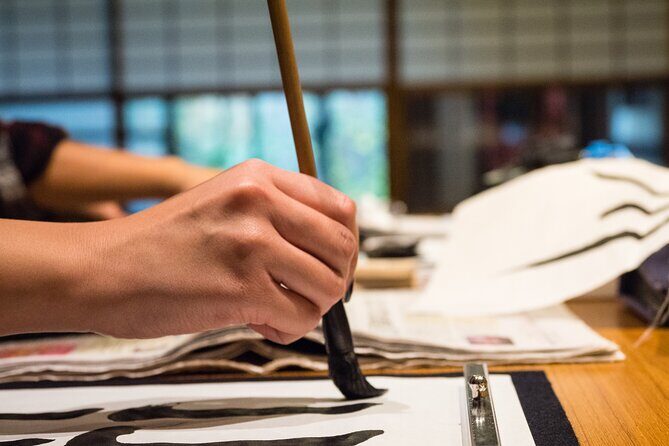
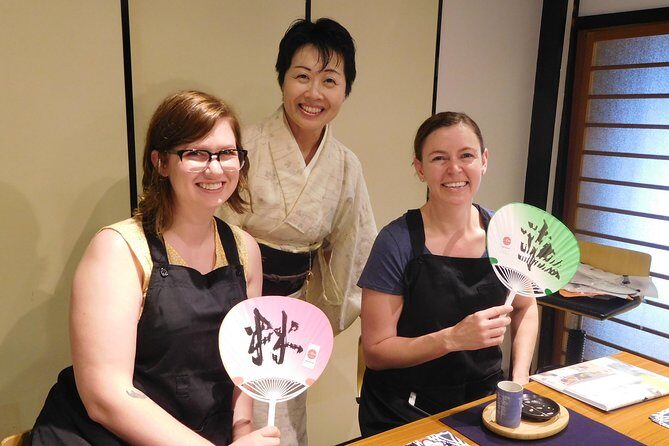
Most Kyoto souvenirs are cute. This one is personal. You’re taking home the kanji art work you create during the lesson, which means the piece has your own decisions in it—your stroke choices, your pace, your best attempt with guidance.
That changes how the souvenir lands at home. You don’t just hang it. You remember the moment you learned how to slow down and control a brush stroke. It’s one of those keepsakes that starts conversations, because people ask what the character means and how you made it.
Also, since the workshop is designed for beginners, you don’t need existing calligraphy skill. The class focuses on achievable progress, so you’re not leaving with a disappointing result and a story about how you couldn’t do it.




Price and value: is $58.64 worth it?
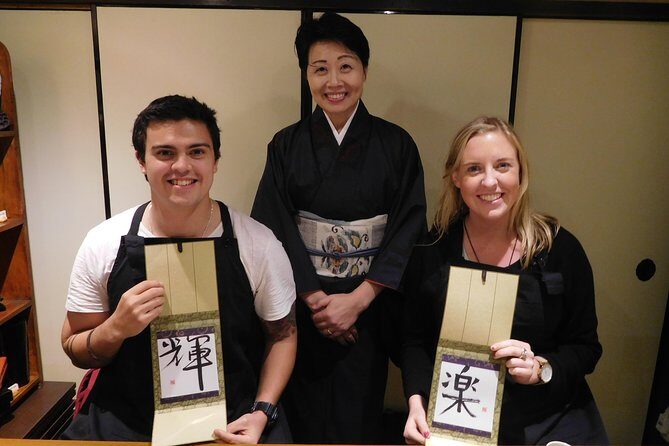
At $58.64 per person, you’re paying for more than “try calligraphy once.” You’re paying for:
- Instruction with explanation and demonstration
- A calm, traditional townhouse setting
- Included materials (ink, paper) and utensil rental
- A guided session long enough to produce an actual finished work
- Small-group teaching, capped at 5 people
When you compare that to paying separately for materials plus hoping you find a good teacher on your own, the workshop format makes sense. The price is also easier to justify because you end up with a physical artifact you can keep.
One more value point: this workshop is listed with mobile ticket use and group discounts, which can help if you’re coordinating with a friend or two. And it’s generally easy to fit into a day because the duration is about 1 hour 30 minutes.
If you’re the type who wants “one great activity” instead of a long shopping crawl, this is the kind of class that delivers. You get calm focus, a teacher, and something to bring home.
Group size and teaching style: why small helps
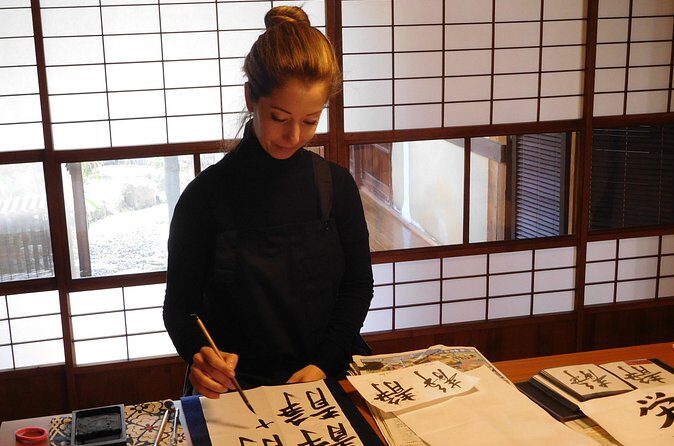
The class size is capped at 5 travelers, which is a big deal for calligraphy. In a larger room, you can end up feeling invisible with ink on your paper and no idea if your strokes are improving.
In a smaller group, the instructor can notice patterns in what you’re doing. You’re more likely to get specific, actionable feedback—something that helps right away.
One review mentioned a small cozy class setup with just one other person plus the instructor, which is exactly how you want it for a beginner-friendly experience. When the room isn’t crowded, it’s easier to stay relaxed and actually learn.
Practical details that help you plan your day
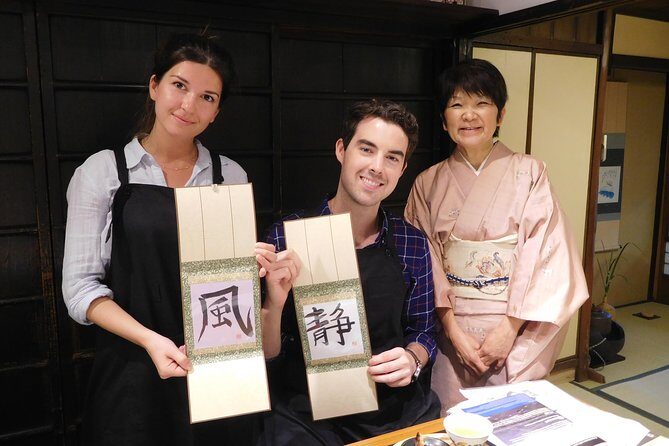
Here’s the practical side so you don’t waste time.
You’ll meet at 605 Nishidachō, Shimogyo Ward, Kyoto, 600-8397, Japan and the experience ends back at the same meeting point. There’s no hotel pickup or drop-off, so plan to arrive on your own and be on time.
The location is described as near public transportation, which matters in Kyoto where walking is great but can add up quickly if you’re hopping between neighborhoods.
Your confirmation should arrive within 48 hours of booking (subject to availability), and you’ll use a mobile ticket.
If you’re traveling with someone under 18: the workshop requires an adult accompaniment. Even if the adult doesn’t participate, a 3,500 yen per person viewing fee applies. So it’s worth planning participation ahead of time.
Who should book this workshop (and who might skip it)
This is a great fit if you want:
- A beginner-friendly cultural activity
- A calm, hands-on experience (not a lecture marathon)
- Something meaningful to bring home
- A chance to experience a traditional Kyoto townhouse setting
You might consider skipping if:
- You’re looking for a long, multi-hour deep practice session
- You want a purely sightseeing experience with lots of walking and views
- You’d rather spend your time on activities that don’t involve fine motor control and concentration
For most people, though, this lands in the sweet spot: structured, small-group, and outcome-focused.
Should you book Calligraphy Experience in a Kyoto Townhouse?
I’d say yes if you want one activity that feels unmistakably Kyoto and gives you a real keepsake. The combination of Zen-rooted instruction, included materials, small group size, and a take-home kanji piece makes the $58.64 price feel fair.
Book it if you’re curious about Japanese calligraphy and want to leave with a result, even as a beginner. Skip it only if you dislike quiet focus or you’re only in Kyoto for heavy sightseeing days.
FAQ
FAQ
How long is the calligraphy workshop in Kyoto?
The workshop lasts about 1 hour 30 minutes.
How much does the calligraphy experience cost?
The price is listed as $58.64 per person.
What’s included in the price?
The price includes materials such as ink and paper, plus a calligraphy utensils rental fee.
What isn’t included?
Hotel pickup and drop-off are not included.
Where do I meet for the experience?
You’ll start at 605 Nishidachō, Shimogyo Ward, Kyoto, 600-8397, Japan.
How many people are in the class?
The maximum group size is 5 travelers.
Can children or teens participate?
Participants under age 18 must be accompanied by an adult. If the adult does not participate, a viewing fee of 3,500 yen per person will be charged.
What is the cancellation policy?
Free cancellation is available. You can cancel up to 24 hours in advance for a full refund, based on local time.