REVIEW · GEISHA & MAIKO TOURS
Kyoto: Try Nishijin Weaving in the Oldest Geisha District
Book on GetYourGuide →Operated by DeepExperience, Inc. · Bookable on GetYourGuide
Weaving turns Kyoto into something you can touch. This small-group tour brings together Kamishichiken and Nishijin weaving, starting at Kitano Tenmangū’s first torii and ending with a guided walk through the preserved hanamachi streets. I like the way you get both the spiritual backdrop and the craft behind Kyoto’s geiko and maiko culture, and I especially like the hands-on workshop where you practice an ancient Tsuzure-ori technique. The only real drawback is practical: you spend time outdoors at the shrine and walking the district, so plan for cold or damp weather if you’re going in winter.
One reason I think this works so well is that the flow makes sense. You start with the guardian shrine that helps explain why this district formed, then you move straight into a real workshop so the craft isn’t treated like a photo stop. Guides I’ve seen referenced in past departures, including Kanako San and Yayoi-san, are described as warm and friendly, and the master weaver (hirano sensei is specifically mentioned) is praised for being humorous and patient—exactly the vibe you want when you’re learning a detail-heavy process.
In This Review
- Key things to know before you go
- Entering Kitano Tenmangū at the first torii
- Kitano Tenmangū Shrine: prayers, treasures, and seasonal scenery
- Tsuzure-ori weaving class: make something real in 1.5 hours
- The Kamishichiken guided stroll: 400 meters of latticework townhouses
- Why this combo feels worth the money
- Price and timing: what 3 hours means for your day
- What to expect from your guide and workshop setting
- Should you book this Nishijin weaving tour in Kamishichiken?
- FAQ
- Where do I meet the guide for this tour?
- How long is the Nishijin weaving and Kamishichiken tour?
- What is included in the price?
- What will I do during the weaving experience?
- Is the tour offered in English?
- How much time do we spend at Kitano Tenmangu Shrine?
Key things to know before you go
- Kitano Tenmangū sets the stage: you visit the guardian shrine tied to the district’s creation.
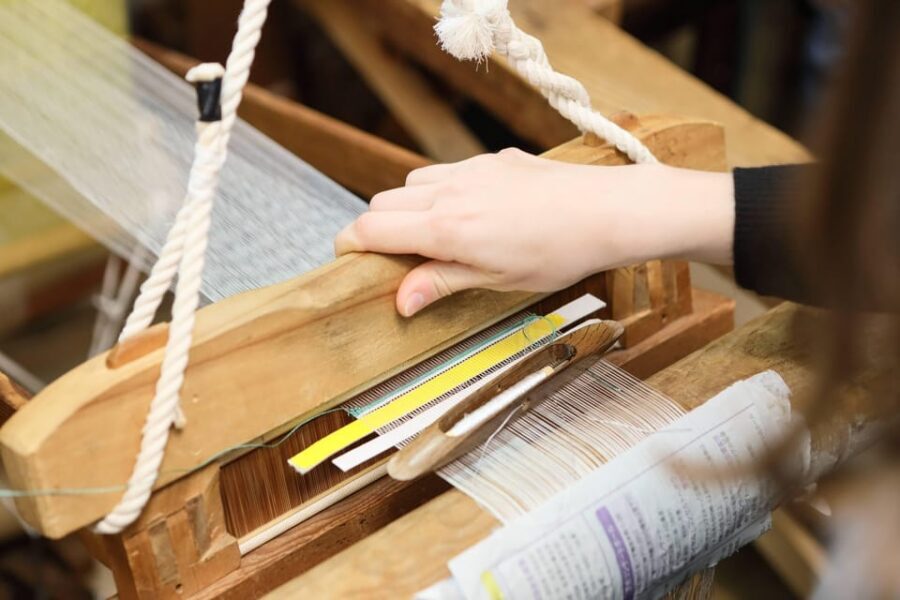
- Tsuzure-ori hands-on craft time: learn the basics of a patterned textile tradition said to be thousands of years old.
- You make your own piece: you pick from an available selection and create a one-of-a-kind work under a craftsman.
- A short walk with big atmosphere: a guided stroll focuses on Kamishichiken’s 400-meter townscape and latticework townhouses.
- Geiko and maiko connections: your guide points out places associated with local geiko and maiko culture.
- English or Japanese live guide: the tour runs with a live guide and is available in both languages.
Entering Kitano Tenmangū at the first torii
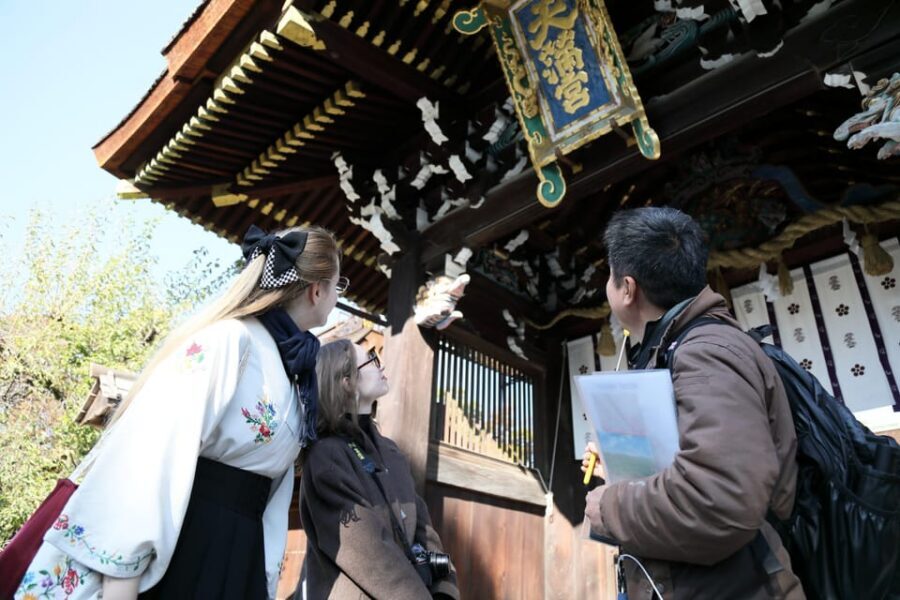
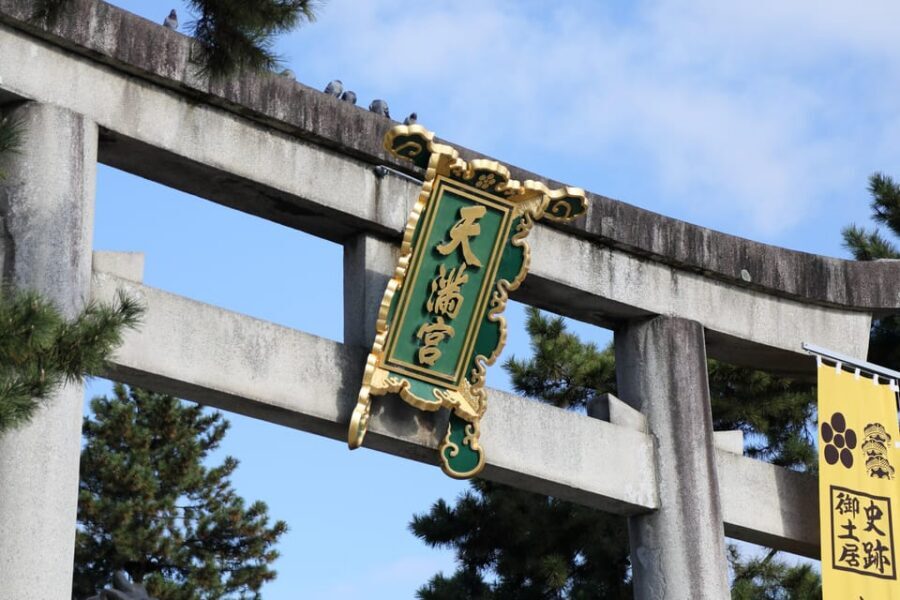
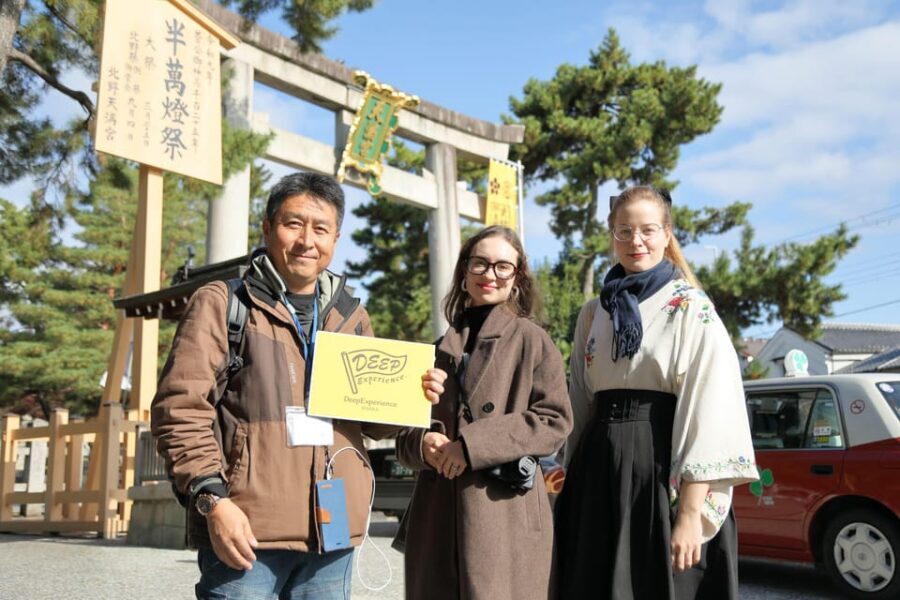
Your tour begins at Kitano Tenmangū Shrine, with the meeting point placed right in front of the first grand torii gate. Your guide holds a yellow sign with the DeepExperience logo, which helps you get oriented fast—Kyoto crowds can be fine, but clear meeting points save time and stress.
Starting at the first torii also gives you a clean visual entry into the day. You’re not wandering around guessing where to go. You’re pulled into the shrine’s rhythm immediately: walk in, observe, and follow your guide’s cues.
One small thing that matters: this tour is only about 3 hours total, so you’ll want to arrive a few minutes early. You don’t want to spend your limited time rereading directions while everyone else is already moving.
You can also read our reviews of more tours and experiences in Kyoto.



Kitano Tenmangū Shrine: prayers, treasures, and seasonal scenery
The shrine portion is about 30 minutes, guided. You’ll get a tour that focuses on the area’s cultural assets—your guide points out important items and even national treasures, including the main worship hall.
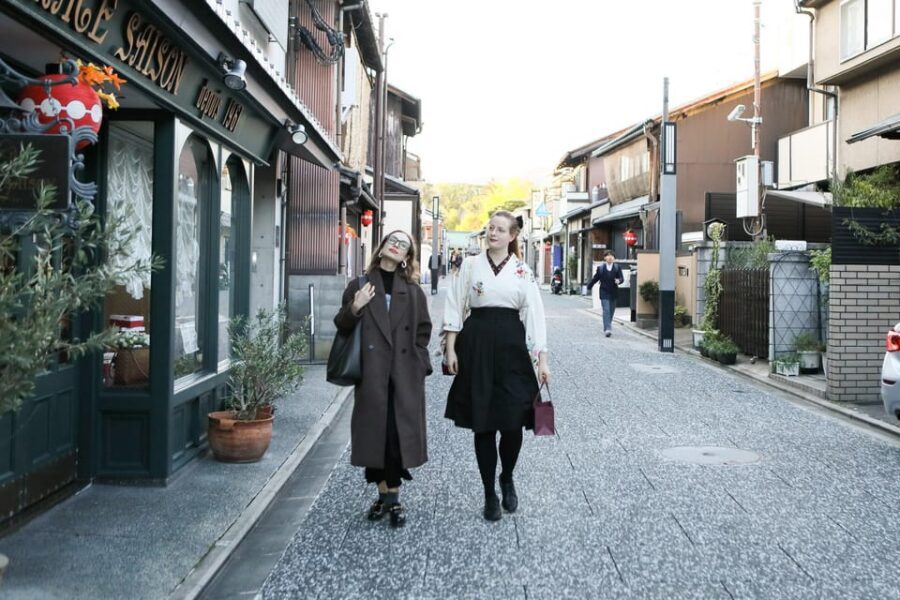
This stop isn’t just sightseeing. It’s the context piece that makes the later Kamishichiken walk click. Kitano Tenmangū is framed here as a key player in the creation of the district, so as you listen, it’s easier to understand why this hanamachi grew where it did.
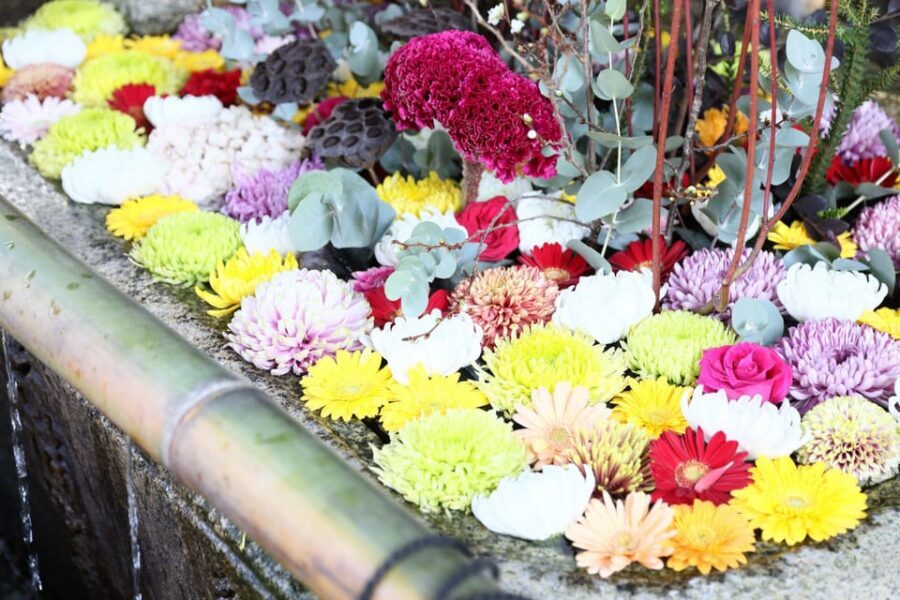
You’ll also spend time taking in the seasonal look of the shrine grounds. That’s not a throwaway line; seasonal scenery is often where Kyoto stops feeling like a checklist and starts feeling like a place. In one past departure described as cold and rainy, the same kind of outdoor conditions were said to add charm rather than ruin the experience—so bring layers and let the weather be part of the atmosphere.
Practical note: because you’re outdoors around shrine grounds, shoes that handle stone or wet pavement will make the walk smoother.
Tsuzure-ori weaving class: make something real in 1.5 hours
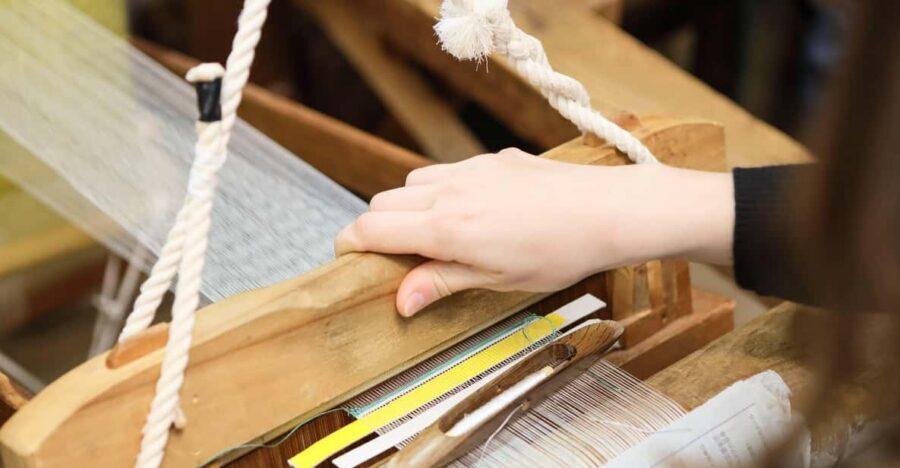
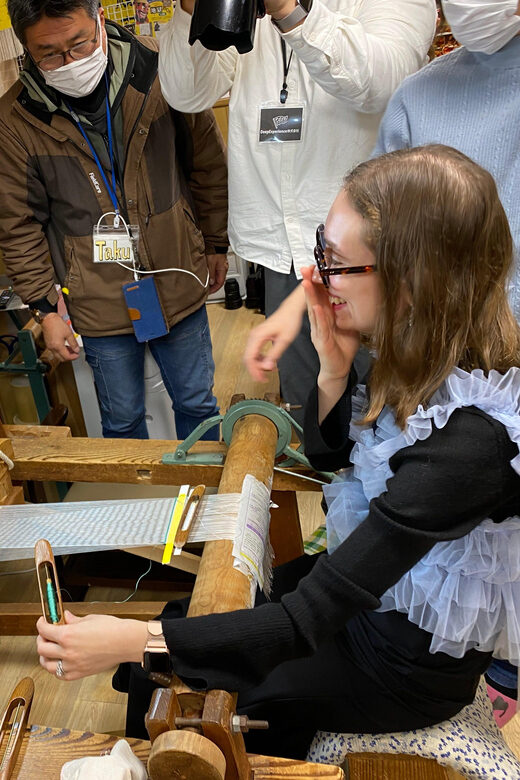
Next comes the main event: the weaving session, lasting about 1.5 hours. This isn’t a lecture-only experience. You learn the basics of Tsuzure-ori, described here as a technique with a history of roughly 4,000 years. You’ll also hear it tied to claims like the world’s oldest patterned textile and the oldest Nishijin textile technique—whether you’re a textile nerd or just curious, the point is that you’re learning a craft with deep roots.
Here’s what you can expect in the workshop style:
- You’ll get an explanation of the basics of the process.
- You’ll choose from a selection of items you can work on.
- You’ll create a one-of-a-kind piece using traditional techniques.
- A craftsman guides you as you actually do the steps.
That hands-on time is where value shows up. Lots of Kyoto experiences let you watch. This one asks you to slow down enough to make. If you like learning by doing, you’ll feel the difference quickly.
Also, this matters for beginners. In past tours, the master weaver is described as patient and humorous, and the overall teaching approach is described as warm. That combo is crucial when the craft details are exacting—patience keeps the learning process enjoyable instead of frustrating.
The Kamishichiken guided stroll: 400 meters of latticework townhouses
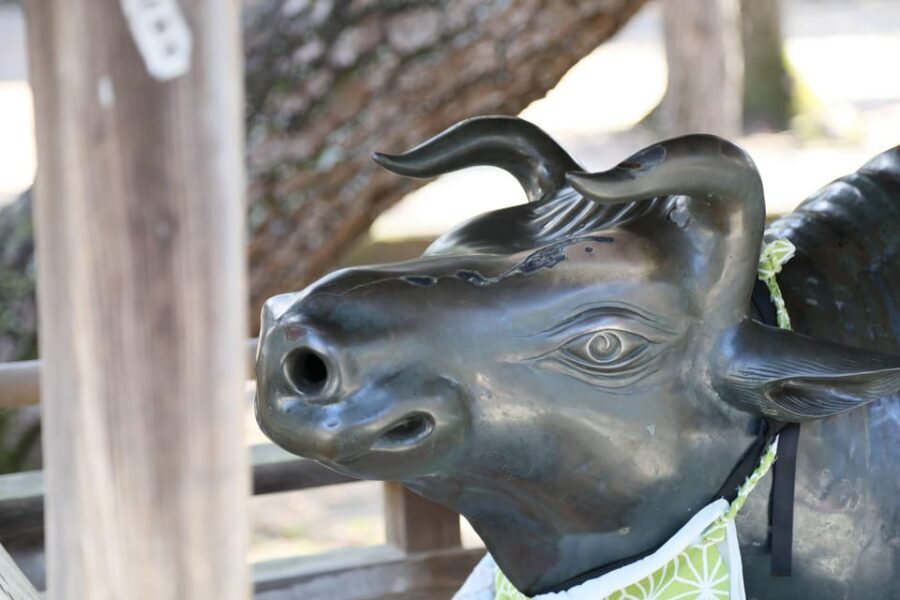
After the workshop, you shift from making to seeing. The final guided walk is about 30 minutes focused on Kamishichiken, described as Kyoto’s oldest hanamachi district.
The walk is short—about a 400-meter street—but it’s packed with the kind of visual detail that makes Kamishichiken feel like Kyoto from before the crowds. You’ll notice townhouses with traditional latticework lining the street, and you’ll follow your guide to spots associated with local geiko and maiko culture.
This is the best time to think less about taking photos and more about reading the street. When your guide points out why a place matters, the district starts to feel logical instead of decorative. You’ll also get a sense of why Kamishichiken is described as preserved: the atmosphere is maintained by keeping the townscape consistent.
One extra nice touch: the experience is framed as a tranquil stroll away from the crowds, which is exactly the kind of pacing that makes a short tour feel relaxing rather than rushed.
And yes, you might catch a small food moment: dango tasting is mentioned as subject to store availability. Don’t plan your day around it, but if it’s offered on the day you go, it’s a pleasant bonus with a local vibe.
Why this combo feels worth the money
This tour is priced at about $131 per person for 3 hours, which sounds like a lot until you break down what you’re paying for: a guided shrine experience plus a real workshop session with a craftsman.
Where the value really lands is the pairing:
- You learn the cultural reason the district exists (Kitano Tenmangū’s role in the creation of Kamishichiken).
- You learn the craft language used in Nishijin weaving (Tsuzure-ori basics).
- You connect the craft to the street by walking Kamishichiken afterward.
If you only did the district walking, you’d miss the tactile understanding of why textiles matter in the performance world. If you only did a weaving workshop, you’d miss the local setting that explains why this style has been valued for so long. This order makes both parts stick.
The other value factor is the human side. Past descriptions include guides like Kanako San and Yayoi-san being friendly and informative, and a master weaver like hirano sensei being both knowledgeable and patient. That’s a big deal in a hands-on class, because the craft process depends on clear instruction.
Finally, you get a live guide in English or Japanese, with private or small groups available, so the experience is less likely to feel like you’re just being herded.






Price and timing: what 3 hours means for your day
Three hours in Kyoto is short, but it’s a smart length for this kind of experience. You’ll spend:
- about 30 minutes at Kitano Tenmangū (guided),
- about 1.5 hours in the weaving workshop,
- about 30 minutes in Kamishichiken (guided walk).
That pacing matters. You don’t get stuck waiting around. You also don’t overload your brain with back-to-back heavy walking. It’s a compact itinerary built around concentration: listen at the shrine, focus at the loom, then shift your attention to visual details on the street.
If you’re trying to balance Kyoto sightseeing with at least one hands-on cultural activity, this is a good fit. It’s also a strong option if you want something more personal than temples alone.
One consideration: because it includes an outdoors shrine stop and an outdoor street walk, you’ll want to dress for the weather. In cold or rainy conditions, bring layers and plan for a bit of chill between stops.
What to expect from your guide and workshop setting
This tour is run with an expert live guide, and past departures mention guides with distinct teaching styles—warm, natural, and friendly. Kanako San is described as kind and friendly, with an easygoing, natural interaction. Yayoi-san is also described as informative.
In the weaving portion, you learn from a traditional craftsman. The master weaver hirano sensei is specifically mentioned as humorous, knowledgeable, and patient. That kind of demeanor tends to make technical instruction easier to follow, especially if you’re new to weaving.
Workshop style matters too. You’re not just pressing buttons on a tourist model. You’re learning basic technique and producing a personal piece with traditional methods under guidance in a real workshop environment.
So the takeaway is simple: expect a structured lesson, but not stiff. You’ll likely ask questions, and the guide and craftsman setup is built for learning.
Should you book this Nishijin weaving tour in Kamishichiken?

I’d book it if you want Kyoto in two modes: cultural context plus real making. The best reason to choose it is the combination of Kitano Tenmangū’s connection to Kamishichiken and the chance to practice Tsuzure-ori/Nishijin weaving in a guided workshop.
Skip it only if you mainly want temple-photo sightseeing and you don’t have much patience for hands-on crafts. Also, plan for outdoor time at the shrine and during the walk. If you’re traveling in winter and hate cold, pack accordingly.
If you like crafts, learning by doing, or you’re simply tired of the same kind of tour pattern, this one gives you a memorable souvenir of skill, not just a bag from a shop.
FAQ
Where do I meet the guide for this tour?
Meet your guide in front of the first grand torii gate of Kitano Tenmangu. The guide will be holding a yellow sign with the DeepExperience logo.
How long is the Nishijin weaving and Kamishichiken tour?
The tour lasts about 3 hours.
What is included in the price?
The tour includes an expert guide, a visit to Kitano Tenmangu Shrine, and the Nishijin weaving experience.
What will I do during the weaving experience?
You’ll learn the basics of Tsuzure-ori weaving and then choose an item to make your own using traditional techniques, guided by a craftsman in a real workshop.
Is the tour offered in English?
Yes. The live tour guide is available in English and Japanese.
How much time do we spend at Kitano Tenmangu Shrine?
The shrine visit is about 30 minutes, with a guided tour.