REVIEW · GEISHA & MAIKO TOURS
Kyoto: Tea Ceremony with Maiko
Book on GetYourGuide →Operated by B.B.Advisors Inc. AN KYOTO · Bookable on GetYourGuide
Matcha tastes better with a Maiko watching. This 45-minute Kyoto experience brings matcha and Maiko culture together, with a short lecture, hands-on tea-making, and up-close photo time. It’s also easy to fit into a short day since you’re close to Gojo Station.
What I really like is the chance to make your own cup, not just watch. The Q&A is another strong point because you get answers about daily life and the path toward Geiko, not generic talking points. One thing to consider: it isn’t in an ochaya-style traditional house, so if you want a full-on old-teahouse setting, the vibe may feel more modern and simple.
In This Review
- Key things to know before you book
- A fast Kyoto fix near Gojo Station
- Maiko or Geiko, in a relaxed building setting
- From greeting to matcha: what happens in the 45 minutes
- 1) Greeting and the Maiko’s tea lecture
- 2) Tea ceremony with instructions and practice
- 3) Ohigashi tasting with your tea
- 4) Q&A session: ask what you actually want to know
- 5) Wrap-up: photos and a lucky charm
- Photos up close, plus the Senjafuda lucky charm
- What you should know before you go (stairs, timing, and language)
- No elevator means stairs
- Timing matters
- English support exists, but Japanese is the base language
- Performer type can vary
- Children and seating
- Price and value: is $28 worth 45 minutes?
- Who this experience is best for (and who might not love it)
- Should you book the Kyoto Maiko Tea Ceremony with Matcha?
- FAQ
- How long is the Kyoto tea ceremony with Maiko?
- Where do I meet the group?
- Is the tea ceremony in a traditional Japanese house?
- What will I do during the experience?
- Can I take photos with the performer?
- What is the Senjafuda?
- Will it always be a Maiko?
- Is there English support?
- What about stairs or accessibility?
- Can I cancel and get a refund?
- What happens if I arrive late?
Key things to know before you book
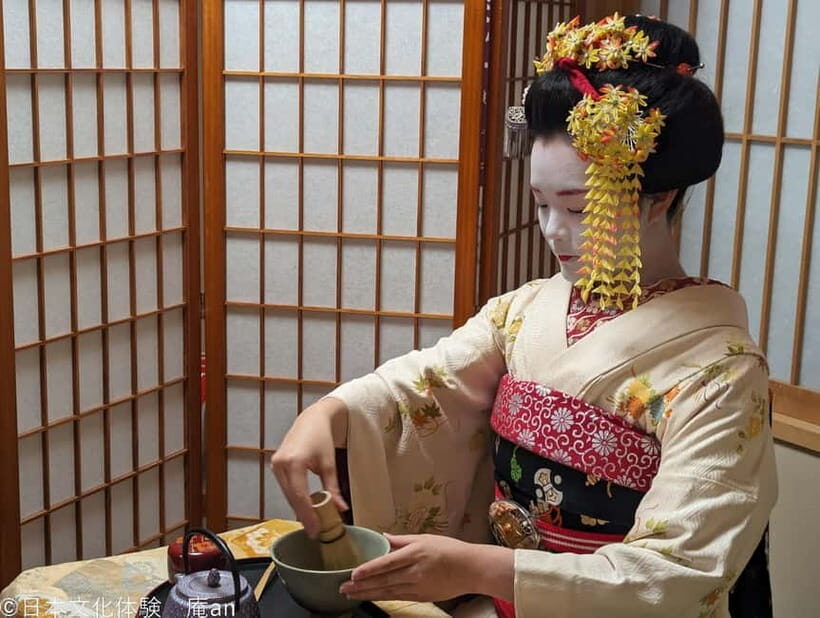
- Make matcha yourself: you’ll follow the Maiko’s instructions and produce your own tea.
- Two dried Japanese sweets (Ohigashi): you’ll get a small tasting alongside the tea.
- A real Q&A session: you can ask questions directly and learn how this world works.
- Photos up close: you get a commemorative picture right beside the Maiko (or Geiko).
- Senjafuda lucky charm: you’ll receive this charm as a special takeaway.
- Maiko vs Geiko depends on the date: some sessions may include Geiko instead of Maiko.
A fast Kyoto fix near Gojo Station
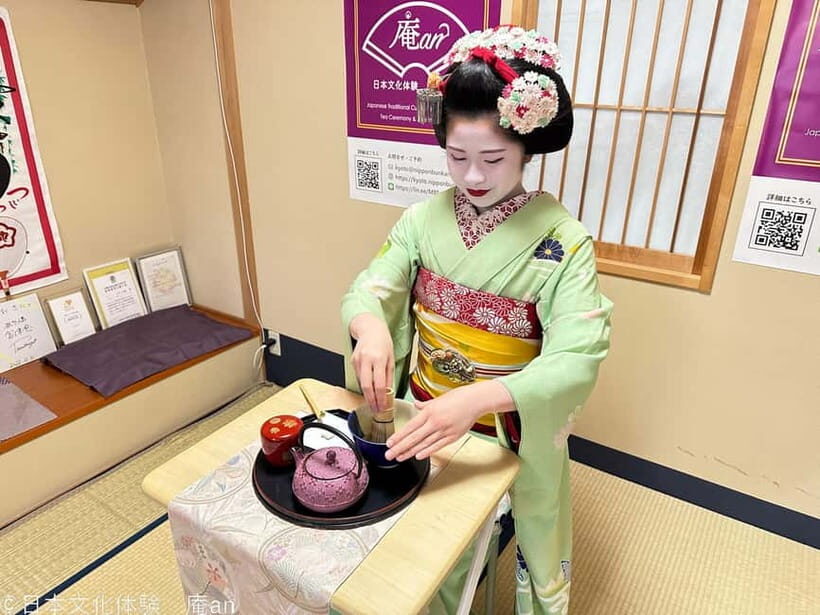
Kyoto can eat up time fast—especially if you’re hopping between districts and trying not to overschedule. This experience is a smart way to get a taste of Kyoto culture without committing half a day. It’s about 30 to 40 minutes of actual program time, plus you’ll be in and out quickly.
The meeting point is convenient, too. You’ll walk about 1 minute from Exit 1 of the Karasuma Line Gojo Station, and the store entrance faces Gojo-dori. That matters because Kyoto wayfinding can be a little tricky when you’re tired or when streets look similar.
If you’re doing a busy first day in Kyoto, this is the kind of activity that gives you a “Kyoto moment” fast: etiquette, tea, sweets, and conversation, all in one compact block.
You can also read our reviews of more tours and experiences in Kyoto.


Maiko or Geiko, in a relaxed building setting
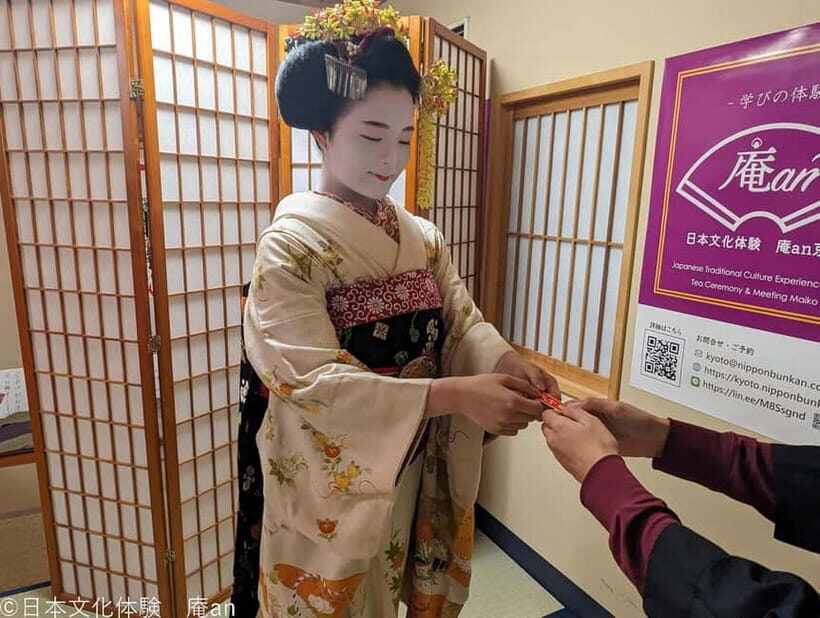
I appreciate that the program is clear about what it is and isn’t. The venue is not an ochaya or a traditional Japanese house. Instead, it’s held in a building, with a relaxed atmosphere and friendly staff.
That setup can be a plus. You don’t need special preparation, and you can focus on the experience rather than worrying about dress code vibes or complicated customs. In at least some cases, the host may invite a Geiko instead of Maiko, depending on the situation and date—so don’t assume the performer will always be the Maiko you pictured in your head.
Also, the format is designed for interaction. You’re not just sitting in silence while someone performs. You’ll learn, answer questions, and take photos—so the “close-up” part is part of the plan, not a lucky accident.
From greeting to matcha: what happens in the 45 minutes
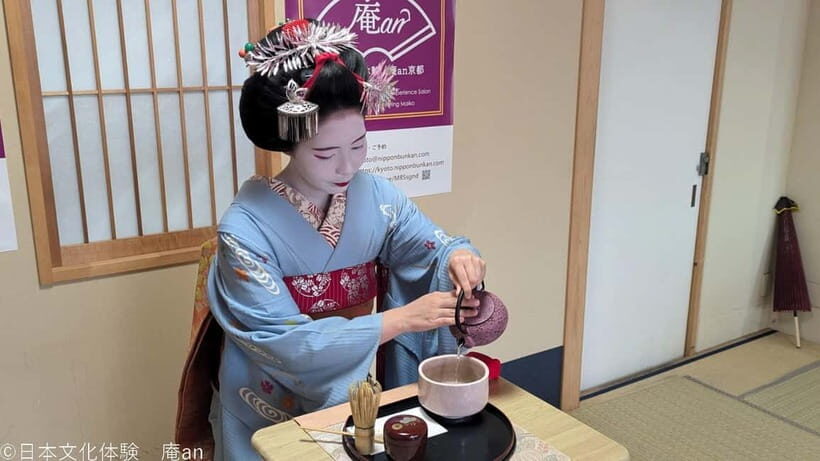
The schedule is straightforward, and that’s part of the value. You’ll typically start with a greeting, then shift into the main event: tea ceremony instruction and practice.
1) Greeting and the Maiko’s tea lecture
Right away, you’re introduced to the basics of the ceremony and what you’ll be doing. The performer explains the key steps and the meaning behind the ritual in a way that’s meant for you to follow. Since the program language is Japanese, you’ll also have English translation provided as much as possible, and the host can help keep things clear.
2) Tea ceremony with instructions and practice
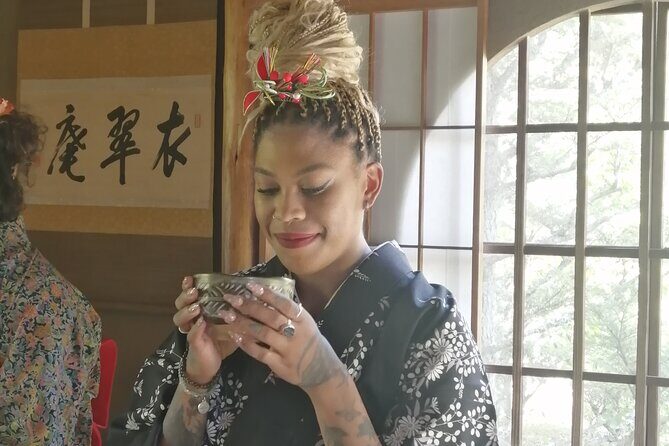
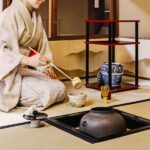
Then comes the heart of it: the matcha lesson. The Maiko demonstrates how to make matcha tea, and you’ll get the chance to make your own cup.
This is more than entertainment. When you whisk and pour (with guidance), you suddenly understand why the ceremony treats even small steps seriously. You’re learning technique and rhythm, not just drinking tea.
In some sessions, you may also be served sake alongside the tea demonstration. If that happens during your time slot, it’ll be part of the same overall ceremony flow.



3) Ohigashi tasting with your tea
You’ll also have two dried-type Japanese sweets called Ohigashi. They’re served with the tea, and they work as a small taste of seasonal flavor and texture variety—so you get a more complete snapshot of Kyoto’s tea-time culture.
4) Q&A session: ask what you actually want to know
One of the best parts is the Q&A. This is where you stop watching and start learning. You can ask questions directly and get insight into the performer’s daily life and how becoming Geiko works.
This is also where the event feels most human. The answers aren’t just scripted background—they’re tied to the way the performer lives and trains. In past experiences, a friendly host and interpreter-style support helped many visitors understand everything clearly.
5) Wrap-up: photos and a lucky charm
After the ceremony and Q&A, the pacing stays upbeat. You’ll move into photo time, then finish with a gift.
Photos up close, plus the Senjafuda lucky charm
The photo part is built in, and it’s handled as a calm, respectful moment. You’ll take a commemorative photo right beside the Maiko, not from across the room. That up-close access can feel special because you get proximity without the feeling of crowding.
Then you’ll receive a Senjafuda lucky charm from the performer. It’s a small item, but it’s a meaningful one—another Kyoto detail that turns the experience into something you keep, not something you only remember.
In one of the sessions I read about, the performer also showed a graceful, confident personality during the Q&A and photo moment. That combination—conversation plus a tangible souvenir—is what makes the whole 45 minutes feel like more than a quick stop.
What you should know before you go (stairs, timing, and language)
A few practical points can save you stress.
No elevator means stairs
There is no elevator in the building. You’ll need to take stairs to reach each venue area. If you’re traveling with mobility issues or heavy bags, plan for that ahead of time.
Timing matters
Latecomers won’t be entitled to a refund, and the event won’t be held to accommodate delays. This matters because the experience is short—45 minutes means they keep a tight schedule. I’d treat your arrival like a meeting: be there a few minutes early, not right at the start time.
English support exists, but Japanese is the base language
The program language is Japanese. English translation is provided as much as possible. If you want additional English support, you’ll need to contact in advance.
Performer type can vary
Depending on the date, the experience may be hosted by either a Maiko or a Geiko. If you’re booking specifically for one type, keep that flexibility in mind.
Children and seating
Children who require their own seat pay the same fee as one person. Children who sit on their parent’s lap are free of charge if they are under 2 years old.
Price and value: is $28 worth 45 minutes?
$28 for a 45-minute Kyoto experience is not just a “buy a ticket and sit down” price. You’re paying for personal instruction, a chance to make matcha yourself, a tasting, and a guided Q&A with a performer.
Here’s what you get for the money:
- Tea ceremony with Maiko/Geiko instruction
- Your own matcha-making practice
- Two dried-type Japanese sweets (Ohigashi)
- Photo time right beside the performer
- A Senjafuda lucky charm
The value gets better because the location is easy to reach from Gojo Station. You’re not spending a lot of time and transit effort to reach an activity—so more of your Kyoto day stays intact.
Could you find cheaper tea in Kyoto? Sure. But you’re not just buying tea. You’re buying access: direct conversation, up-close interaction, and the ritual taught by someone living that world.
Who this experience is best for (and who might not love it)
This is a great fit if you:
- Want a quick Kyoto cultural moment without a half-day commitment
- Like hands-on activities, especially making food or drinks
- Enjoy respectful Q&A and learning how something actually works
- Value photo opportunities and small take-home souvenirs like Senjafuda
You might want to think twice if you:
- Expected a full traditional ochaya house atmosphere
- Prefer longer, slower experiences where you mostly watch and soak in ambiance
- Hate the idea of stairs or a tight schedule (because late arrival isn’t handled)
One more tip: go in with a flexible mindset about performer type. If it’s Geiko instead of Maiko during your date, the experience still centers on tea, questions, and the same overall format.
Should you book the Kyoto Maiko Tea Ceremony with Matcha?
If you have limited time in Kyoto, I’d book this. It’s compact, close to transit, and designed so you actually participate—not just observe. The hands-on matcha making, the Q&A, and the Senjafuda gift together make it feel like a real experience rather than a quick performance.
If your travel style is “I want the classic Kyoto setting above all,” you may feel slightly underwhelmed because the venue is in a building and not a traditional house. But if you want Kyoto in human scale—tea, sweets, conversation, and a personal moment—you’ll likely be glad you scheduled it.
FAQ
How long is the Kyoto tea ceremony with Maiko?
The experience lasts about 45 minutes.
Where do I meet the group?
Meet at the store entrance about a 1-minute walk from Exit 1 of Subway Karasuma Line Gojo Station. The entrance faces the main street, Gojo-dori.
Is the tea ceremony in a traditional Japanese house?
No. The venue is not an ochaya or a traditional Japanese house. It’s located in a building but still has a relaxed atmosphere.
What will I do during the experience?
You’ll have a tea ceremony with a Maiko/Geiko, learn how to make matcha, and then make your own matcha. You’ll also be served two dried-type Japanese sweets called Ohigashi.
Can I take photos with the performer?
Yes. You’ll get a photo opportunity right beside the performer.
What is the Senjafuda?
It’s a lucky charm the performer gives you as a gift during the experience.
Will it always be a Maiko?
Not always. Depending on the date and situation, it may be hosted by either a Maiko or a Geiko.
Is there English support?
English translation is provided as much as possible. If you want to add English support, you need to contact ahead of time.
What about stairs or accessibility?
There is no elevator in the building, so you’ll need to take stairs to reach the venues.
Can I cancel and get a refund?
Yes. You can cancel up to 8 days in advance for a full refund.
What happens if I arrive late?
The event will not be held for delays, and latecomers will not be entitled to a refund.