REVIEW · GEISHA & MAIKO TOURS
Kyoto: Tea Ceremony with Maiko Premium
Book on GetYourGuide →Operated by B.B.Advisors Inc. AN KYOTO · Bookable on GetYourGuide
A Maiko-led matcha session sounds like a postcard, but it’s actually a real cultural meet-and-learn. You get a lesson on making matcha, a chance to ask questions face-to-face, plus close-up photos, dances, and games—packed into 90 minutes in Kyoto.
I really like the mix of up-close access and structured cultural teaching. The Maiko (or sometimes a Geiko) shares how the lifestyle works day to day, then you make matcha with her guidance and get two Japanese sweets to go with it.
One thing to consider first: this is not held in a classic tatami ochaya. It’s in a building with tables and chairs, and there’s no elevator, so you’ll want to plan for stairs and accept a more modern setting than you might picture.
In This Review
- Key things you’ll remember from this Maiko tea ceremony
- What makes this Kyoto Maiko tea ceremony special
- Matcha, sweets, and Q&A: your 90 minutes step by step
- 1) Greeting and first meet-up
- 2) Tea ceremony with matcha and two sweets
- 3) Q&A session that’s built for real questions
- 4) Photo moment right beside the Maiko
- 5) Two dance performances
- 6) Interactive game with Maiko
- 7) Room departure and last chatter
- The Senjyafuda charm and your close-up photo strategy
- Maiko and Geiko dancing plus games: why the Premium version works
- Where the ceremony happens: venue reality, stairs, and photo backgrounds
- Price and seating value: is $50 worth it
- Who should book this, and who might skip it
- Should you book this Maiko tea ceremony?
- FAQ
- How long is the Kyoto Tea Ceremony with Maiko Premium?
- Where is the meeting point near Gojo Station?
- What do you actually do during the tea ceremony?
- Is the venue a traditional ochaya house?
- Do you provide English translation, or is it Japanese only?
- Are children under 2 free?
Key things you’ll remember from this Maiko tea ceremony
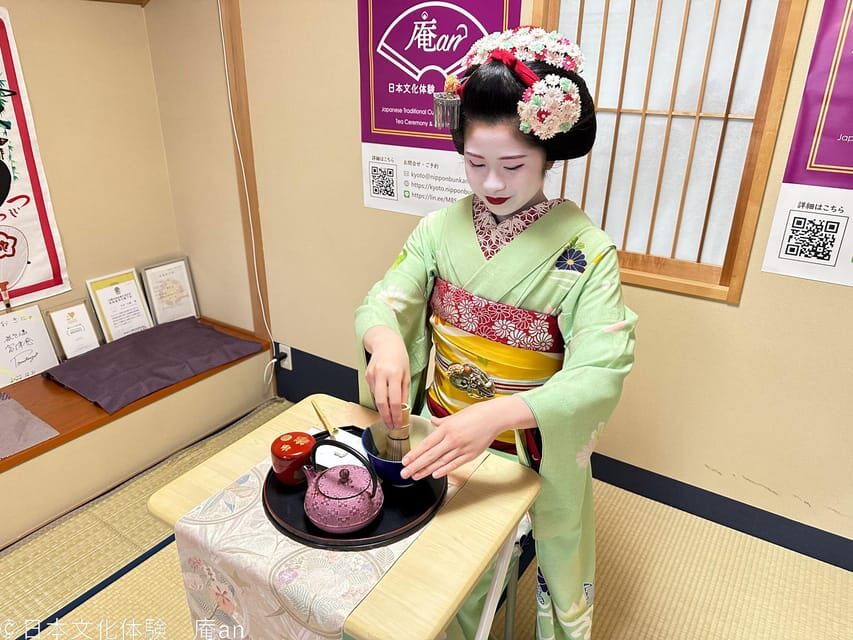
- Maiko instruction + hands-on matcha: you don’t just watch; you make your own matcha tea.
- Q&A time that feels personal: ask directly and get answers about training and daily life.
- Dance performance with seasonal themes: two dances that connect to seasons, love stories, or everyday life.
- Photo time right beside the performer: plus a lucky charm gift called Senjyafuda.
- Interactive games: simple, playful activities where guests can join in.
- Premium value choices: better seating options (SS/S2/S3) can improve how you see the show.
What makes this Kyoto Maiko tea ceremony special
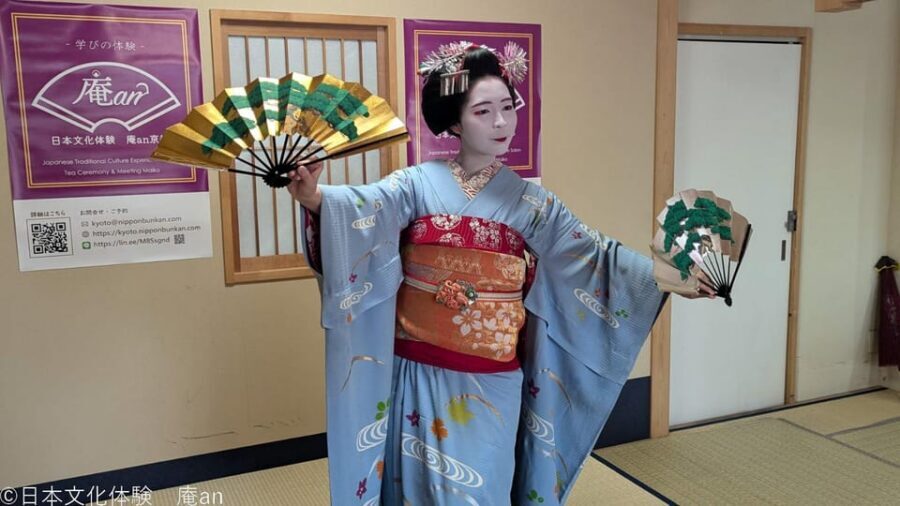
This experience lives in the sweet spot between performance and explanation. Yes, you’ll see elegant dance. But what makes it worth your time is that you’re not just consuming a show. You’re meeting a live part of Kyoto tradition and learning how it’s practiced.
The star is the Maiko world: polished kimono, meticulous hairstyles, and the disciplined routine behind the scenes. The program frames that dedication as something still alive today, even if the older samurai era has faded. For many people, that context is the difference between seeing costumes and actually understanding culture.
A bonus: depending on the situation, you may meet a Geiko instead of a Maiko. Same overall concept—tea, Q&A, and performance—but it can add an extra layer of surprise to your night. If you care about seeing the whole tradition spectrum, that flexibility is part of the appeal.
You can also read our reviews of more tours and experiences in Kyoto.



Matcha, sweets, and Q&A: your 90 minutes step by step
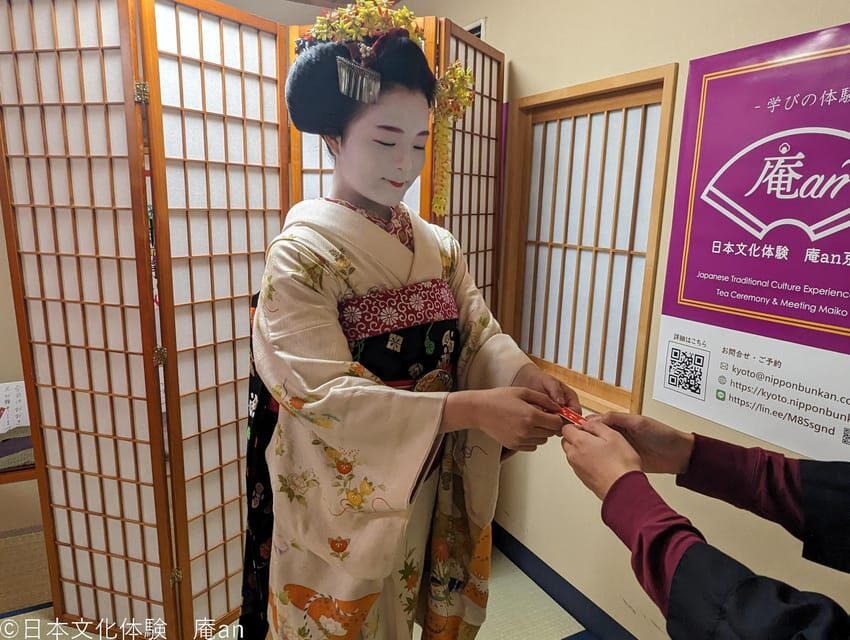
The flow is timed tightly, but not hectic. You’re typically in the room for the full 90 minutes, with a clear sequence from greeting to departures.
Here’s the experience in the order you’ll feel it:
1) Greeting and first meet-up
The session begins with a greeting from the Maiko. This matters more than you might think. You’re not starting with a lecture; you’re starting with a person in full role, so the rest of the program lands with more meaning.
2) Tea ceremony with matcha and two sweets
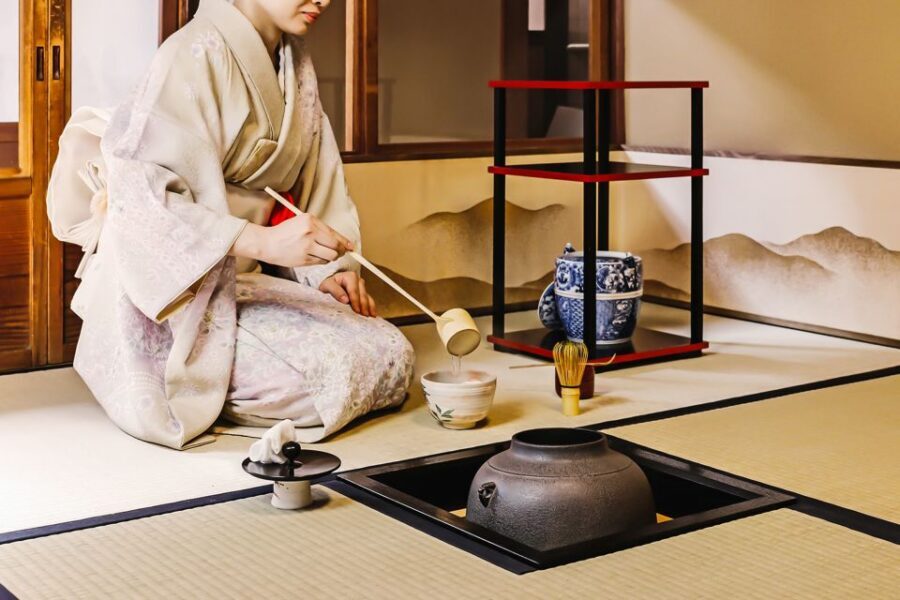
Next comes the core: tea ceremony with the Maiko. She teaches you how to make matcha tea, and then you make your own matcha. The set also includes two dried-type Japanese sweets.
This is a good moment to slow down your expectations. Matcha tea can feel overly “ritual” from a distance, but here it’s practical. You’ll get the basic process and learn how to handle it, even though the venue isn’t a full traditional tearoom environment.
One practical tip: take your time during matcha making and watch how she moves. In these kinds of sessions, small gestures (how you handle utensils, how you pour, how you taste) are the teaching.
3) Q&A session that’s built for real questions
Then you move into a Q&A. This is one of the most praised parts of the evening, because it turns the experience from watching to understanding. You’ll ask questions directly and learn how her training and daily life work.
A helpful reality check: English support is provided as much as possible, and if you need added English translation you’ll be asked to contact in advance. If you show up with a few prepared questions (about training, etiquette, routines, or what people misunderstand about Maiko/Geiko culture), you’ll get more out of this section.





4) Photo moment right beside the Maiko
After Q&A, you get a commemorative photo right beside the Maiko. This is a highlight for a reason: you get very close, and you’re not stuck at the back of a hall.
As part of the photo moment, she presents you with a lucky charm called Senjyafuda. It’s the kind of souvenir that feels connected to the experience rather than tacked on at the end.
5) Two dance performances
Next is the dance performance: two traditional dances that express themes tied to Japan’s seasons, love stories, or everyday life. People often mention the beauty of the movements and how emotional the performance can feel even in a short session.
If you’re thinking this is going to be just waving hands in kimono, skip that idea. The pacing and precision are what makes it memorable.
6) Interactive game with Maiko
Then comes a lighter section: an interactive game. The program notes that Maiko often play simple, exciting games as part of hospitality. Some guests join in; even if you just watch, it’s usually entertaining because it changes the mood from formal to playful.
If you’re traveling with kids, this is often the part that keeps energy up. It also helps adults relax, which makes the rest of the show more enjoyable.
7) Room departure and last chatter
The program ends around 75 minutes with Maiko leaving the room, then there’s usually a short chatting time before departure. If your schedule allows, this is a nice moment to finish the experience without rushing out mid-breath.
The Senjyafuda charm and your close-up photo strategy
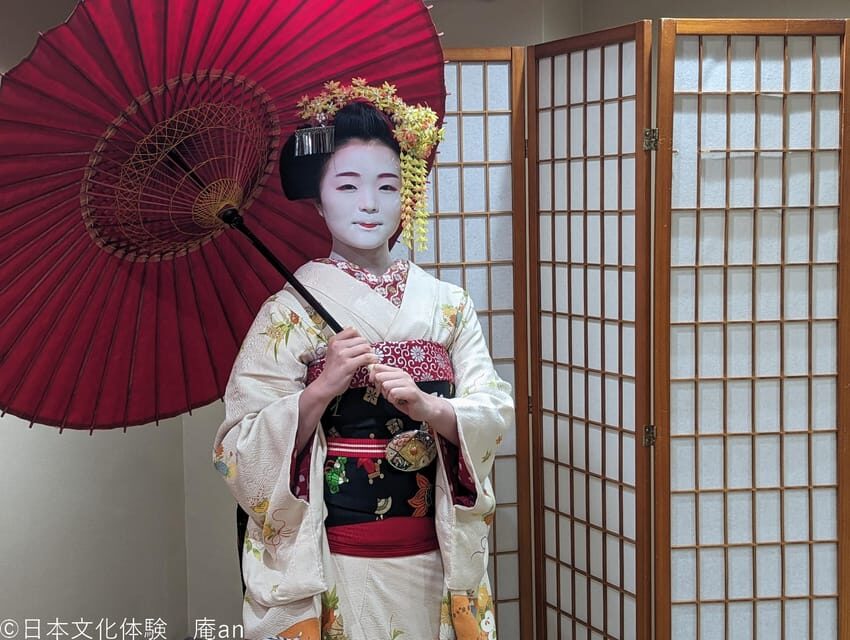
The photo opportunity is one of the biggest reasons people book Premium. You’re not doing a distant “character photo.” You’re getting a shot right beside the performer, and she gives the Senjyafuda lucky charm as a gift.
Now for the part nobody thinks about until they’re holding a camera: your photos may show background branding. Some people have found it tough to get a clean picture because there can be company names, QR codes, or advertisements visible behind the action. That doesn’t ruin the experience, but it affects your photography results.
Here’s what you can do to improve your odds:
- Frame tighter. Focus on the Maiko and your faces, not the entire room.
- If you bring a phone with Portrait mode, test it before the photo moment.
- Arrive early if you can. It increases your chances to settle in and get a sense of where the performer stands.
And one extra practical piece of advice from the rhythm of the evening: once the show ends, stick around briefly if you can. Some people mention that watching the Maiko depart and wave goodbye feels like a movie set moment.
Maiko and Geiko dancing plus games: why the Premium version works
Premium is where this experience turns from a neat cultural stop into a full evening. The added elements—dance, games, and extra show time—are what make the 90 minutes feel complete.
The dance portion gets consistent praise. People talk about goosebump moments from how precise and graceful the performances are, even when the total time is short. That’s important: you’re getting both breadth (two dances) and emotion (audience reactions).
Then the game section brings something different. Games sound silly on paper until you see how they’re used. The Maiko’s role is still respected, but the mood becomes friendly and interactive. You’re basically being invited into hospitality, not just into a lecture.
And yes, you might see Geiko instead of Maiko. That swap can happen depending on what the program is able to schedule. If you care about the entire system of arts in Kyoto rather than one specific category, that flexibility is a plus.
Where the ceremony happens: venue reality, stairs, and photo backgrounds
Here’s the honest setup: this isn’t an ochaya, and it isn’t a traditional Japanese house. It’s in a building, and the room may be arranged with tables and stools.
That affects your expectations in two ways:
1) Atmosphere
You may not get the tatami-room, candlelit feeling you imagined. The room can feel more like a performance space than a historic tearoom.
2) Comfort and access
There is no elevator, and you’ll need stairs to reach each venue area. If you’re bringing older travelers or you’re moving slowly with luggage or mobility needs, plan for that up front.
Also, several people mention the background isn’t always photo-perfect. If you’re serious about photography, come with the mindset that you’ll get great close-ups of faces and performance moments, but backgrounds might be less charming than you want.
Price and seating value: is $50 worth it
The listed price is $50 per person, for a 90-minute program. On paper, that’s not cheap for a group activity. In practice, the value comes from the combination: matcha-making lesson, two sweets, direct Q&A with the performer, photo time, a Senjyafuda lucky charm, two dances, and an interactive game.
If you’re comparing to a quick cultural show where you only watch and leave, this feels more complete because you actively participate. That matters when you’re in Kyoto for just a few days. You want high “memory density” for your time.
There are also seating upgrades mentioned:
- SS seat (First row): 3,300 JPY
- S2 seat (Second row): 2,200 JPY
- S3 seat (Third row): 1,100 JPY
If Premium matters to you for visibility and comfort, upgrading seats can be a smart choice. If you’re okay with average viewing angles and you mostly care about the Maiko being close for photos, you can weigh the extra cost against your comfort level.
One more value note: the program includes free snacks and a drink. That helps you feel less like you’re spending extra on top of the base ticket.
Who should book this, and who might skip it
This works best for people who want Kyoto culture with interaction. If you enjoy asking questions, learning practical basics (like matcha preparation), and seeing traditional dance up close, you’ll probably love it.
It’s also a strong option for families. One booking specifically notes that kids enjoyed the mix of learning, photos, and the game section. Even when the setting isn’t traditional tatami, the program is lively.
I’d be a bit cautious if:
- You’re strongly attached to a totally traditional setting atmosphere. The room is described as modern with tables and chairs.
- You expect a quiet, museum-like environment. This is a group activity and can get lively.
If you’re primarily after the best photo backdrop for social media, know that backgrounds may include visible branding.
Should you book this Maiko tea ceremony?
Book it if you want a short, high-impact Kyoto experience: matcha you make yourself, a real Q&A moment, two dances, and a close-up photo with a Maiko (or sometimes a Geiko) plus the Senjyafuda charm.
Skip or rethink if you’re chasing strict traditional setting vibes and quiet silence above all else. You’ll still get cultural value, but the environment is more practical than historic.
My call: if your schedule is tight and you want a “learn + meet + do” night in Kyoto, this is one of the easier ways to get there without spending all evening searching.
FAQ
How long is the Kyoto Tea Ceremony with Maiko Premium?
The experience runs for 90 minutes.
Where is the meeting point near Gojo Station?
Meet about a 1-minute walk from Exit 1 of the Karasuma Line Gojo Station. The store entrance faces Gojo-dori.
What do you actually do during the tea ceremony?
You have the tea ceremony with the Maiko, including making matcha tea with her guidance. The program also includes two dried-type Japanese sweets.
Is the venue a traditional ochaya house?
No. The venue is located in a building and is not described as a traditional ochaya or Japanese house. The atmosphere is relaxed, but you should expect a room setup rather than a full traditional tearoom.
Do you provide English translation, or is it Japanese only?
The language is Japanese, and English translation is provided as much as possible. If you want to add English translation, you’re instructed to contact the provider.
Are children under 2 free?
Children under 2 years old are free, but if a seat or meal is required, the same fee as 1 person will be charged. Children sitting on their parents’ laps are free.