REVIEW · ARASHIYAMA TOURS
Kyoto: Nijo, Kinkaku-ji, Arashiyama, Kiyomizu & Fushimi Inari
Book on Viator →Operated by Amigo Tours Japan · Bookable on Viator
Kyoto in one long day? Yes. This bus tour lines up the big names, from Arashiyama Bamboo Grove early access to Fushimi Inari torii gates, with a bilingual guide to talk you through it all as you ride. It’s designed for speed without feeling like a drive-by.
What I really like is the structure: you get commentary on the bus, then time to wander at each stop. I also like the flexibility baked in, since you can choose options that include major temple/castle tickets or keep them off, plus a lunch add-on if you want it. The tour uses a mobile ticket, which is handy when you’re juggling maps and photos.
One thing to think about before you book is comfort. This is a long day with lots of time outside, and during hot weather you’ll want to manage heat and hydration yourself. Also, the guide is bilingual, and some people find it harder when English and Spanish pacing alternates.
In This Review
- Key highlights worth knowing
- Price and logistics: what $51.80 really buys you
- Your morning setup: starting at 7:00 am and why it helps
- Arashiyama Bamboo Grove: early access and how to enjoy the 1 hour 20 minutes
- Kinkaku-ji (Golden Pavilion): your time, ticket choice, and photo strategy
- Nijo Castle: UNESCO-level architecture with a longer 1 hour 30 minutes
- Kiyomizu-dera: hillside views with the most time pressure
- Fushimi Inari Taisha: free entry torii gates and long walking legs
- The drive back: finishing strong without extra stress
- What the guide experience feels like in real life
- How to decide if this single-day Kyoto loop fits you
- My booking verdict: should you book this Kyoto tour?
- FAQ
- What does the tour include?
- Are tickets for Kinkaku-ji, Nijo Castle, and Kiyomizu-dera included automatically?
- Is lunch included?
- How long is the tour and when does it start?
- Where do I meet the tour?
- Does the tour have time to explore on your own?
- What group size is the tour limited to?
Key highlights worth knowing
- Early Arashiyama timing helps you see the Bamboo Grove before the strongest crowd wave
- Bilingual English/Spanish guide commentary keeps the ride informative, not silent
- Ticket options for Golden Pavilion, Nijo Castle, and Kiyomizu-dera so you control what you pay for
- Free entry stops at Arashiyama Bamboo Forest and Fushimi Inari Taisha make the day feel lighter
- Small group size (max 30) keeps it easier to follow along and stay together
Price and logistics: what $51.80 really buys you
At $51.80 per person for a roughly 10 hours 45 minutes day, you’re mostly paying for three things: transportation, a guide, and a pre-planned route that hits Kyoto’s headline sights. That matters because Kyoto is big, traffic can be slow, and “I’ll just figure it out” usually turns into extra transit time and missed entry windows.
You’re also not locked into paying for every ticket up front. The tour offers options where admission for places like the Golden Pavilion (Kinkaku-ji), Nijo Castle, and Kiyomizu-dera can be included or not. If you want to spend your money only on the sites you care about most, this setup is a practical way to customize.
The tour starts at 7:00 am and meets at Hotel Keihan Kyoto Grande (Hotel Keihan Kyoto Grande ホーム2). The day ends back at the meeting point, so you don’t have to scramble for last-mile transit. It’s a mobile-ticket tour too, so you’ll show your ticket on your phone rather than digging through paperwork.
Group size is capped at 30 travelers, which tends to help. It’s not a private tour, but it also isn’t that chaotic big-bus feeling where everyone drifts. The itinerary can also shift due to weather, traffic, or road closures, which is normal in Kyoto and worth keeping in mind if you’re chasing photos at specific times.
You can also read our reviews of more tours and experiences in Kyoto.



Your morning setup: starting at 7:00 am and why it helps
The day starts early—at 7:00 am—because the best Kyoto moments are the ones that happen before crowds fully arrive. Even if you’re not an early riser, this is one of those days where the start time makes your whole itinerary more realistic.
After meeting at the hotel location, the group heads toward Arashiyama. There’s about 40 minutes of bus travel at the beginning, so you get a buffer to settle in, listen to the guide, and get your bearings. This is one of the smartest parts of a highlights tour: the first ride gives your brain a chance to switch from “I’m here” to “I know where I’m going.”
Also, you’ll be with the same guide and driver for the day, so you’re not repeating the same orientation tasks at each stop. That sounds small, but in a one-day plan, it adds up.
Arashiyama Bamboo Grove: early access and how to enjoy the 1 hour 20 minutes
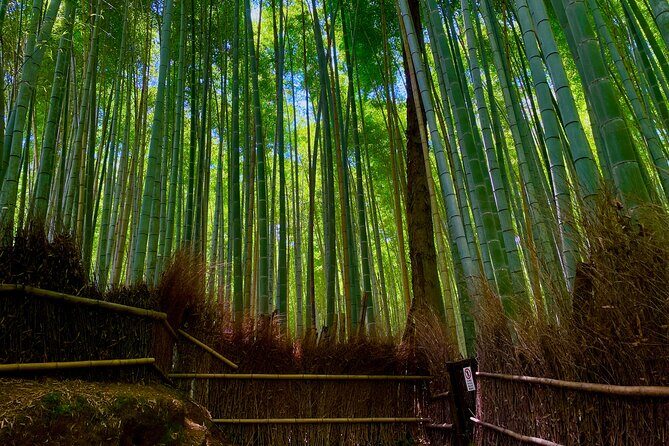
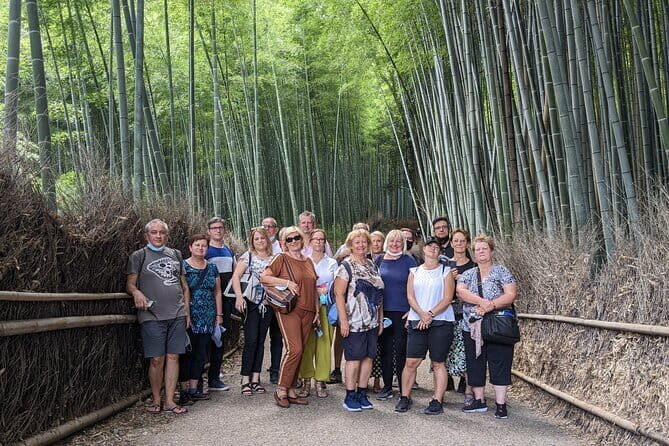
Arashiyama Bamboo Forest is your first true stop. You’ll have early access, and admission is listed as free for this part. That early timing is the key. The Bamboo Grove is iconic, but it’s also narrow and photogenic—meaning it can feel crowded quickly.
You’re given about 1 hour 20 minutes here. That’s plenty of time if you treat it like walking plus choosing your photo angles, not like racing to one spot and moving on. If you want different looks—close-up stalk textures versus wider, tunnel-like perspectives—use your time to explore a little rather than only standing at the center most visible from the entry.
Practical tip: wear shoes you can move in fast. The grove area involves steady foot traffic and uneven spots. And yes, it can get hot. If you’re visiting in summer, plan on sweating through your shirt and carry water in your day bag (the tour schedule includes no specific “water breaks” in the details provided).
One more thing: the tour is clearly focused on the famous stretch. Still, the broader Arashiyama area is large, so make sure you’re actually dropped at the Bamboo Grove stop promised for the early access window.
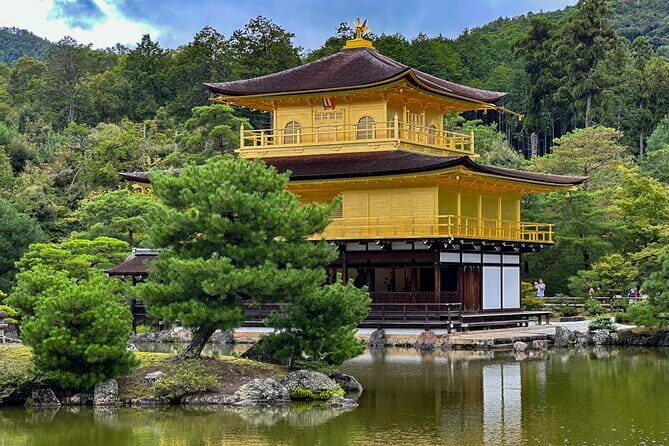
Kinkaku-ji (Golden Pavilion): your time, ticket choice, and photo strategy

After Arashiyama, you go to Kinkaku-ji, with about 30 minutes of bus travel. This stop is 45 minutes long and the admission is not included unless you select the ticket option.
That ticket detail is important. Kinkaku-ji is one of Kyoto’s most photographed landmarks, and the Golden Pavilion is worth it if you care about iconic architecture. But the biggest value of this stop is that you can choose how you want to handle entry costs. If you’re doing a budget version, you’ll need to purchase entry separately. If you want everything handled, pick the option that includes admission.
With only 45 minutes, I’d treat this stop like a high-quality quick visit:
- Go in with your photo plan in mind (wide view first, then close textures)
- Don’t waste time inside the shop area unless you really want it
- Save your walking energy for what you actually paid to see
There’s also something psychological here. When you know the day has a tight schedule, a short temple visit can still feel satisfying—if you focus. That’s exactly what a highlights loop does well.
Nijo Castle: UNESCO-level architecture with a longer 1 hour 30 minutes
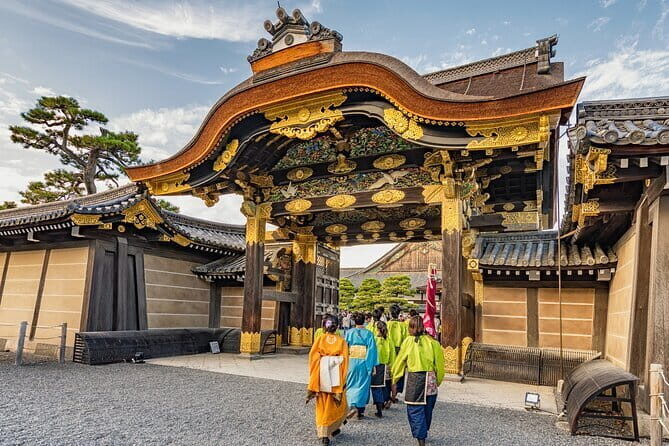
Next up is Nijo Castle, a UNESCO World Heritage site. The bus ride is roughly 30 minutes, and the stop is 1 hour 30 minutes. Admission is listed as not included unless you choose the ticket option.
Nijo Castle stands out for two reasons in a one-day context. First, the site is big enough that 1.5 hours doesn’t feel like a sprint. Second, it adds a different flavor to the day—architecture and gardens rather than only religious sites and gates.
If you’re selecting tickets for this tour, I think Nijo is one of the best “ticket value” adds because it gives you time to move at a calmer pace than the shorter stops. It also balances the day. You’ve already seen nature (bamboo) and you’ll soon see hillside views and walking through torii gates. Nijo breaks the pattern with a more structured, palace-and-gardens feel.
If you’re not purchasing the Nijo ticket option, you may lose a key part of the castle experience. So decide based on your interests: do you want to see the castle grounds and architecture, or would you rather reserve money for the sites that matter most to you?




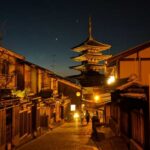
Kiyomizu-dera: hillside views with the most time pressure
Then comes Kiyomizu-dera, with about 30 minutes by bus. The stop length is 2 hours 30 minutes, which is generous for a one-day route. Admission for Kiyomizu-dera is listed as not included unless you choose the ticket option.
Kiyomizu-dera sits on a hillside, and the views are the point. But “views” also means stairs and walking. Two and a half hours sounds like plenty until you factor in crowds, entry lines (if you’re doing tickets that day), and time spent moving between viewpoints.
Here’s how I’d make your time count:
- Build in a buffer. Don’t plan on perfect photo timing.
- Don’t try to see every viewpoint if your energy is fading. Pick the 2 or 3 that will make you happiest later.
- Use your “wandering time” wisely. This is where a guide can help you avoid aimless circling.
This stop can be physically harder than it looks from pictures. If you’re traveling with limited mobility, it’s still possible, but you’ll want to go slow and prioritize the views over the longest routes.
Fushimi Inari Taisha: free entry torii gates and long walking legs

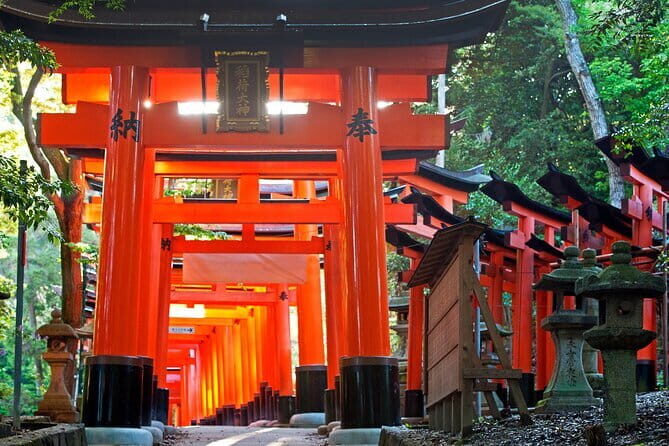
Finally, you’ll head to Fushimi Inari Taisha, famous for thousands of vermillion torii gates forming a mountain pathway. The bus ride is about 30 minutes, and admission here is listed as free. You also get free time at this stop, and the stop length shown is 1 hour 30 minutes.
This is the most “walk with purpose” part of the day. Fushimi Inari can turn into a choose-your-own-adventure depending on how far you climb. With 1.5 hours, you can do a meaningful stretch up the gates and still come back without feeling totally rushed.
I like this stop in a highlights itinerary because it feels like Kyoto rather than just Kyoto landmarks. The gate tunnels create a sensory shift: you’re surrounded by repeating arches and changing perspectives. It’s also where you’ll likely get your best candid photos, not just the iconic postcard shots.
Practical note for a long-day tour: your legs may be tired by now. Wear supportive shoes and plan for uneven ground on the route. If it’s very hot, start earlier in your free time rather than later. Shade can help, but the torii path isn’t a guaranteed cool environment.
The drive back: finishing strong without extra stress
After Fushimi Inari, the tour returns to Kyoto Station by bus for about 30 minutes, then ends back at the meeting point. The total day is about 10 hours 45 minutes, so the “finishing” phase matters.
This is where the guide’s pacing becomes more important than people expect. A good day-tour guide knows how to balance facts, walking time, and when to let you go off on your own. Some of the strongest feedback tied to this tour is about guides staying energized and keeping the commentary both informative and light enough that you still get freedom at stops.
If you want an easy evening afterward, take the bus back as a win. Don’t try to cram another attraction right away unless you’ve got energy and a plan.
What the guide experience feels like in real life
This tour includes a bilingual English/Spanish guide. That’s a big deal because Kyoto’s sights aren’t just pretty buildings—they have context, symbolism, and practical details you wouldn’t guess from a photo.
In the guide names shared for this tour, I’ve seen references to guides such as Ángeles, Cesar, Paula, Alan, and Pastor, along with a driver mentioned as Nishimura-san. While you can’t pick who you get, it does signal that the experience often leans on personable, enthusiastic guiding rather than dry facts.
Here’s what I think that means for you:
- You’ll get a better sense of why each place matters, not just what to photograph
- You’ll understand how to spend your limited time at each stop
- The ride between sites becomes useful, not wasted
One caution: bilingual delivery can work great, but if you’re sensitive to language switching, it can be distracting. If you rely heavily on one language for comfort, you might want to confirm how the guide delivers commentary that day.
How to decide if this single-day Kyoto loop fits you
This tour is best for you if:
- You want Kyoto highlights in one day and don’t want to manage transit between scattered neighborhoods
- You like getting a guide’s context while still getting time to wander
- You’re okay with a packed schedule and want efficient sightseeing
It may not be best if:
- You want a slow, in-depth visit with long breaks
- You’re sensitive to heat and walking volume
- You prefer fully self-paced touring with no guided rhythm
Also, this tour is designed around a specific route: Arashiyama, Kinkaku-ji, Nijo Castle, Kiyomizu-dera, and Fushimi Inari. If you already know you only care about one or two of those, you might get better value by doing fewer stops with more time each.
My booking verdict: should you book this Kyoto tour?
I’d book this tour if your priority is getting a lot of Kyoto into one day without turning your trip into a logistics project. The price makes sense when you factor in guided commentary, transportation between areas, and the ability to choose ticket-inclusive options for the big-paid attractions. Plus, the early Arashiyama timing and the mix of nature, architecture, and torii-gate walking give you a well-rounded taste.
But I’d go in with realistic expectations. This is not a relaxed day. Bring water, wear good shoes, and plan for heat and crowds—especially if you’re traveling during summer. If you’re comfortable with that, you’ll likely leave with photos, stories, and a clearer mental map of Kyoto’s main sights.
If you want, tell me your travel month and whether you prefer Golden Pavilion, Nijo Castle, or Kiyomizu-dera the most. I can suggest which ticket option to choose so your money goes to the sites you’ll enjoy most.
FAQ
What does the tour include?
The tour includes a bilingual English/Spanish guide, transportation from the meeting point, and admissions to Golden Pavilion, Nijo Castle, and Kiyomizu-dera only if you select the option that includes those tickets. Lunch is included only if you choose the lunch option.
Are tickets for Kinkaku-ji, Nijo Castle, and Kiyomizu-dera included automatically?
No. Admission to the Golden Pavilion, Nijo Castle, and Kiyomizu-dera is not included unless you choose the option that adds those tickets. Arashiyama Bamboo Forest and Fushimi Inari Taisha are listed as free.
Is lunch included?
Lunch is included only in the Premium option. If you pick the non-lunch option, you’ll need to plan your own meals.
How long is the tour and when does it start?
The tour runs for approximately 10 hours 45 minutes and starts at 7:00 am.
Where do I meet the tour?
The meeting point is Hotel Keihan Kyoto Grande, ホーム2, Kyoto.
Does the tour have time to explore on your own?
Yes. You get free time at stops such as Fushimi Inari Taisha, and the overall schedule includes time to stroll at each location.
What group size is the tour limited to?
The tour has a maximum group size of 30 travelers.