REVIEW · KYOTO CRAFT WORKSHOPS
Authentic knife making experience at a blacksmith in Kyoto
Book on GetYourGuide →Operated by Kendo Experience · Bookable on GetYourGuide
A knife you actually made in Kyoto. In a small Sakyo-ku workshop, Mao and the team guide you through heating, forging, sharpening, and polishing a practical blade that you take home.
What I love most is the hands-on forging itself, not a demo you watch from the side. You’ll use real tools and learn how the blade takes shape from glowing steel. The other big win for me is the coaching style: clear safety talk, patient corrections, and enough structure that even total beginners finish with something usable.
One thing to consider: this is physically demanding and you’ll work around very hot metal. Plan for heat, wear socks, and expect lots of hammering and concentration.
In This Review
- Key Highlights You’ll Care About
- A Kyoto Knife Shop That Feels Like Real Craft
- Meet Mao and Get Kitted Out Like a Japanese Smith
- Getting Your Safety and Tools Straight Before the Heat
- From Red-Hot Steel to Your Blade: The Forging Steps
- Sharpening Stones, Grinders, and the Edge You Can Use
- Polishing, Final Finish, and Why the Knife Makes a Great Gift
- Studios in Sakyo-ku: Finding Studio NIN Yase vs Studio NIN Kendo
- Price and Value: Why $154 Can Make Sense Here
- Who Should Book This Knife-Making Class (And Who Should Skip It)
- Should You Book This Knife-Making Experience?
- FAQ
- How long is the knife-making experience?
- Where do I meet for the workshop?
- Which studio location will I attend?
- What’s included in the price?
- What do I need to bring?
- Is this experience suitable for children?
- Are there any restrictions on what I can bring or consume?
Key Highlights You’ll Care About
- A real take-home knife (about 13–15 cm) that’s sized for everyday kitchen use and gift giving
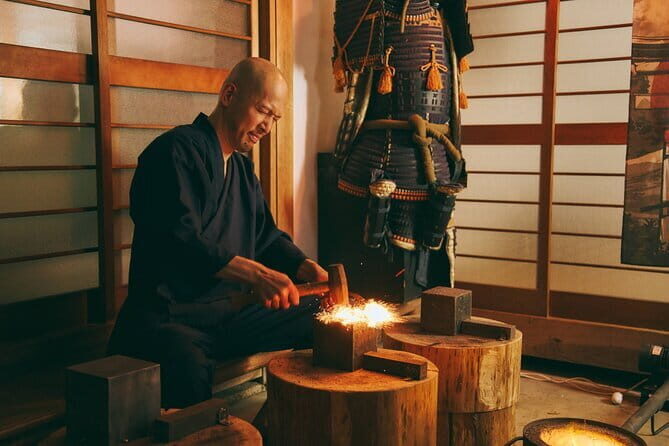
- Traditional smithing attire so you instantly feel like you stepped into a working forge
- Step-by-step forging with guidance on hammer angle, rhythm, and precision
- Sharpening + polishing included, using stones/grinders until the edge and finish are ready
- Convenient transit access: the meeting point is about a minute walk from the Yase-Hieizan Exit on the Eizan Electric Railway
- Small group feel, with English/Japanese support throughout
A Kyoto Knife Shop That Feels Like Real Craft
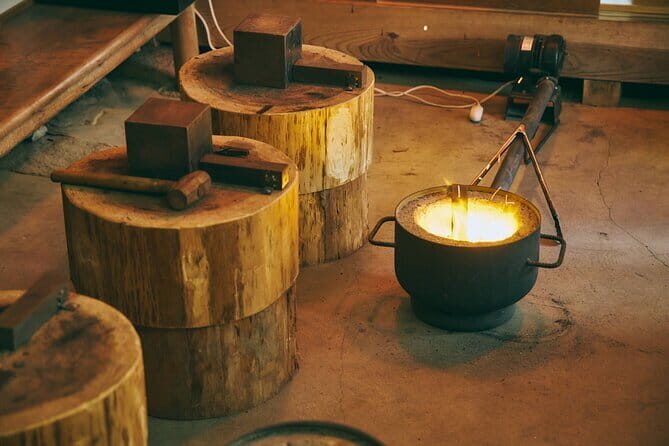
Kyoto has plenty of workshops. This one is different because you don’t just paint, fold, or pose. You create metal into a knife shape with your own hands—and that’s a rare thing to find in Japan.
The experience runs about three hours, and the finished product is practical: a handmade Japanese-style kitchen knife around 13–15 cm. You’re also not leaving with a “souvenir only” object. The course ends with sharpening and polishing, so the blade you make is meant to be used.
The tone here matters. You start by dressing in traditional blacksmith attire, so your brain shifts from tourist mode to craft mode fast. Then the staff walks you through tools and safety in a way that makes you feel set up to succeed rather than rushed.
You can also read our reviews of more tours and experiences in Kyoto.


Meet Mao and Get Kitted Out Like a Japanese Smith
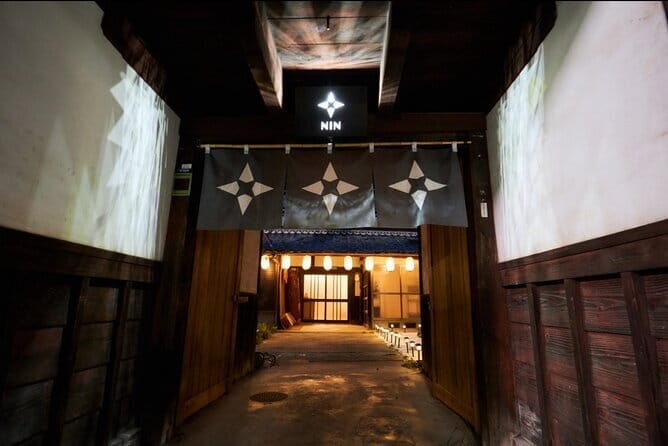
Your session begins at Studio Shinobi YASE (168-1 Yase-no-secho, Sakyo-ku). It’s a one-minute walk from the Yase-Hieizan Exit of the Eizan Electric Railway, and the workshop strongly recommends train access.
When you arrive, you’re greeted by your instructor, Mao—a knife professional with over 10 years of experience. The language support is English and Japanese, which is a huge help for understanding technique and safety without guessing.
Next comes the gear. You change into the traditional craftsman’s uniform worn by Japanese smiths. The class also provides key items like a towel, water, costume, and the materials/tools you need to make the knife.
Practical tip: bring socks. You’ll be in a working environment, and this is one of those details that sounds tiny until you’re standing in a workshop setting and wish you had them.
Also note the rules of the space: no alcohol and no drugs. It’s a safety-forward workshop, and you should treat it like one.
Getting Your Safety and Tools Straight Before the Heat
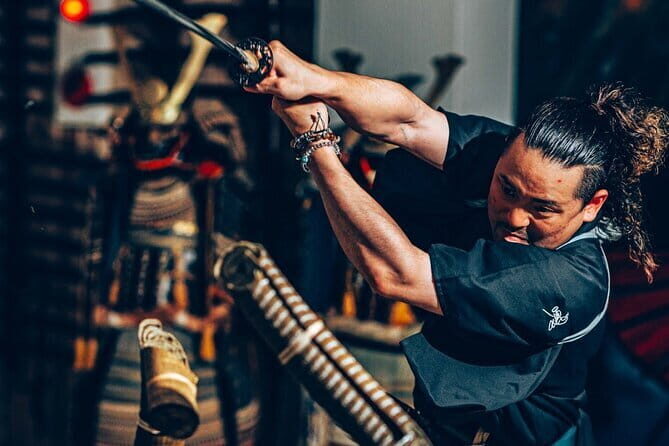
Before you touch the forge work, you get an introduction to tools and safe handling. Expect instruction on hammers, tongs, and grinders, plus guidance on how to work without panicking when things get hot.
The workshop is honest about risk. Some steps involve danger, and in the unlikely event of an injury, the customer is responsible. That sounds scary on paper, but in practice the staff’s job is to teach you how to do the work safely and help when you’re learning.
One helpful detail: the team makes the process feel doable. Even participants who were new to metalwork describe clear instruction and patient help. That matters because knife making isn’t about speed—it’s about doing each step correctly so the blade ends up usable.
From Red-Hot Steel to Your Blade: The Forging Steps
Now the fun part: turning raw steel into a knife.
First, raw iron is placed into the furnace and heated until it glows red-hot. When you see the metal reach that heat, you understand why this craft isn’t just “making something.” It’s control: temperature control, timing, and technique.
Then comes the forging. This is the highlight for most people because you’re not watching someone else hammer. Mao guides you closely as you strike the glowing steel repeatedly with a hammer.
You’ll learn the correct hammering angle and rhythm. The staff also helps you stay safe while you work near the heat. That’s important, because forging is physical, and your posture and focus matter as much as your grip.
The result of this step is shape—your knife starts as a rough piece and turns into something recognizably blade-like. After the initial forging, the metal is cooled and checked for shape, and you refine rough edges so the blade is ready for sharpening.
Here’s what I think is valuable for you: forging teaches patience better than almost any “do it yourself” class. You can’t muscle it into perfection. You’re forced to pay attention to small corrections.
Sharpening Stones, Grinders, and the Edge You Can Use
Once the blade has form, you shift from forging to finishing the edge.
You sharpen under expert instruction. That means you’re not just grinding for looks. The class uses sharpening stones and grinders to help create a functional cutting edge. Even beginners can make progress here because the staff guides you through what to do and how to do it safely.
This part is where the experience stops being a cool story and becomes a real object you’ll use at home. A handmade knife only matters if it performs. By the end, you should have an edge you can keep—and that’s why this course is such good value.
One more practical detail: the workshop includes the tools and materials for this stage. You’re not leaving mid-course because you forgot a consumable. You come prepared with socks, and the rest is handled.




Polishing, Final Finish, and Why the Knife Makes a Great Gift
The final stage is polishing and finish.
You polish the blade to a clean shine, and that step is satisfying in a very different way than forging. Forging is heat and force. Polishing is control, careful work, and the moment when the knife goes from “tool-like” to “handmade.”
When you finish, your knife comes ready to take home, typically with packaging included: a box and bag. That’s a big deal if you’re thinking of gifting. A knife is a special souvenir, but only if it’s protected and presented well for travel and handing over later.
About the look: some sessions can lean toward a rustic kurouchi finish, which keeps a raw, forged feel and is known for helping with anti-rust. One of the best pieces of advice I’d follow here is to respect the finish the instructors guide you toward. A shiny silver look might seem like the goal, but the charm is often in the handmade character.
Photos and videos are welcome throughout the process. That’s worth knowing because so many workshops only allow pictures at the start and end. Here, you can capture the milestones—especially useful since forging is fast and easy to forget once you’re tired.
Studios in Sakyo-ku: Finding Studio NIN Yase vs Studio NIN Kendo
This workshop operates out of two studios in Sakyo-ku, Kyoto: Studio NIN Yase and Studio NIN Kendo. Your staff will message you prior to your visit to confirm which location you attend.
Your meeting point is listed as Studio Shinobi YASE, just a minute walk from the Yase-Hieizan Exit. That’s clear and easy when you’re using the right exit. Still, I’d give yourself extra time the first time you go. Kyoto navigation can be confusing, especially if your directions send you to the other studio.
Here’s my practical approach: don’t wing it. Follow the message confirming the exact studio name. Use the station exit as your anchor. And if you’re coming from other parts of Kyoto, plan for a short walk even if it feels like “just a bit.”
The upside is that once you’re there, the workshop setup feels intentional. It’s not a random back room. It’s a real craft space where you can concentrate on the work.
Price and Value: Why $154 Can Make Sense Here
At $154 per person for about three hours, this isn’t the cheapest thing you can do in Kyoto. But the value is in what you leave with: a usable handmade knife, plus the craft training that gets you there.
You get more than the object. You get:
- Traditional blacksmith attire (included)
- Tools, materials, and safety guidance
- Sharpening and polishing time
- Packaging: a box and bag
Also, the experience itself is rare. Even in Japan, hands-on knife forging is not a common find. That’s not marketing fluff—it shows in the way the staff runs the class like a working shop.
One more value angle: the process humbles you in a good way. You won’t get a factory-perfect blade, and that’s okay. What you’ll get is a knife you made, understand, and can care for. That connection is exactly what turns a souvenir into a memory you use.
If you’re the type who likes crafts where your hands do the work, this price starts to feel fair.
Who Should Book This Knife-Making Class (And Who Should Skip It)
You’ll likely love this class if you want an active, hands-on cultural experience. It’s a strong pick for:
- Couples and small groups who like practical activities
- People who enjoy tools, technique, and learning a real craft
- Anyone who wants a take-home gift that’s both useful and personal
It’s less ideal if you want something passive or very relaxed. Forging involves pounding and concentration, and there’s serious heat in the room.
It also has clear age guidance: children under 15 must be accompanied by a guardian, and it’s not suitable for people over 95.
If you’re making a larger knife, the format changes. Larger knives require over 5 hours and cost more than $400. This workshop uses a shorter, refined 2.5-hour format (you’ll still be there for the full scheduled session time).
Bottom line: this is for people who can handle physical work and are okay learning through doing.
Should You Book This Knife-Making Experience?
Yes, I’d book it if your goal is a real craft memory with a practical result. The combination of hammering red-hot steel, learning sharpening, and walking out with a fully finished knife makes it feel like you truly participated—not just watched.
Book it soon if you’re in Kyoto for only a few days. A spot is time-limited, and the workshop is intentionally structured as a small group.
Before you go, remember the simple things that make the day easier: bring socks, come with a calm attitude toward heat and effort, and follow the studio confirmation message so you show up at the correct location. Do that, and you’ll leave with something you can actually use—and a story that sounds impressive because it’s real metalwork.
FAQ
How long is the knife-making experience?
It lasts about 3 hours.
Where do I meet for the workshop?
The meeting point is Studio Shinobi YASE (168-1 Yase-no-secho, Sakyo-ku, Kyoto City). It’s about a 1-minute walk from the Yase-Hieizan Exit of the Eizan Electric Railway.
Which studio location will I attend?
The workshop operates out of two Sakyo-ku studios: Studio NIN Yase and Studio NIN Kendo. The staff will message you before your visit to confirm which one you should attend.
What’s included in the price?
Included items are costume, towel, water, tools, materials, and also a box and bag for your finished knife.
What do I need to bring?
You should bring socks.
Is this experience suitable for children?
Children under 15 must be accompanied by a guardian.
Are there any restrictions on what I can bring or consume?
Alcohol and drugs are not allowed.