REVIEW · SUSHI MAKING CLASSES
Kyoto: Sushi Making Experience in Kawaramachi
Book on GetYourGuide →Operated by WILL Co.,Ltd. · Bookable on GetYourGuide
Kyoto has a way of making even basic skills feel special. This sushi-making experience in Kawaramachi turns a fun meal into a hands-on lesson. You’ll learn the basics, shape real pieces of sushi, and then sit down to eat your own work.
I especially like two things here: the English-fluent staff who guide you step by step, and the fact that the class ends with sushi you made yourself. One thing to consider: the food options are limited—only shellfish allergies are accommodated, and vegetarian/vegan/halal special dishes aren’t offered.
If you want a relaxed, practical Kyoto activity that fits easily into the day, this is a solid pick. It’s also rated 4.8 out of 13 reviews, so the teaching and overall experience seem to land well for most people.
In This Review
- Key highlights you should know before you go
- Kyoto Kawaramachi location: easy to fit, easy to explore
- What you actually make in 90 minutes: nigiri and gunkan-maki vs temari sushi
- Sushi Making Experience course (Nigiri-focused)
- Temari Sushi Making course (hand-rolled bite style)
- The lecture part: sushi history that helps you cook with context
- Hands-on assembly: learning technique you can repeat later
- If you choose nigiri + gunkan-maki
- If you choose temari + gunkan-maki
- Eating your sushi: why the meal format is the whole point
- The souvenir gift: small takeaway, big memories
- Price and value: is $40 fair in Kyoto?
- Dietary and allergy reality check (read this before you book)
- Who this sushi-making class is best for
- Should you book this Kawaramachi sushi class?
- FAQ
- How long is the sushi-making session?
- Where do I meet for the class in Kyoto?
- What will I make during the class?
- Is hotel pickup or drop-off included?
- What dietary needs can you accommodate?
- Are drinks included in the price?
Key highlights you should know before you go
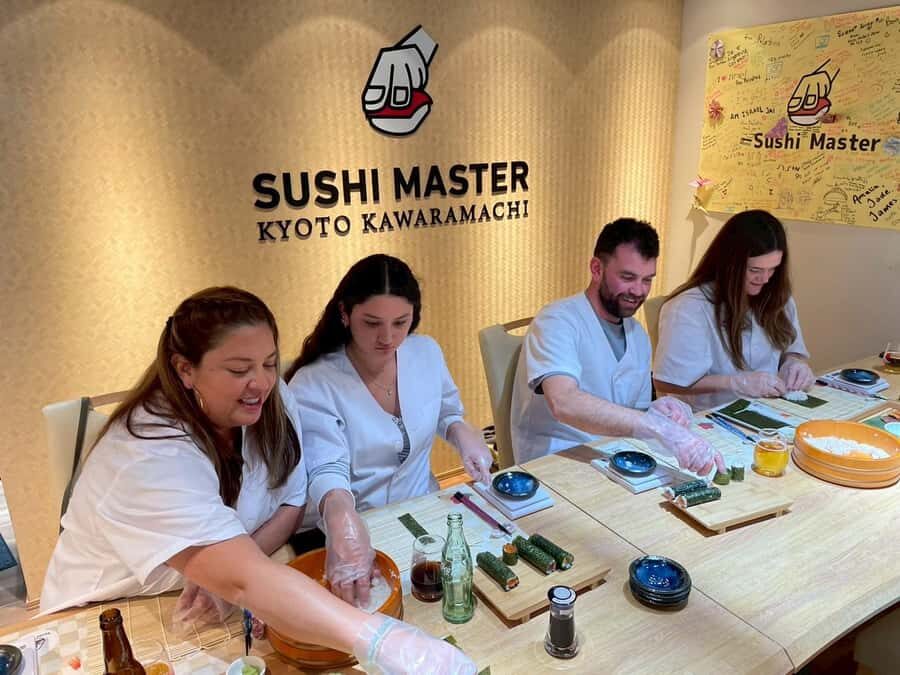
- 90-minute session with a short history lecture, then hands-on sushi-making, then eating your creations
- Two course options: Nigiri and Gunkan-maki, or Temari sushi with extra Gunkan-maki
- 5-min walk from Kyoto Kawaramachi Station on the Hankyu Kyoto Line, so getting there is simple
- English support from friendly staff who guide you through traditional techniques
- What you make is what you eat, plus a special gift to take home
Kyoto Kawaramachi location: easy to fit, easy to explore
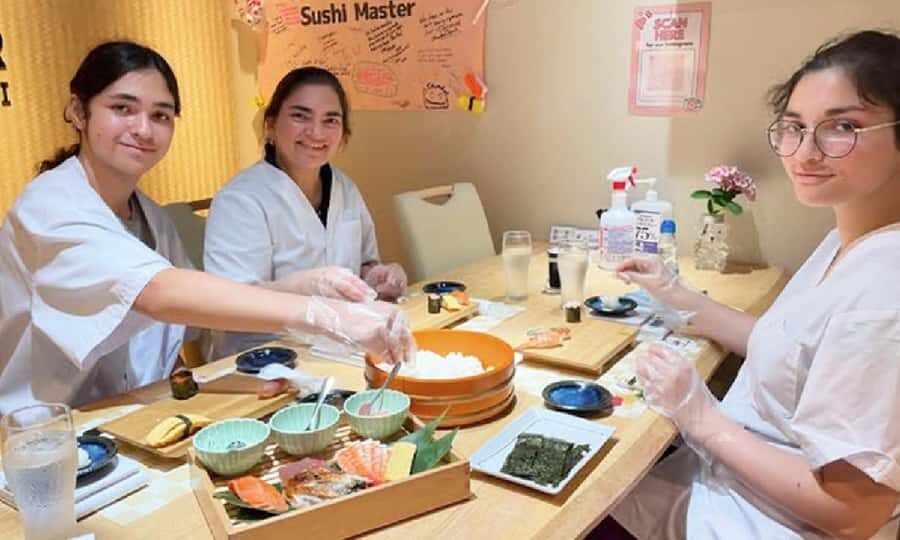
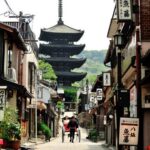
Kawaramachi is one of those neighborhoods where it’s hard to go wrong. You’re close to shops and regular street life, so even if your class runs on time, you still won’t feel stuck. The big practical win is the meeting point: it’s just a 5-minute walk from Kyoto Kawaramachi Station on the Hankyu Kyoto Line.
That matters more than it sounds. In Kyoto, travel time adds up fast. This setup helps you keep your day flexible. You can pair it with other nearby plans—shopping, strolling, or grabbing dinner later—without needing a complicated routing plan. And since the class doesn’t include hotel pickup or drop-off, being near a rail stop is a real advantage. You just go straight to the meeting point and get going.
You can also read our reviews of more tours and experiences in Kyoto.

What you actually make in 90 minutes: nigiri and gunkan-maki vs temari sushi
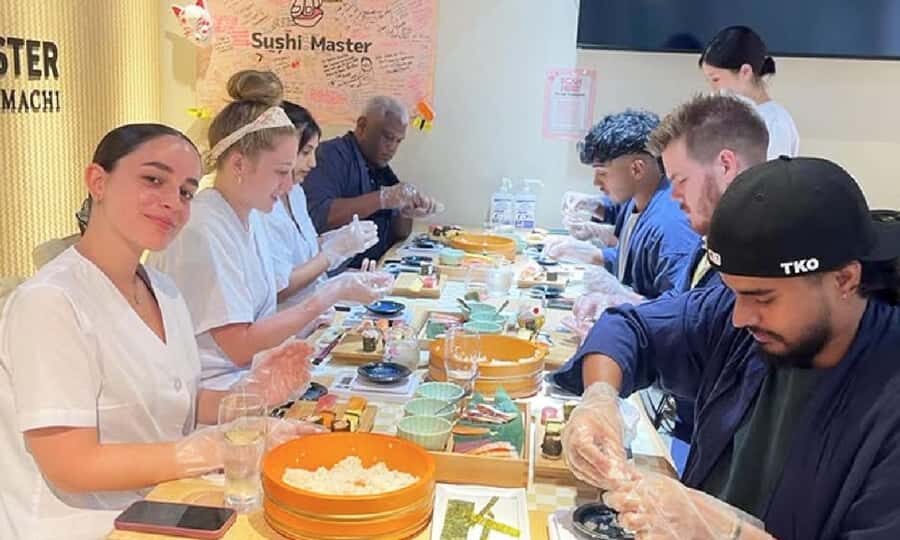
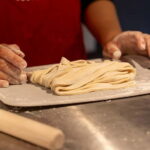
This experience is built around a 90-minute session, and the menu you’ll produce depends on which course you book. You’re not just watching. You’re making pieces—then eating them.
Sushi Making Experience course (Nigiri-focused)
You’ll make a set that includes:
- 9 pieces of Nigiri-sushi
- 3 pieces of Gunkan-maki
Nigiri is the classic starting point for many sushi lessons—rice shaping, then the topping. Gunkan-maki is a different texture and form challenge, since it’s about getting the rice vessel right enough to hold the topping.
Temari Sushi Making course (hand-rolled bite style)
You’ll make:
- 10 pieces of Temari-sushi
- 2 pieces of Gunkan-maki
Temari sushi is typically about shaping small, neat bite-size pieces. If you like the idea of crafting lots of small items (and not worrying as much about long, delicate presentation), this option may feel more forgiving and fun.
Either way, you’ll leave with a clear sense of what sushi actually involves: rice handling plus topping prep plus assembly. Even if you’re a complete beginner, the structure is straightforward.
The lecture part: sushi history that helps you cook with context
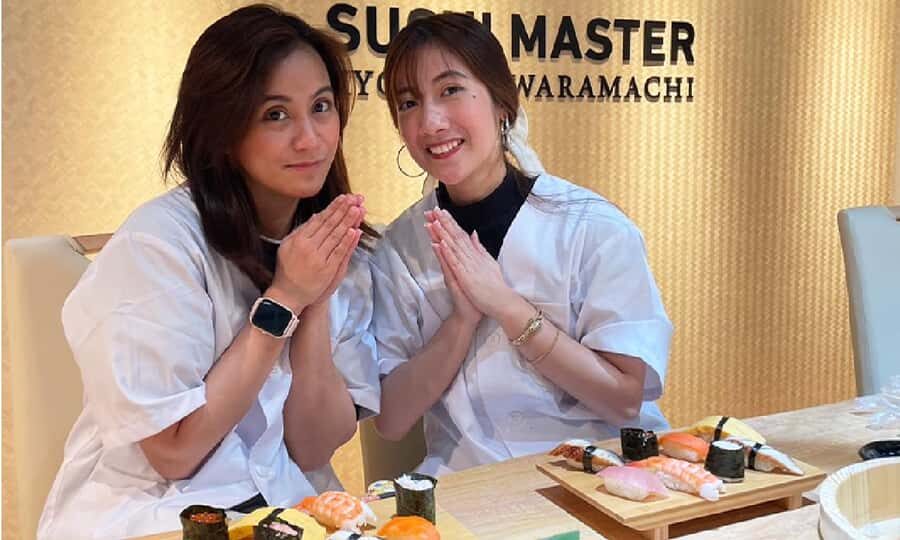
Before the hands-on time, the class includes a lecture on the history of Japanese cuisine and sushi. You’re not going to get lost in textbooks. The point is simple: it gives you context so you understand why the techniques exist.
That can change how you approach the rest of the session. If you know the tradition behind what you’re making, you tend to take the small steps more seriously—rice texture, shape consistency, and how the pieces hold together. It’s the difference between copying a movement and actually learning a method.
Also, the staff speak English and guide you through the process, so you can focus on learning instead of translating in your head.




Hands-on assembly: learning technique you can repeat later
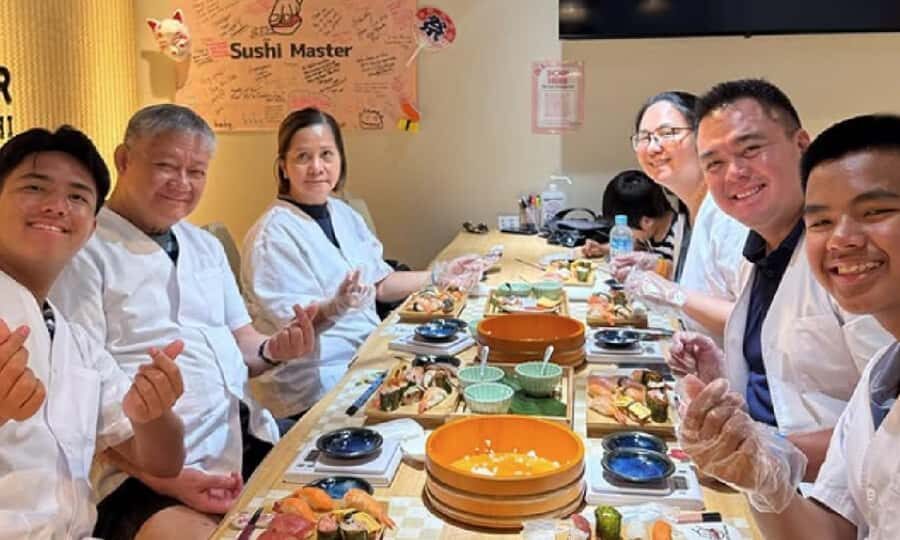
After the lecture, it’s time to get your hands moving. The class is designed as a real practice session, not a demo.
You’ll be coached through making sushi using authentic techniques guided by the staff. That’s a key part of the value here: it’s not just about eating sushi in Kyoto. It’s about learning the workflow—how the pieces are assembled and what matters for a good result.
If you choose nigiri + gunkan-maki
You’ll practice making multiple pieces (9 nigiri plus 3 gunkan-maki). Repetition is the silent teacher. By the time you’ve made several pieces, you start to feel the right rice pressure and shape. That’s the practical payoff most people want from a class.
And then you eat what you made, so you can connect technique to taste immediately. If something falls apart or looks off, you get instant feedback when you taste it.
If you choose temari + gunkan-maki
You’ll be working with a larger set of bite-sized pieces (10 temari plus 2 gunkan-maki). Temari styles are often more about consistent shaping, which can be easier for first-timers. If you like step-by-step craft work, this course style may feel especially satisfying.
Eating your sushi: why the meal format is the whole point
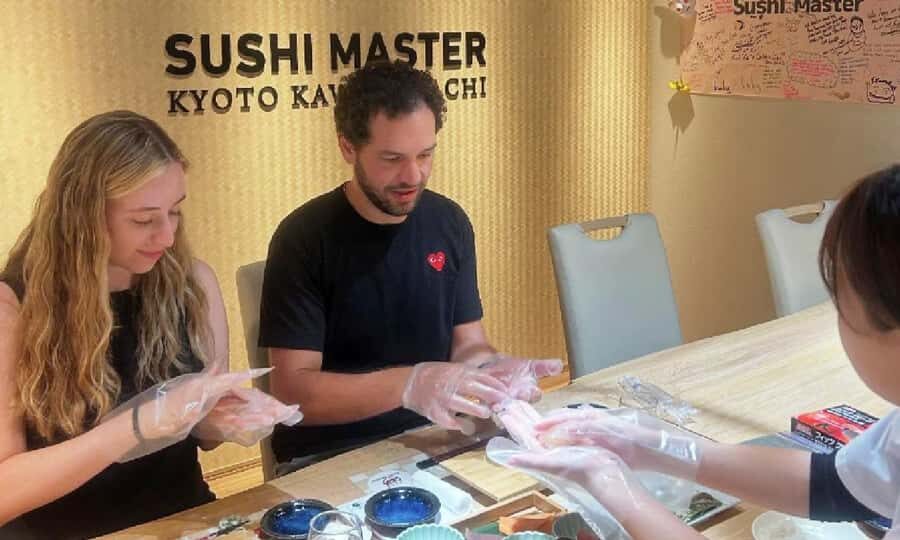
The best part is also the simplest: after you finish making sushi, you get to enjoy the sushi you made. That turns the activity into a full cycle—learn, practice, eat.
This matters because sushi classes can sometimes feel like a “workshop” that ends with you leaving hungry. Here, the meal is part of the design. The ingredients, sushi meals, and the items you create are all included in the experience.
You can also order drinks during class (soft drinks and alcohol are available to order), but drinks themselves aren’t included. So if you like pairing food with something cold or local, plan to pay for that separately.
The souvenir gift: small takeaway, big memories
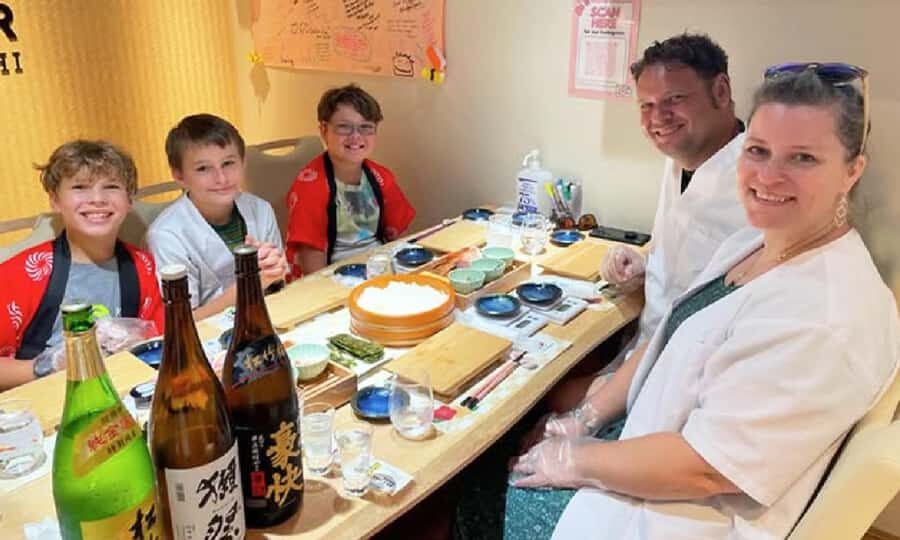
Included with the experience is a special gift. It’s not just a token. It’s a quick way to keep the day anchored in your memory—especially because you’ll have real sushi skills (and photos) from the session.
This is also one of those “low effort, high value” extras. You don’t need to shop, negotiate, or decide what to buy. You already have a fun Kyoto-related takeaway as part of the class.
Price and value: is $40 fair in Kyoto?
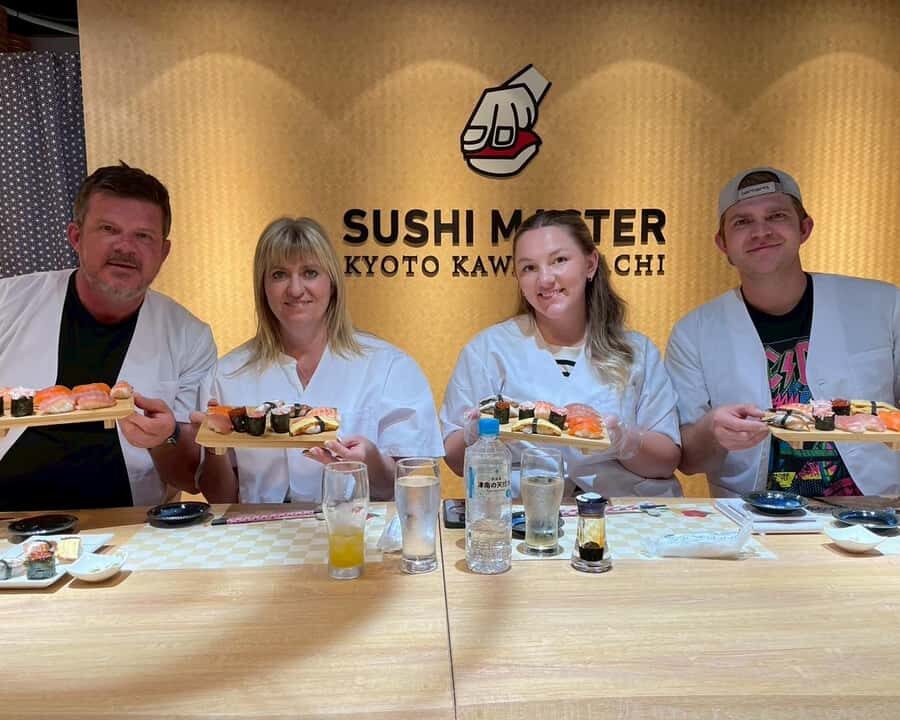
$40 per person sounds like a splurge until you break down what you actually get. For that price, you’re paying for:
- a 90-minute guided class
- a lecture on sushi and Japanese food history
- included sushi ingredients
- sushi meals made during the session
- a special gift
What’s not included is drinks and hotel pickup/drop-off. But even with those exclusions, the overall structure is why the value holds up. You’re not just tasting sushi; you’re getting instruction and a meal outcome. In Kyoto, hands-on experiences with ingredients and staff time can cost more, so this feels like a straightforward way to get real practice without turning it into an expensive half-day.
If you’re on a budget, I’d still recommend it because the class includes what many people pay separately for: an activity plus a meal. If you’re someone who loves cooking or wants a skill you can repeat at home, it’s an especially good match.
Dietary and allergy reality check (read this before you book)
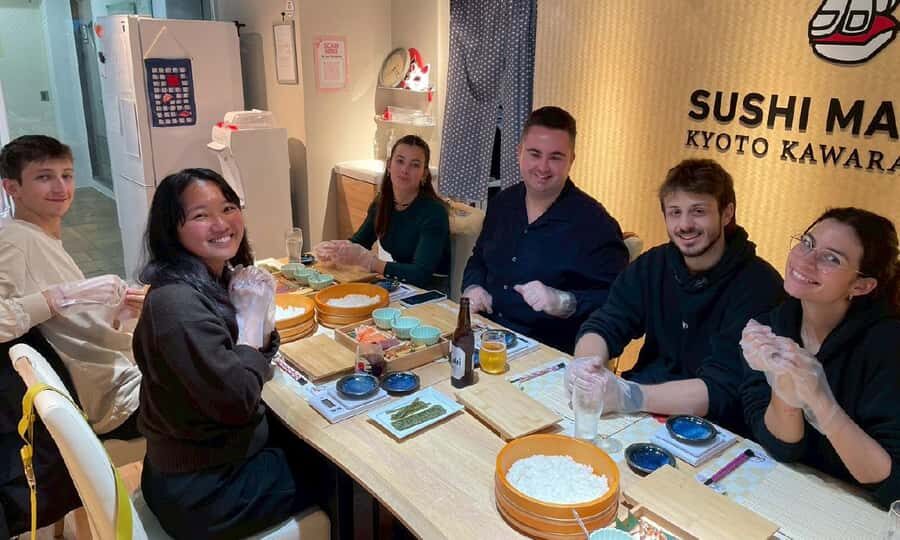
This part is important. The experience has specific limits:
- They only accommodate shellfish allergies (and they note that octopus and squid can be substituted).
- They do not offer special dishes for vegetarians, vegans, or halal diets.
So if your needs are shellfish-related, you should be able to work with them using their substitution option. If your needs are broader than that, you’ll want to reconsider this exact class so you’re not stuck with options that don’t fit.
Also, because the class includes sushi ingredients and sushi meals, you should only book if you’re comfortable with the menu expectations.
Who this sushi-making class is best for
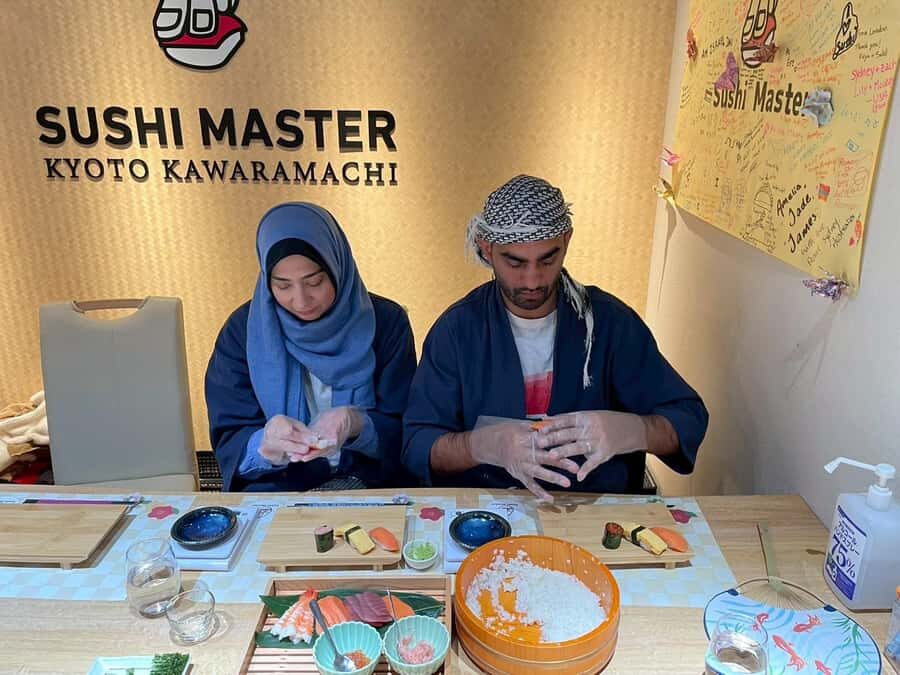
This experience is a good fit if you:
- want a hands-on Kyoto activity that doesn’t require prior cooking knowledge
- like structured learning with step-by-step guidance
- want an included meal that ties directly to what you made
- prefer to travel independently (no hotel pickup required)
It may be less ideal if you:
- need vegetarian/vegan/halal meal accommodations
- can’t manage a class where the food plan is pre-set around sushi ingredients
The session length is also a practical factor. Ninety minutes is long enough to learn and produce multiple pieces, but short enough to still enjoy Kyoto the rest of the day.
Should you book this Kawaramachi sushi class?
I think you should book it if you want the “Kyoto souvenir” feeling without wasting time on something generic. The combination of a short lecture, real hands-on practice, and the chance to eat what you made is a strong value formula. Add the convenient Kawaramachi Station location, and it’s the kind of activity that slots into a day without stress.
Skip it if your dietary needs fall outside shellfish allergy accommodations, since vegetarian/vegan/halal special dishes aren’t provided. And if you hate the idea of going to a meeting point without hotel pickup, plan to arrive using public transport.
If those constraints work for you, this is a fun, learnable, and genuinely memorable Kyoto experience.
FAQ
How long is the sushi-making session?
The session is 90 minutes. It includes a lecture, hands-on sushi making, and then eating the sushi you made.
Where do I meet for the class in Kyoto?
The location is about a 5-minute walk from Kyoto Kawaramachi Station on the Hankyu Kyoto Line. You should come directly to the class meeting point, since pickup and drop-off aren’t available.
What will I make during the class?
It depends on the course you book. The Sushi Making Experience course includes 9 pieces of Nigiri-sushi and 3 pieces of Gunkan-maki. The Temari Sushi Making course includes 10 pieces of Temari-sushi and 2 pieces of Gunkan-maki.
Is hotel pickup or drop-off included?
No. Hotel pickup and drop-off service is not available, so you’ll need to go to the meeting point yourself.
What dietary needs can you accommodate?
They only accommodate shellfish allergies. They note that octopus and squid can be substituted. They do not offer special dishes for vegetarians, vegans, or halal diets.
Are drinks included in the price?
Drinks are not included. You can order soft drinks and alcohol during the class.